
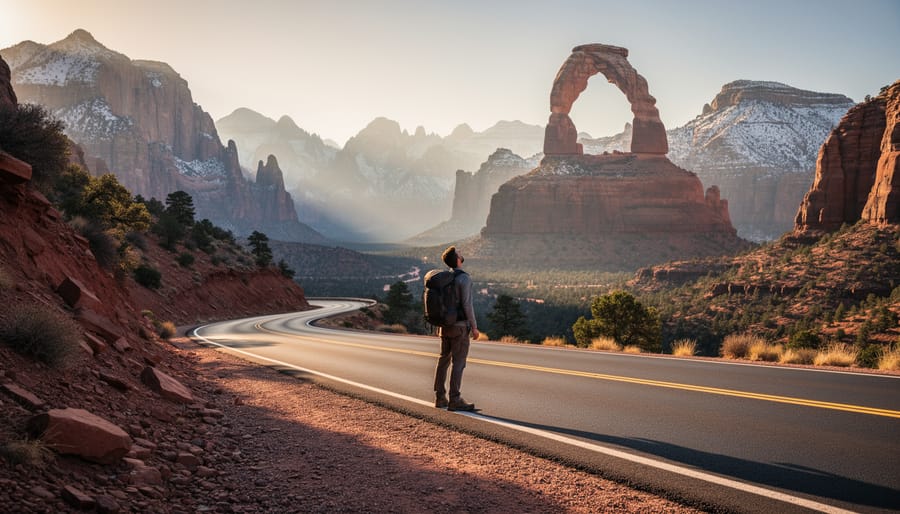
Rocky Mountain National Park, Great Sand Dunes, Mesa Verde, the Grand Canyon, Arches, Yellowstone, Yosemite, and Zion are the national parks with the most iconic landmarks, and each one earns its spot with a view you’ll recognize before you even park the car. Trail Ridge Road tops out above 12,000 feet. Delicate Arch frames Utah license plates. Half Dome and Old Faithful need no introduction.
We leaned toward Colorado and the road-trip parks around it, because that’s where our readers actually go. Three of the eight sit inside the state, and the rest are a long weekend or a good vacation away.
If you want a quick gut-check before you commit to a bigger adventure, spend a morning on the Barr National Recreation Trail. It’s a Colorado favorite for building trail legs, and it gives you a real sense of how you handle elevation and sustained climbing, which matters a lot at places like Rocky Mountain and Zion.
Looking for the most camera-ready stops? Our photographer favorites go deeper on light and timing. Below, you’ll find how we picked, the full list with trip-planning notes, and answers to the questions we hear most from fellow travelers.
How We Ranked These Landmark-Packed Parks (and Where Barr Trail Fits In)
Ranking national parks is a little like picking a favorite campfire song: everyone has an opinion. So here’s the simple approach we used, and the reasons behind it.
We looked for parks with landmarks you’d recognize from across a room, then weighed how realistic each one is for a Colorado traveler. A park that’s a long day’s drive or a quick flight got a fair shot, but our own backyard got a little extra credit. Here’s what counted:
- Landmark recognizability: would a friend name it from a single photo?
- Access from Colorado: how easy is it to turn into a weekend or road trip?
- Hiking options for different abilities: is there something for casual walkers and seasoned climbers?
- Family-friendliness: can kids and grandparents enjoy it too?
- Overall wow factor: does it stop you in your tracks?
You might wonder where Barr National Recreation Trail on Pikes Peak lands in all this. It’s not a ranked entry, because it isn’t a national park. Think of it instead as our training ground and comparison point. Its steady climb is exactly the kind of effort that preps your legs and lungs for big-payoff hikes elsewhere, so you’ll see it pop up as a handy yardstick along the way.
Got a park we should have squeezed in, or one you’d rank higher? The Nomadic Adventures community loves hearing your favorites, so share them with us.
1. Rocky Mountain National Park, Trail Ridge Road and the Roof of the Rockies
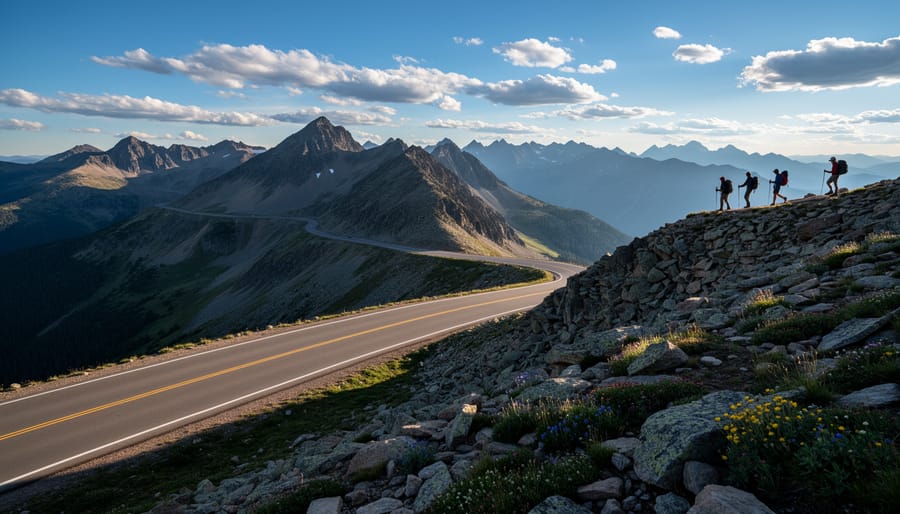
There’s a moment on Trail Ridge Road when the trees simply give up. The spruce and fir shrink, then vanish, and suddenly you’re cruising through open alpine tundra with the whole Continental Divide spread out beside your window. At 12,000-plus feet, it’s one of the highest continuous paved roads in the country, and it’s the fastest way to understand why Rocky Mountain National Park earns its “Roof of the Rockies” nickname. Pull over at the overlooks, step out, and notice how the wind and thin air make everything feel a little bigger.
Down at the other end of the park’s personality, Bear Lake is the kind of easy win families love. A short loop circles water that mirrors the peaks behind it, and it’s a launch point for gentler hikes to Nymph, Dream, and Emerald Lakes. Then there’s Longs Peak, the 14,000-foot giant that anchors the skyline and calls to serious climbers. Most of us admire it from below, and that’s perfectly fine.
Altitude is the real wild card here, so give your body time to adjust. Spending a morning on Barr National Recreation Trail is a smart move. Its steady, patient climb toward Pikes Peak gives you that same high-country burn, and it teaches your lungs and legs what pacing at elevation feels like before you take on Rocky’s higher terrain.
2. Great Sand Dunes National Park, North America’s Tallest Dunes in Colorado’s Backyard
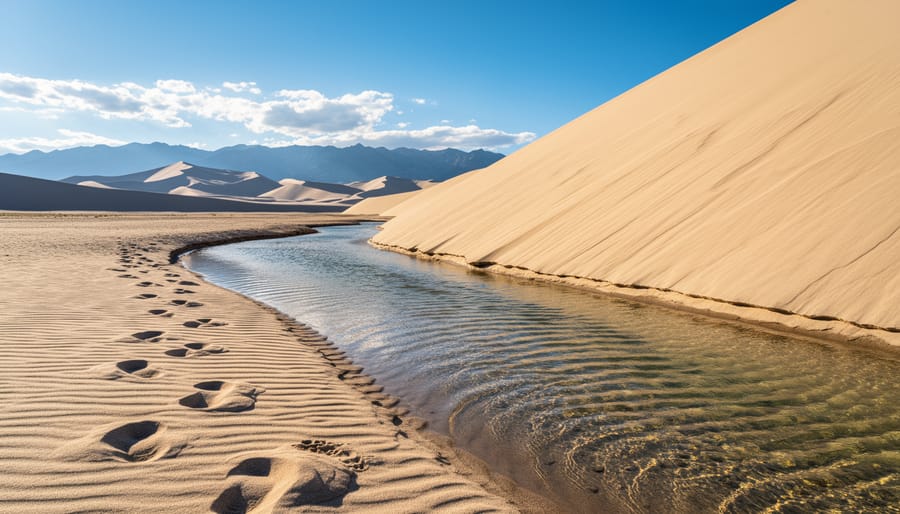
Nothing quite prepares you for the moment the dunes appear. You’re cruising through the flat, golden San Luis Valley, and then these massive waves of sand pile up against the Sangre de Cristo Mountains like someone dropped a piece of the Sahara into Colorado. At roughly 750 feet, Star Dune is among the tallest in North America, and the whole scene feels almost unreal.
Families tend to head straight for Medano Creek, a shallow, seasonal stream that spreads across the sand at the base of the dunes. When it’s flowing, kids splash around like it’s a natural beach, and the creek even produces little “surge waves” that roll in and out. Sandboarding and sand sledding are the other big draws. Rental shops outside the park rent boards and sleds, and you can have a blast sliding down even the lower slopes without hiking to the top.
If you’re up for a little effort, try a sunrise walk. The light turns the ridges amber, the crowds are thin, and the sand stays comfortable underfoot.
Pack plenty of water, closed-toe shoes for the hot sand, and a little patience. Hiking in loose sand is a real workout, so take it slow, enjoy the views, and let the kids set the pace.
3. Mesa Verde National Park, Cliff Palace and Ancient Colorado Stories
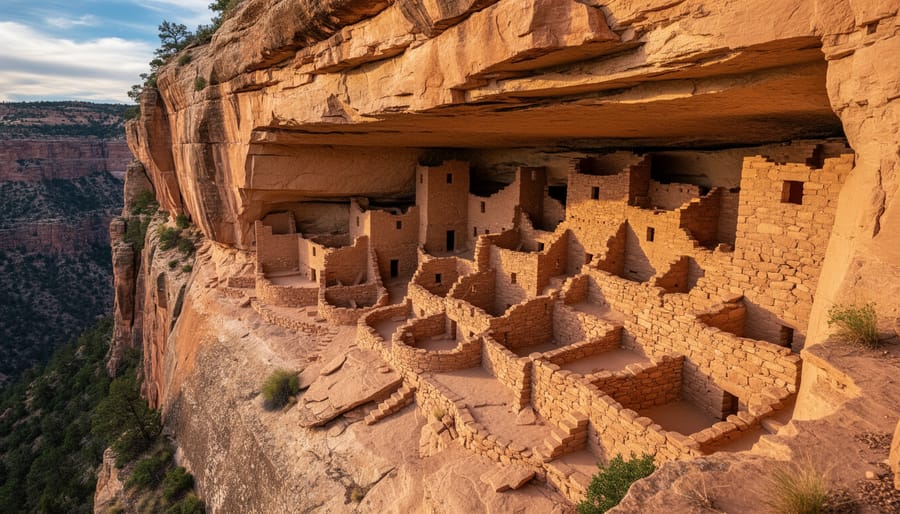
Mesa Verde is the park that makes you go quiet. Tucked into the canyons of southwestern Colorado, it protects some of the best-preserved cliff dwellings in North America, built by Ancestral Puebloan people who lived in this region for centuries. Cliff Palace, the largest of them, sits tucked beneath a massive sandstone overhang, and its towers and kivas look almost too deliberate to be real until you’re standing across the canyon from it.
What stays with most visitors is the human scale. You can see where doorways were shaped, where plaster was smoothed, where families once gathered. It’s less a monument than a neighborhood that happens to be eight hundred years old.
Visiting well means remembering that this is a place with living cultural significance. Many Pueblo peoples today trace their ancestry here. Stay on marked paths, never climb on or lean against walls, and leave every stone and potsherd exactly where you found it.
Access to the big dwellings is through ranger-guided tours, which is a gift rather than a hassle. Rangers walk small groups down stone steps and, in some spots, up sturdy wooden ladders, sharing context you’d never get on your own. Tour tickets are limited and typically need to be reserved ahead of time, so check the National Park Service site before you build a road trip around it. Plan for altitude, bring water, and give yourself time to simply look.
4. Grand Canyon National Park, the Rim Views That Define Bucket Lists
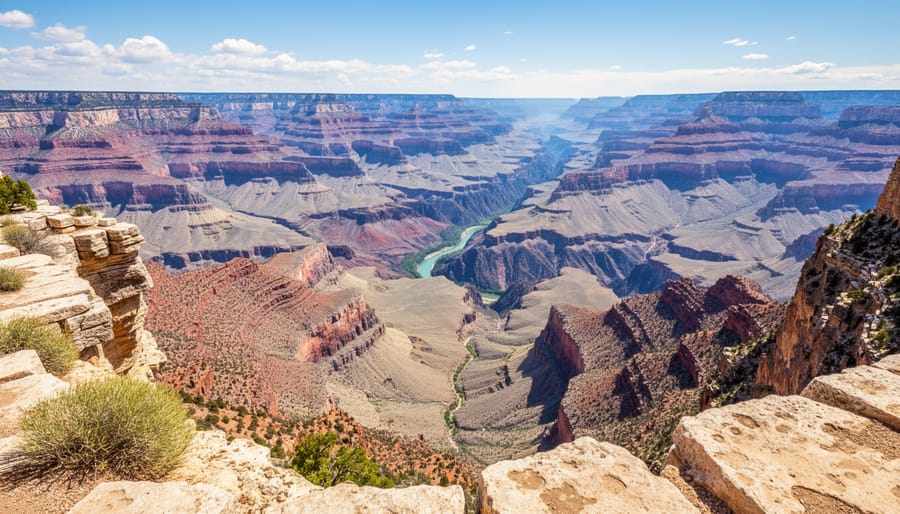
Some views reset your sense of scale, and the Grand Canyon is the one that does it best. Stand at the South Rim and the land simply drops away, layer after layered band of red, orange, and cream stretching to a horizon that doesn’t feel real. Mather Point is the classic first stop, but give yourself time to wander Yaki Point and Desert View, where the old stone watchtower frames the canyon beautifully, especially around sunrise and sunset.
Here’s the part that surprises first-timers: the real magic is the idea of a rim-to-river perspective. The canyon is a mile deep, and every step below the rim shifts the colors, the light, and the silence around you. Even a short walk down changes how the place feels.
For Colorado travelers, it’s a natural road trip. Load up the car, trade a few mountain passes for desert highway, and you can make a long weekend of it.
The famous corridor trails, Bright Angel and South Kaibab, will feel familiar if you’ve spent time on Barr Trail. Both are long, steady, switchback-heavy descents and climbs where the hard part comes on the way back up. The lesson carries over perfectly: start early, pace yourself, carry more water than you think you need, and remember that going down is optional but coming up is mandatory. Respect the canyon’s heat, and it will reward you.
5. Arches National Park, Delicate Arch and Utah’s Sandstone Showpieces
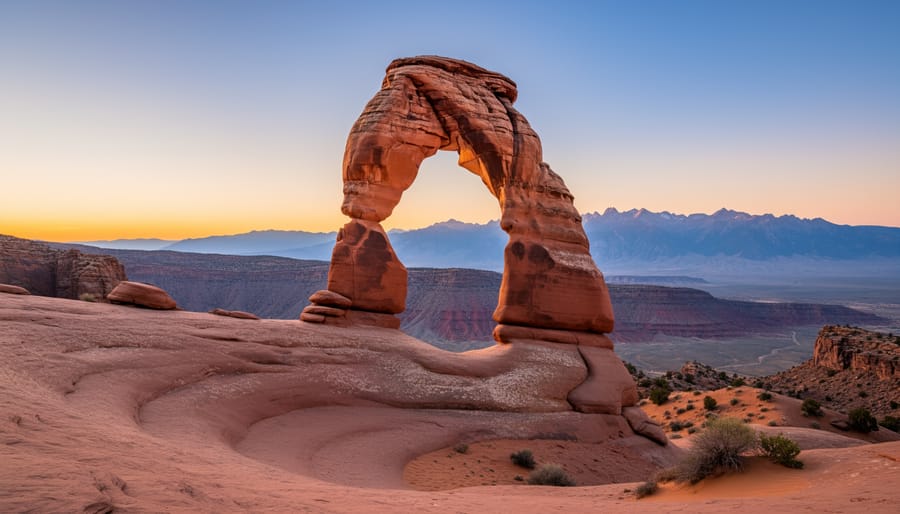
Cross the state line from western Colorado and the landscape flips from alpine green to glowing red rock. Arches National Park, just outside Moab, packs more than 2,000 documented natural sandstone arches into one compact park, and it’s an easy add-on if you’re already road-tripping through Grand Junction or the Colorado National Monument.
The headliner is Delicate Arch, the freestanding span you’ve seen on Utah license plates. Reaching it means a moderate hike of about three miles round trip over open slickrock, with little shade and a steady climb near the end. Rounding the final bend and seeing the arch framed against the La Sal Mountains is one of those moments that makes everybody go quiet for a second.
A few evergreen tips make the visit smoother:
Go early or go late. Midday heat on bare rock is no joke, and sunrise and sunset light turns the sandstone a deep orange. Sunset at Delicate Arch is popular, so bring a headlamp for the hike back down.
Pack more water than you think you need, and wear shoes with real grip.
Don’t skip the short stops. Windows Section and Balanced Rock deliver big views with very little walking, which is perfect if you’re traveling with kids or tired legs.
Timed-entry reservations have been used in busy seasons, so check the National Park Service site before you go.
6. Yellowstone National Park, Old Faithful and the Wild Geothermal Landscape
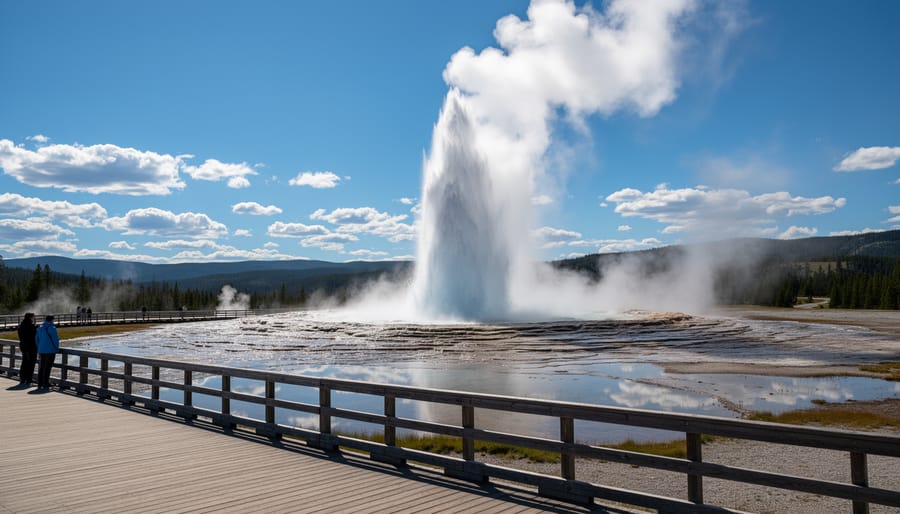
Yellowstone is the one park on this list that feels like visiting another planet. The ground steams, the water glows in impossible colors, and a bison might wander across the road while you’re stuck in a very slow traffic jam. For Colorado travelers, it’s a bigger commitment: a long road trip north through Wyoming, or a flight into the region followed by a rental car. Plan on at least three or four days so you’re not just racing between stops.
Old Faithful is the headliner, and it earns the reputation. The eruptions are fairly predictable, and the visitor center posts estimated times, so you can wander the nearby boardwalks and still catch the show. Grand Prismatic Spring is the one that photographs like a painting. Its rainbow rings of orange, yellow, and deep blue are best appreciated from an elevated overlook, where the full pattern comes into view.
Wildlife watching is a huge part of the magic, especially in the early morning and evening. Bison, elk, and sometimes wolves or bears are all part of the scene. Keep a generous distance, use a zoom lens instead of walking closer, and never feed or approach animals. Stay on the boardwalks and marked trails around thermal features, too. The ground can be thin and the water is scalding, so those rules protect you and the landscape.
7. Yosemite National Park, Half Dome, El Capitan and Waterfall Country
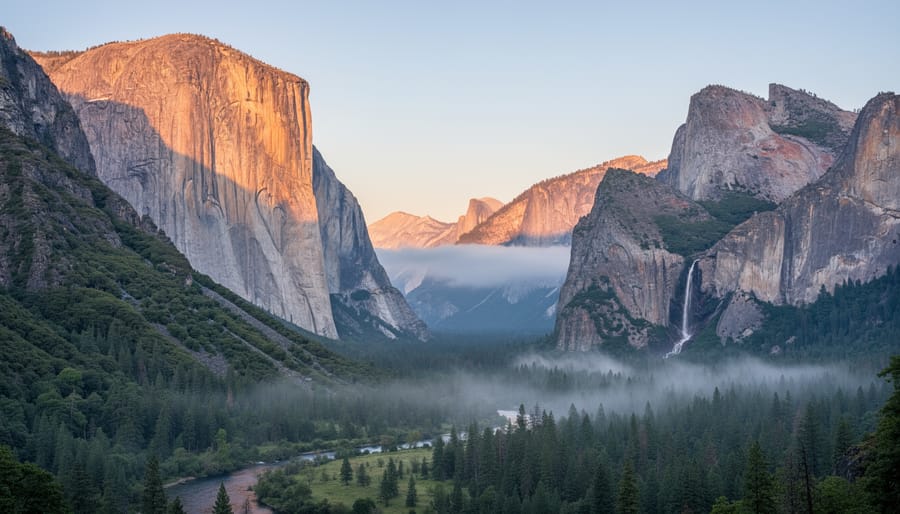
Yosemite is where granite stops feeling like rock and starts feeling like architecture. Standing in the valley, you look up at El Capitan, a sheer wall that climbers treat as a lifelong pilgrimage, and Half Dome, that famous sliced-off summit that shows up on postcards for good reason. Add Yosemite Falls thundering down in spring and the mist drifting off Bridalveil, and it’s easy to see why this park sits among the most beloved iconic landmark parks in the country.
Here’s the part Colorado hikers should hear early: the Half Dome day hike is no casual stroll. It’s a long, sustained effort with serious elevation gain, and the final stretch up the cables asks for steady legs and a clear head. This is exactly where Barr Trail earns its keep. Putting in repeat miles on that steady Pikes Peak climb teaches you to pace yourself, drink before you’re thirsty, and keep a rhythm when the trail just keeps going up.
Think of Barr as your rehearsal. If you can settle into a comfortable grind there, Half Dome feels like a challenge you’ve already prepared for, not a surprise. Check current permit rules before you plan, and start small if you’re new to big days. The valley floor alone, with its meadows and waterfalls, is worth the trip.
8. Zion National Park, Angels Landing and the Narrows
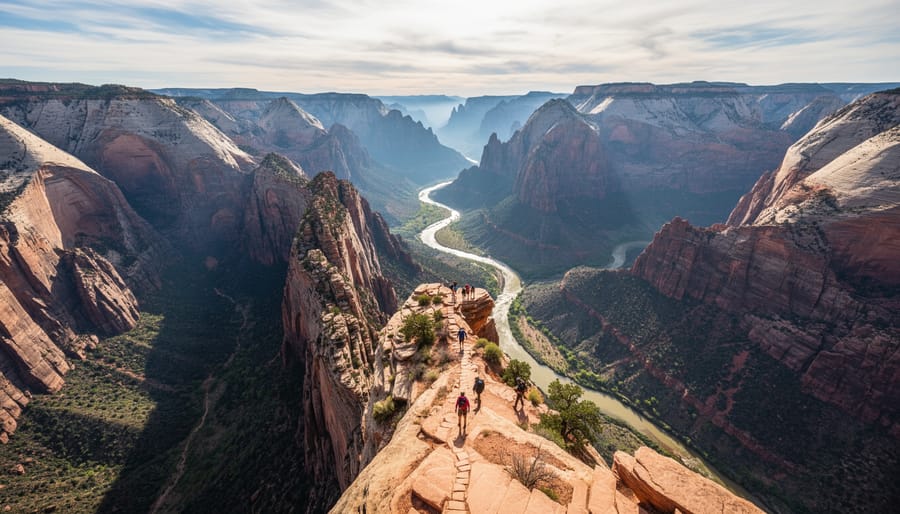
Zion is canyon country at its most dramatic, with sheer sandstone walls rising from a narrow valley floor. The big names are Angels Landing and the Narrows, and they couldn’t feel more different. Angels Landing is a high, exposed ridge with chains bolted into the rock. The Narrows has you wading up the Virgin River between walls that pinch in overhead.
Plan ahead here. Zion’s main canyon is reached by a shuttle system, so you park once and ride to each trailhead instead of driving it yourself. Permits can be required for Angels Landing’s final stretch, and the Narrows depends on river conditions and the weather upstream, so check the park’s official site before you go. Our U.S. national parks guide walks through the basics of reservations and timing, and the same Colorado road trip tips apply for the drive over from the Front Range.
Pick the hike that matches your comfort level, not the one that wins the photo contest. Plenty of travelers happily stick to the riverside walk at the start of the Narrows. If heights make your palms sweat, skip the chains and still leave with great views. And if you’re building up to the big ones, start small on a trail like Barr, then go bigger when you’re ready. Not every adventure has to be a hike, either: Colorado’s scenic train routes are a relaxed way to soak in mountain views.
Train Like a Local: How Barr National Recreation Trail Preps You for Iconic Park Hikes
Barr National Recreation Trail is Colorado’s proving ground. It climbs steadily up Pikes Peak with very little letup, and that sustained grade teaches you things a flat walk never will. You learn your real pace, how your breathing changes as the air thins, and how quickly a small mistake with water or layers turns into a long afternoon.
Those habits travel well. Start slower than feels necessary, because the Grand Canyon’s corridor trails and the grind up toward Half Dome in Yosemite punish anyone who burns out early. Sip water often instead of chugging at rest stops. Pack layers, since a trail can swing from warm switchbacks to windy and cold in a single climb, and Zion’s canyons and the Narrows have their own surprises. Sturdy, broken-in shoes beat shiny new ones every time. Trail conditions on any mountain shift with season and weather, so check with the managing agency before you go rather than trusting an old trip report.
A local hiker in our community put it simply: “Barr taught me to stop racing the person ahead of me. Once I found a pace I could hold for hours, the big park hikes felt a lot kinder.” That’s the real gift of training close to home. By the time you’re staring up at a famous cliff face, the hard part is already in your legs.
Your Questions About Iconic National Parks and Barr Trail, Answered
Which park is best for first-timers?
Rocky Mountain National Park is a friendly place to start if you live in Colorado, since Trail Ridge Road delivers huge views without a big hike. If you’re up for a longer drive, Grand Canyon National Park gives you an unforgettable rim view the moment you step out of the car.
Which landmarks are easiest for families?
Great Sand Dunes National Park is a crowd-pleaser, because kids can play on the dunes at their own pace. Old Faithful at Yellowstone National Park is another easy win, with boardwalks and plenty of places to rest.
How can Colorado travelers fit these parks into road trips?
Mesa Verde, Arches, and Zion pair nicely on a loop through the Four Corners region, while Rocky Mountain and Great Sand Dunes make easy weekend trips. Give the bigger destinations like Yellowstone and Yosemite their own dedicated getaway.
Is Barr National Recreation Trail a good warm-up hike?
It sure is. Its steady climb toward Pikes Peak builds the stamina and altitude comfort that help on tougher outings like Half Dome or Angels Landing, as long as you pace yourself and carry plenty of water.
Still have a question we didn’t cover? Share it with the Nomadic Adventures community, because someone has probably hiked that trail and has a story to tell.
The most iconic landmarks reward the people who show up prepared and curious. Whether it’s Delicate Arch glowing at sunset or the first look down into the Grand Canyon, the payoff feels bigger when you’ve put in the miles to get there. Colorado makes a great starting point, with Rocky Mountain, Great Sand Dunes, and Mesa Verde all within reach, and a steady climb like Barr National Recreation Trail is the perfect way to build your legs and your confidence. Pick one park, lace up, and start small. Then come share your own trail stories with the Nomadic Adventures community, because we’d love to hear where your adventures lead.