
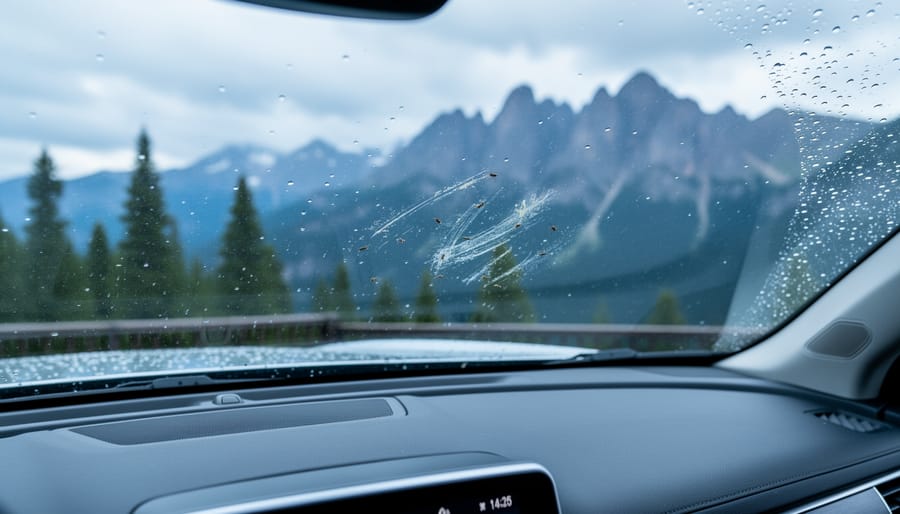
Preparing your windshield with GYEON glass coating before a Colorado road trip takes about 30 minutes and delivers crystal-clear visibility through rain, snow, and bug splatter for up to 12 months. The process involves thoroughly cleaning the glass, decontaminating stubborn residues with alcohol, and applying a thin layer of GYEON’s hydrophobic coating that causes water to bead and roll off at speeds above 40 mph. This matters especially when you drive Highway 9 through sudden mountain weather or chase fall colors along Independence Pass, where visibility can shift from blazing sun to thick fog in minutes.
Colorado’s high altitude intensifies UV exposure, which breaks down untreated glass surfaces faster than at sea level. Summer monsoons drop sheets of rain that turn bug residue into vision-blocking smears, while winter brings ice buildup that clings stubbornly to bare windshields. A properly applied glass coating solves all three problems at once. Water sheets off instead of pooling, bugs wipe away with a single pass, and ice scrapes clean in half the time.
The entire application requires no special skills, just patience and attention to detail. You’ll need the GYEON Q² View or CanCoat coating kit, microfiber towels, isopropyl alcohol, and a workspace away from direct sunlight. Most first-timers complete the job successfully on their initial attempt, and the coating cures fully within 24 hours. The result transforms how you experience long drives through Colorado’s unpredictable weather, turning windshield maintenance from a constant chore into something you handle twice a year at most thanks to quality ceramic coatings for automotive glass.
Why GYEON Glass Coatings Are Ideal for Colorado Road Trips
Colorado’s dramatic elevation changes and unpredictable mountain weather create unique challenges for your windshield. GYEON glass coatings offer targeted solutions that directly address what you’ll encounter on routes like Trail Ridge Road or driving through sudden afternoon thunderstorms in the Rockies.
The hydrophobic properties of GYEON coatings transform how your windshield handles moisture. When rain or melting snow hits your treated glass, water beads up and rolls off instead of spreading into vision-blocking sheets. This becomes critical when you’re navigating switchbacks on Independence Pass during a summer downpour or descending from Loveland Pass as weather shifts from sunshine to sleet in minutes. The coating causes water to fly off at highway speeds, often reducing your reliance on wipers altogether.
Bug splatter becomes a serious visibility issue on Colorado roads, especially during summer drives through lower elevations and rural areas. GYEON’s smooth, chemically resistant surface prevents insects and debris from bonding to your glass. What would normally require scrubbing at a rest stop wipes away with a quick squeegee swipe, keeping your view clear as you drive from Denver toward the Western Slope.
UV protection matters more at altitude. Colorado’s thinner atmosphere means 25 percent more UV exposure than at sea level, which degrades untreated glass and dashboard materials faster. GYEON coatings add a protective barrier that helps maintain clarity while reducing glare from intense mountain sunlight bouncing off snowfields or rocky terrain.
The durability factor separates GYEON from standard treatments. A properly applied coating withstands hundreds of miles of highway driving, temperature swings from morning frost to afternoon heat, and the abrasive dust that Colorado winds kick up. You’ll maintain that crystal-clear view from Denver to Durango without reapplying every few days.
What You’ll Need: Tools and Materials
Gathering everything beforehand makes the application process smoother and helps you avoid that frustrating halfway-through realization that you’re missing a critical item. Here’s what you’ll need to prepare your windshield for Colorado’s challenging roads:
Essential Items:
- GYEON Q² View or GYEON Q² Pure glass coating (50ml bottle covers 4-6 windshields)
- At least 6 high-quality microfiber towels (separate for cleaning, applying, and buffing)
- Automotive glass cleaner or dedicated prep solution
- Clay bar kit or fine glass polish for decontamination
- 99% isopropyl alcohol for final surface prep
- Foam or microfiber applicator pads (usually included with GYEON products)
- Nitrile gloves to protect your hands
Optional but Helpful:
Consider grabbing a spray bottle for the isopropyl alcohol, painter’s tape to protect trim areas, and a LED flashlight to check for streaks during application.
You can find GYEON products through authorized online retailers like Detailed Image or Amazon, which ship quickly to Colorado addresses. For immediate needs, some Denver-area detailing supply shops stock GYEON coatings, though calling ahead saves a trip. Most other items, microfiber towels, isopropyl alcohol, clay bars, are available at AutoZone, O’Reilly Auto Parts, or Walmart locations throughout Colorado. Budget around $40-60 total if you’re starting from scratch, less if you already have quality microfiber towels and cleaning supplies on hand.
Safety Precautions and Important Warnings
Before you start applying GYEON coating, take a few minutes to set up properly, skipping these precautions can ruin your application or create safety issues.
First, find a shaded spot away from direct Colorado sun. Our intense high-altitude UV rays cause the coating to cure too quickly, creating streaks and uneven coverage you’ll regret on the road. A garage is ideal, but a covered carport or even the shaded side of your house works fine. If you’re working outdoors, pick early morning before the sun climbs high.
Check your windshield carefully before you begin. If you spot any chips, cracks, or significant damage, stop and get those repaired first. Coating over damaged glass seals in moisture and makes future repairs harder. This ties directly into road safety tips clear, intact glass matters even more on mountain passes.
Wear nitrile or latex gloves throughout the process. GYEON coatings bond aggressively to skin and are difficult to remove once cured. If coating does contact your skin, wash immediately with soap and warm water. Should it get in your eyes, flush with water for 15 minutes and seek medical attention.
Keep the coating away from your car’s painted surfaces, trim, and rubber seals. If you accidentally get product on paint, wipe it off within seconds using a damp microfiber towel, once it cures, removal requires polishing. Work carefully around windshield edges and wiper cowls.
Ensure decent airflow while you work. Crack a window or door if you’re in an enclosed garage; the fumes aren’t overwhelming, but proper ventilation keeps you comfortable during the 20-30 minute application window.
Step-by-Step: Applying GYEON Glass Coating to Your Windshield
Step 1: Thoroughly Clean the Windshield
Start by giving your windshield a thorough wash to remove the layers of Colorado dust, pine pollen, and road film that build up even on short drives. Spray a quality automotive glass cleaner generously across the entire surface, working from top to bottom. Use a fresh microfiber towel to wipe in overlapping horizontal strokes, then switch to a clean, dry microfiber towel to buff away any remaining cleaner and moisture.
Pay extra attention to the lower windshield area where road spray accumulates, and don’t skip the edges where grime loves to hide. If you’ve recently tackled any of Colorado’s dangerous roads you’ll likely find more stubborn dirt embedded in the glass that requires a second cleaning pass.
This initial cleaning removes the surface-level contamination that would prevent the GYEON coating from bonding properly. Think of it as creating a blank canvas: any dirt, oils, or residue left behind will compromise the coating’s performance and longevity. Take your time here, because a clean foundation makes every subsequent step easier and more effective.
Step 2: Decontaminate with Clay Bar
Spray your clay bar lubricant generously across a small section of the windshield, about two feet square works well. Take your clay bar (or synthetic clay mitt) and gently glide it across the glass using light, overlapping strokes. You’ll feel it grab slightly at first as it pulls out embedded contaminants like pine sap from mountain forests, road tar, and mineral deposits from Colorado’s hard water.
Keep the surface wet and work methodically across the entire windshield. The clay bar will glide more smoothly as it removes stubborn grime. Run your clean hand across the treated area, it should feel noticeably slicker than before, almost like touching smooth plastic rather than textured glass.
If you encounter particularly stubborn spots or notice light water spots that won’t budge, switch to a dedicated glass polish instead. Polish works better for etched-in mineral deposits common at higher elevations. However, most road grime responds well to clay bar treatment alone.
Wipe away the lubricant residue with a clean microfiber towel once you’ve clayed the entire windshield. That silky-smooth surface means you’re ready for the next step.
Step 3: Final Prep with Isopropyl Alcohol
Pour isopropyl alcohol (70% or higher concentration works, though 90% is ideal) onto a fresh microfiber towel, never spray directly on the windshield where it might drip onto paint or trim. Wipe the entire glass surface in overlapping passes, working from top to bottom. This step strips away any lingering wax residue, fingerprint oils, or cleaning product film that survived your earlier wash and clay bar work.
You’ll want to work quickly here since alcohol evaporates fast in Colorado’s dry air, especially at higher elevations. Use a second clean towel to immediately buff the glass dry before the alcohol dries on its own and leaves streaks. The windshield should look crystal clear with no haze, smudges, or rainbow patterns when you’re done, any remaining contamination will prevent the GYEON coating from bonding properly, leaving weak spots that fail during your trip.
Step 4: Apply the GYEON Glass Coating
Now comes the moment you’ve been prepping for. Shake the GYEON bottle well, then apply 3-5 drops of coating to your applicator pad, a little goes a long way, and using too much makes the buffing stage harder. If your windshield is particularly large (like on an SUV or truck), you might need a second application of drops midway through.
Work in sections about 2 feet by 2 feet. This keeps you from rushing and ensures even coverage before the coating starts to flash. Place the pad flat against the glass and use overlapping horizontal strokes, then follow with vertical strokes to cross-hatch the area. Apply moderate, consistent pressure. You’re not scrubbing hard, just ensuring the coating spreads evenly across the surface.
As you work, the coating will appear slightly hazy or rainbow-tinted on the glass. This is normal and exactly what you want to see. The product should spread smoothly without dragging or skipping. If the pad starts to drag heavily, add one more drop to refresh it.
Keep an eye on timing. In Colorado’s dry climate, especially at higher elevations, the coating can flash faster than at sea level. You’ll typically have 1-2 minutes before it’s ready to buff, but watch the haze pattern rather than the clock. Move systematically across the windshield, section by section, maintaining that consistent overlap to avoid missing any spots.
Step 5: Buff and Level the Coating
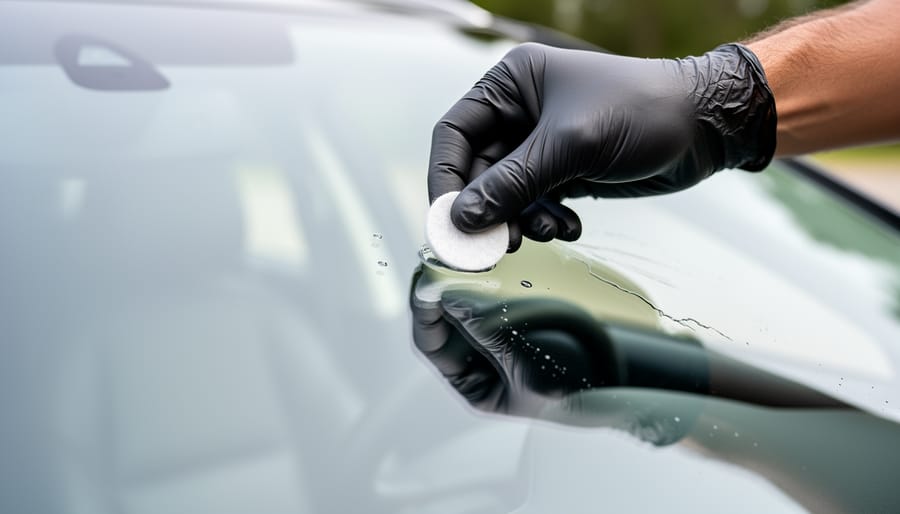
Once you’ve applied the GYEON coating across your windshield, grab a fresh, clean microfiber towel and start buffing immediately. Work in circular motions with light to moderate pressure, watching the coating transform from hazy to crystal clear. You’ll feel the towel glide smoothly as the coating levels out.
Check your work from different angles, especially looking across the glass at an angle where streaks or high spots show up easily. If you spot any haziness or uneven areas, buff those sections again with a clean part of your towel. The glass should look perfectly transparent with no cloudiness, streaking, or texture variations when you’re done.
Flip to a fresh section of your microfiber frequently to avoid redistributing product. In Colorado’s dry air, the coating firms up quickly, so don’t hesitate during this step.
Step 6: Allow Proper Curing Time
Once you’ve buffed the coating to clarity, patience becomes your best friend. GYEON glass coatings typically need 12 to 24 hours to cure fully, though you can check your specific product’s instructions for exact timing. During this period, keep your car parked under cover if possible, a garage is ideal, but even a carport works.
The coating is vulnerable to water until it’s fully cured, so you’ll want to avoid driving through rain or running your windshield wipers. Here in Colorado, this means planning around our famously unpredictable weather. Those afternoon thunderstorms that roll through the Front Range can catch you off guard, so check the forecast and aim to apply your coating on a clear morning with stable weather predicted for the next day.
If you’re at altitude where temperatures drop significantly at night, allow extra curing time. Cold slows the chemical bonding process, and you don’t want to rush it after all the prep work you’ve done. Wait until the coating has had its full cure time before hitting the road, your crystal-clear view through Rocky Mountain passes will be worth the wait.
How to Verify Your Coating Applied Correctly
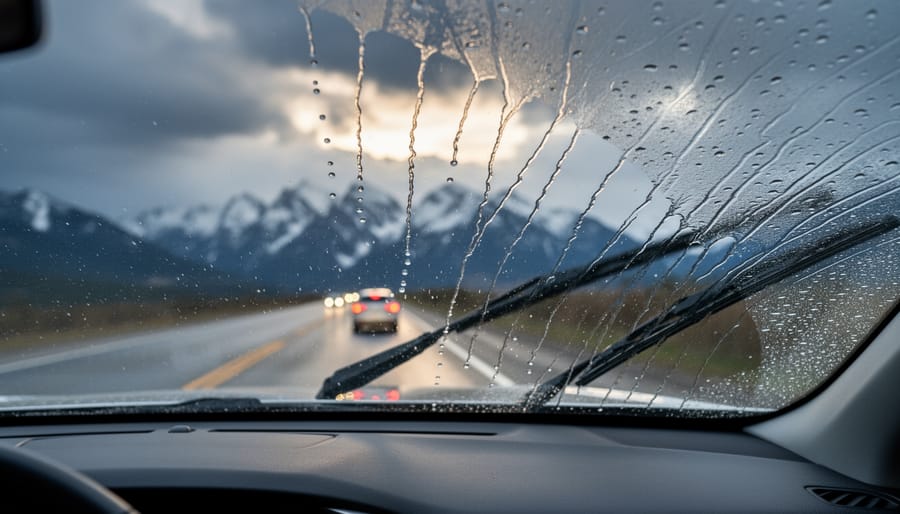
Once the coating has cured, you’ll want to confirm it’s doing its job before you hit I-70 toward the Rockies. The good news? Verifying a successful application takes just a few minutes and gives you confidence that your windshield is ready for whatever Colorado throws at it.
Start with the water beading test, the most reliable indicator of proper hydrophobic performance. Grab a spray bottle filled with clean water and mist a section of your windshield. If the coating applied correctly, water droplets should immediately form tight, round beads that roll off the glass rather than spreading into sheets. On a properly coated windshield, these beads typically measure about the size of a pea or smaller, and they’ll slide down the glass with minimal effort when you tilt your hand or when air flows over the surface while driving.
Next, check visual clarity by standing at different angles to the windshield in good light. The glass should look exceptionally clear without any haziness, streaking, or rainbow-like patterns. If you notice any high spots (areas where the coating pooled slightly), you’ll see them as subtle darker or shinier patches. These can sometimes catch light differently and may need addressing before your trip.
Run your clean hand gently across the surface for a touch test. A properly coated windshield feels incredibly smooth and slick, almost like touching ice. There shouldn’t be any rough patches, sticky spots, or areas that grab at your skin.
Signs of improper application include water spreading instead of beading, visible streaks that persist after buffing, or uneven texture when you touch the glass. If you catch these issues, you can often fix them by gently buffing the affected area again with a clean microfiber towel. For stubborn problems, wipe the area with isopropyl alcohol and reapply a thin layer of coating to that spot, following the same application steps.
Maintaining Your Coated Windshield on the Road
Once you’re out exploring Colorado’s backroads and mountain passes, keeping your GYEON-coated windshield performing at its best requires just a few simple habits. The coating does most of the heavy lifting, but smart maintenance on the road ensures it keeps working through your entire trip.
When you need to clean your windshield at rest stops or gas stations, stick to plain water and a clean microfiber towel. Skip the squeegee buckets at gas stations, those often contain harsh detergents and sit in dirty water that can introduce contaminants. If you’re dealing with bug splatter after a drive through lower elevations, let water sit on the spots for a minute to soften them, then gently wipe away. The coating makes this much easier than on untreated glass, but patience beats scrubbing.
Coating Care During Your Trip:
- DO use distilled or clean water with soft microfiber cloths for cleaning
- DO let bug splatter soak briefly before wiping to avoid abrading the coating
- DON’T use ammonia-based cleaners, which can degrade the coating
- DON’T use abrasive materials, paper towels, or rough sponges on the glass
- DON’T apply waxes or silicone-based products over the coating
Your GYEON glass coating should last three to six months with proper care, easily covering a summer of Colorado adventures. You’ll notice it’s still working when water beads and sheets off during rain, and bugs wipe away with minimal effort. If you’re planning extended trips or frequent mountain driving, consider reapplying every season to maintain peak performance. Between applications, the coating remains durable enough for daily driving and occasional cleaning without special treatment.
Frequently Asked Questions
How long does GYEON glass coating last on a windshield?
GYEON glass coatings typically last 6 to 12 months with proper application and maintenance, though Colorado’s intense UV exposure and frequent altitude changes may reduce longevity slightly. You’ll notice the hydrophobic effect weakening when water stops beading as tightly, signaling it’s time to reapply before your next big adventure.
Can I apply GYEON coating myself or should I hire a professional?
GYEON glass coatings are absolutely DIY-friendly if you follow the prep steps carefully, many Colorado road trippers handle it themselves in a garage or shaded driveway. A professional detailer will charge $75 to $150 for windshield coating, but doing it yourself costs just the product price and gives you confidence for touch-ups down the road.
Will GYEON coating work with my current wiper blades?
Yes, GYEON coatings work perfectly with any quality wiper blades, and you’ll actually notice your wipers glide more smoothly across the treated glass. The coating reduces friction and helps blades clear water faster, which means less chatter on those rainy stretches through the Rockies.
How does GYEON perform in Colorado snow and winter conditions?
GYEON coatings excel in snow because the hydrophobic surface prevents ice from bonding as strongly to the glass, making scraping easier on cold morning starts. Snow and slush slide off more readily at highway speeds, keeping your view clear through Berthoud Pass or Independence Pass in shoulder seasons.
What should I do if I miss a spot or see streaks after application?
If you catch a missed spot or streak within the first hour, wipe the area with isopropyl alcohol and reapply coating to that section while it’s still workable. After full curing, you’ll need to clay bar and prep that area again before touching it up, it’s a bit more work, but ensures consistent protection across your entire windshield.
These questions come up constantly when folks are prepping for their first coated road trip. The beauty of GYEON is that it’s forgiving enough for beginners but delivers professional-level results when you take your time with the process. If you’re still uncertain about tackling it solo, consider doing a test application on a side window first, you’ll build confidence without the pressure of getting your main windshield perfect on the first try.
Most Colorado drivers find the investment worthwhile after their first rain-soaked drive down from Rocky Mountain National Park or through a sudden afternoon thunderstorm near Colorado Springs. That moment when water sheets off your windshield while other cars are fighting streaks and reduced visibility? That’s when you realize the hour you spent prepping was absolutely worth it.
Taking an hour to properly prepare your windshield with GYEON glass coating before your Colorado road trip pays dividends from the moment you head out. You’ll notice the difference immediately when your first rain shower beads off like water on a duck’s back, when bugs wipe away effortlessly at rest stops, and when that intense mountain sun doesn’t create the same glare it used to. Clear visibility isn’t just a convenience on Colorado’s winding mountain passes and scenic byways, it’s essential for safety and enjoying those jaw-dropping views that make our state special.
The beauty of GYEON coatings is that this protection lasts for months, handling everything from sudden snowstorms along I-70 to dusty back roads in the San Juans. You’ve invested time planning your Colorado adventure, choosing routes, and mapping out stops. This simple preparation step ensures your windshield won’t be what holds you back from fully experiencing the journey.
We’d love to hear how your coated windshield performs on your next Colorado road trip. Share your experiences, favorite routes, or tips in the comments below. Safe travels and clear views out there!