
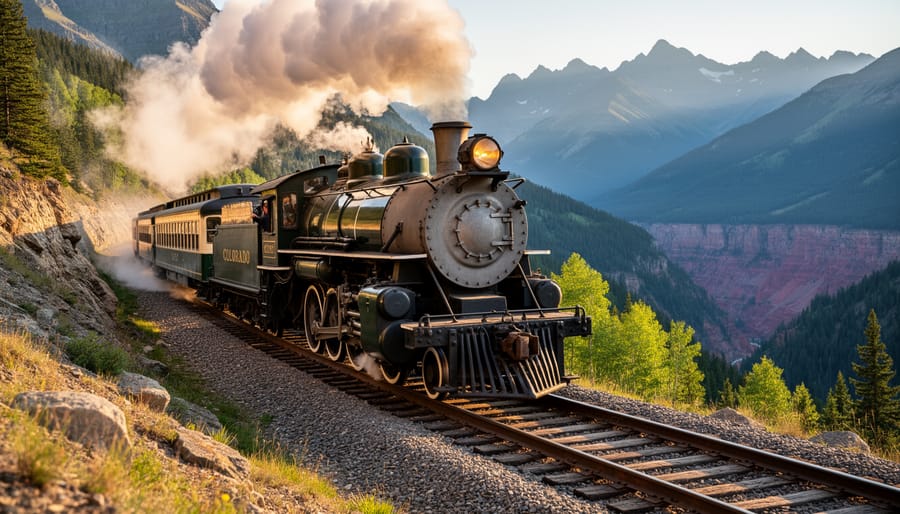
Colorado’s mountain railways deliver some of North America’s most breathtaking rail journeys, winding through alpine passes, red rock canyons, and historic mining districts that roads simply can’t reach. Seven standout routes offer everything from leisurely valley tours perfect for families to challenging narrow-gauge ascents that thrill serious rail enthusiasts, each showcasing a different side of the state’s dramatic landscapes.
These aren’t just train rides. They’re moving time capsules that follow routes carved during Colorado’s mining boom, when engineers defied gravity and common sense to haul silver and gold out of impossible terrain. The locomotives that still run these tracks today connect you to that wild-west engineering ambition while treating you to views that haven’t changed since the 1880s.
What makes Colorado’s scenic railways special is their authenticity. Most operate on original track beds using restored vintage equipment, and several still tackle the same mountain grades that tested early railroaders. You’ll smell coal smoke, hear the conductor’s stories about ghost towns passed along the way, and watch the landscape shift from aspen groves to subalpine tundra through windows that frame the Rockies better than any windshield ever could.
Whether you’re planning a summer adventure or a fall foliage tour, choosing the right route depends on what kind of experience speaks to you.
What Makes a Great Scenic Train Route
Choosing the right scenic train journey depends on what you’re hoping to experience in Colorado’s mountains. We’ve selected these seven routes based on specific criteria that ensure each one delivers an unforgettable adventure, whether you’re chasing dramatic vistas, diving into mining history, or planning a family outing that works with your schedule.
Here’s what we looked for when curating this list:
- Dramatic mountain views and diverse landscapes that showcase Colorado’s natural beauty
- Historical authenticity, including vintage locomotives and preserved railroad heritage
- Family-friendly accessibility with options for different mobility levels and ages
- Variety of experiences, from wilderness access to gourmet dining cars
- Seasonal considerations and year-round availability to fit different travel windows
The routes you’ll discover range from high-altitude mountain crossings to deep canyon passages, each offering a distinct perspective on Colorado’s terrain. Some operate only during warmer months when alpine passes are accessible, while others run year-round with special holiday experiences. We’ve prioritized journeys that combine authentic railroad experiences with spectacular scenery, giving you more than just a ride but a genuine connection to Colorado’s railroad heritage and mountain landscapes.
Every route on this list brings something unique to the table. You’ll find everything from America’s longest narrow gauge railroad to the newest route launching in 2026, ensuring there’s a perfect train adventure for your interests and timeframe.
Colorado’s Most Spectacular Scenic Train Journeys
1. Durango & Silverton Narrow Gauge Railroad
The Durango & Silverton Narrow Gauge Railroad stands as Colorado’s most celebrated rail journey, and for good reason. This 45-mile route carries passengers through the remote wilderness of the San Juan Mountains aboard coal-fired steam locomotives that have been making this run since 1882.
The journey begins in Durango and climbs through the Animas River Gorge, where sheer rock walls tower hundreds of feet above the tracks. Your vintage coach car hugs cliff edges as the river churns far below, offering views that simply don’t exist from any highway. The steam whistle echoes off canyon walls as you pass through terrain accessible only by train or on foot.
What makes this route exceptional is the unchanged wilderness experience. You’re following the same path miners took over a century ago, and much of the landscape remains as wild as it was then. Black bears sometimes wander near the tracks, and you’ll spot remnants of old mining camps tucked into impossible-looking mountainside perches.
The three-and-a-half-hour ride delivers you to Silverton, a historic mining town where you have time to explore before the return journey. Many travelers we’ve spoken with say the northbound leg offers the best light for photography, with afternoon sun illuminating the canyon walls.
This isn’t a quick scenic overlook. It’s a full-day commitment that rewards you with an authentic connection to Colorado’s railroad heritage and some of the most dramatic mountain scenery you’ll find anywhere in the Rockies.
2. Cumbres & Toltec Scenic Railroad
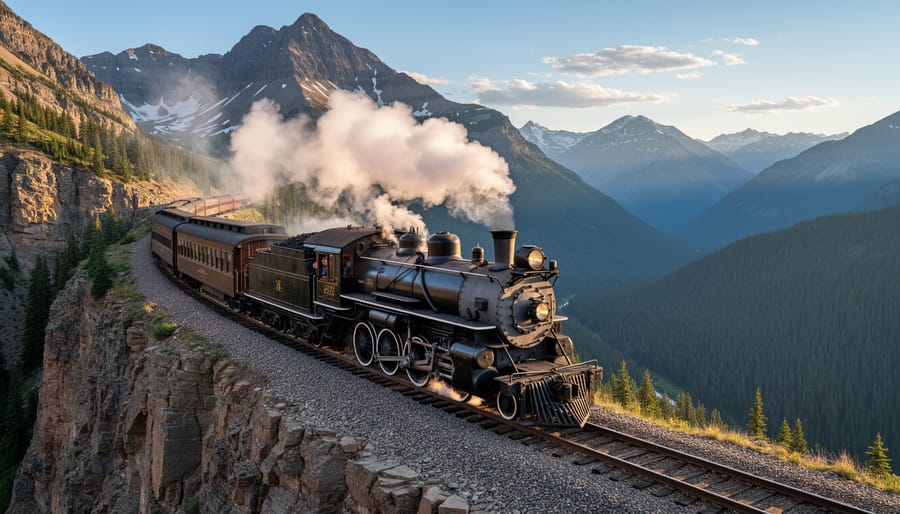
Straddling the Colorado-New Mexico border at elevations topping 10,000 feet, the Cumbres & Toltec Scenic Railroad holds the distinction of being America’s longest and highest narrow gauge railroad still in operation. This 64-mile journey through the San Juan and Sangre de Cristo Mountains delivers raw alpine beauty that few roads can match, think windswept tundra, dense spruce forests, and plunging gorges carved by ancient volcanic activity.
The railroad climbs through Toltec Gorge, where sheer rock walls rise 600 feet above the tracks, then crosses the 10,015-foot Cumbres Pass before descending into New Mexico’s high desert landscape. You’ll cross spindly wooden trestles that seem to float above mountain valleys and wind through rock tunnels hand-carved in the 1880s. The engineering alone tells a story of determination: building this route through such unforgiving terrain required ingenuity that still impresses modern visitors.
The C&T’s regular season typically runs late May through late October, when weather permits safe passage through the high country. Recent years have seen season opening after delay due to conditions, so checking current schedules before planning your trip matters. The full-day journey requires commitment, it’s an all-day adventure, but the constantly changing scenery and genuine wilderness access make every hour count. This isn’t a quick photo stop; it’s an immersion in landscapes that remain virtually unchanged since railroad workers first laid these tracks nearly 150 years ago.
3. Georgetown Loop Railroad
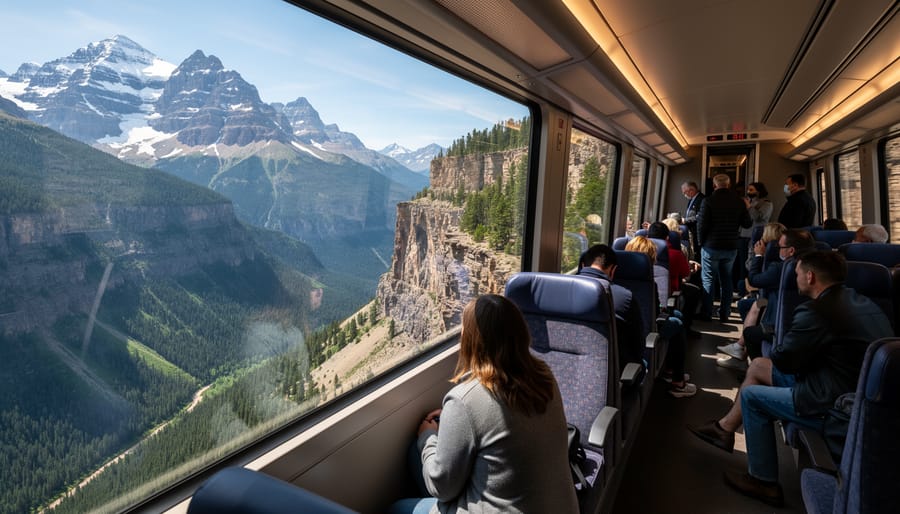
Winding through the rugged walls of Clear Creek Canyon, the Georgetown Loop Railroad delivers one of Colorado’s most photographed railroad moments: a dramatic crossing high above the canyon floor on the Devil’s Gate High Bridge. This historic narrow gauge route connects the old mining towns of Georgetown and Silver Plume, climbing over 600 feet in elevation through just two miles of track, an engineering marvel from the 1880s silver boom era.
The journey itself feels like stepping into a vintage postcard. As the train spirals upward through rocky cliffs and pine forests, you’ll spot remnants of Colorado’s mining heritage scattered across the mountainsides: old ore chutes, mine entrances, and weathered trestles that tell stories of the state’s rough-and-tumble past. The route’s centerpiece, that graceful steel bridge curving above the creek, offers a thrilling moment where passengers crane their necks for photos of the dizzying drop below.
Families especially love this route for its manageable length and the option to add a guided tour of the Lebanon Silver Mine, where kids can step inside a real tunnel and learn how miners worked in near-darkness with only candles for light. The regular season kicks off in April, making it one of the first train experiences available as spring returns to the high country. The two-hour round trip strikes the perfect balance for younger travelers: long enough to feel like an adventure, short enough to hold everyone’s attention.
4. Leadville Colorado & Southern Railroad
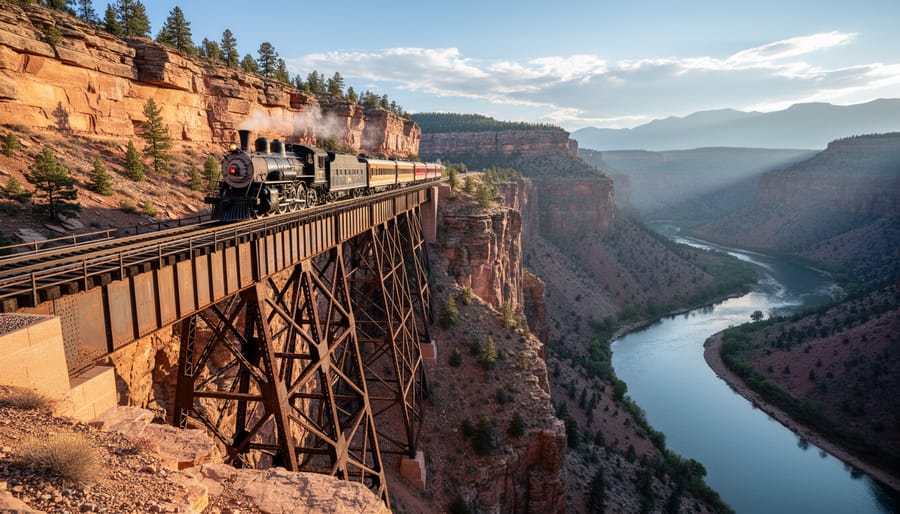
At 10,152 feet above sea level, the Leadville Colorado & Southern Railroad claims the title of North America’s highest standard-gauge railroad. This two-and-a-half-hour journey departs from the historic mining town of Leadville, winding through the Upper Arkansas River Valley with the towering Sawatch Range as your backdrop. You’ll spot Mount Elbert and Mount Massive, Colorado’s two highest peaks, both exceeding 14,400 feet, dominating the western horizon as the train climbs through aspen groves and high mountain meadows.
The route follows the path prospectors once traveled during the Colorado Silver Boom, passing old mine sites and ghost towns while offering sweeping views across the valley floor. Narration brings the region’s colorful mining history to life, connecting the landscape to the fortune seekers who once called these mountains home. The open-air observation car lets you feel the thin mountain air and capture unobstructed photos of the alpine scenery.
Unlike many Colorado train journeys that operate only during summer months, Leadville Railroad runs year-round. Daily scenic rides are available throughout the season, with summer trips currently running. The Holiday Express starting in November 2026 transforms the journey with festive decorations and seasonal cheer, while Winter Express trips bookable starting May 2026 showcase the valley blanketed in snow. This accessibility makes it easy to experience Colorado’s high country no matter when you visit, with each season painting the landscape in different colors.
5. Royal Gorge Route Railroad
The Royal Gorge Route Railroad delivers what many consider Colorado’s most dramatic train journey, a three-hour round trip through a canyon so deep and narrow that the walls seem to close in around you. Suspended 1,000 feet above the Arkansas River, the tracks cling to the granite cliffs, offering passengers a perspective that simply can’t be matched from the rim above.
What sets this route apart is its accessibility and variety. Unlike seasonal mountain railroads, trains run year-round, making it perfect for winter visitors who want a scenic adventure without weather concerns. The route works beautifully for both casual sightseers and those seeking a full dining experience, you can choose from coach seating with open-air platforms, dome cars for panoramic views, or elegant dining cars where chefs prepare your meal as the canyon unfolds around you.
The geology tells an incredible story here. You’re riding through two billion years of Earth’s history, with exposed rock layers revealing the ancient Precambrian basement that forms Colorado’s foundation. Watch for bighorn sheep on the canyon walls and raptors riding the thermals above the river. The tight curves and sheer drops create that thrilling sense of adventure, yet the modern equipment and smooth ride make it comfortable for all ages. It’s one of the few Colorado train trips where the destination is truly the journey itself.
6. Pikes Peak Cog Railway
Riding America’s highest cog railway to the summit of Pikes Peak remains one of Colorado’s most awe-inspiring train experiences. At 14,115 feet, you’ll reach the top of one of the state’s most famous fourteeners without breaking a sweat, making this journey perfect for visitors who want that summit experience without the physical demands of hiking.
The modernized railway showcases impressive engineering as it climbs through five distinct climate zones. You’ll start in the Engelmann spruce forests near Manitou Springs, then watch the landscape transform into stunted alpine trees before emerging above treeline into the stark beauty of alpine tundra. The specially designed trains feature large windows angled for optimal viewing, and the three-hour round trip includes 30 to 40 minutes at the summit.
What makes this route extraordinary isn’t just the altitude. On clear days, the 360-degree views from the top stretch across four states. You’ll see the Colorado Springs metropolitan area far below, the red rocks of Garden of the Gods, and endless mountain ranges rolling toward distant horizons. The climate shifts dramatically as you climb, bring layers, because even summer days at the summit often hover in the 40s with fierce winds.
The Summit House visitor center offers hot drinks, restrooms, and those famous high-altitude donuts. Photography enthusiasts should grab seats on the right side heading up for the best canyon views during the ascent.
7. Rockies to the Red Rocks Extension
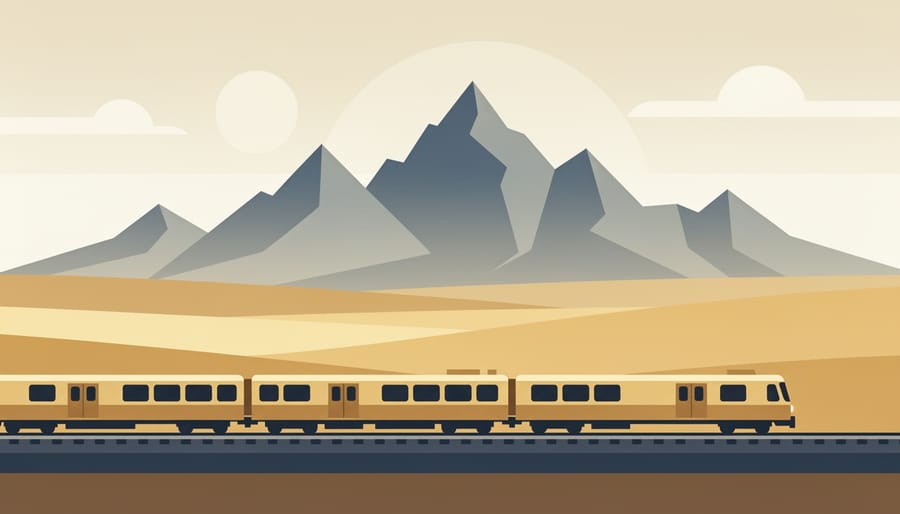
Starting April 21, 2026, Colorado’s scenic train landscape expands with an entirely new perspective. The Rockies to the Red Rocks Extension breaks from the traditional high-mountain routes to showcase a different side of the state’s geological drama, the stunning red rock formations that define Colorado’s lower elevations.
Running weekly, this journey connects the Denver area to landscapes more commonly associated with hiking and road trips, making these iconic formations accessible from the comfort of a train car. Instead of pine-covered peaks and alpine tundra, you’ll witness the dramatic contrast of rust-colored sandstone cliffs, weathered spires, and layered sedimentary rocks that tell millions of years of geological history.
What makes this route particularly exciting is the shift in scenery it offers. While the other six journeys focus on Colorado’s mountainous spine, this extension reveals the state’s striking transition zones, where the Great Plains meet the Rockies, and where ancient seabeds tilted on edge create the spectacular red rock amphitheaters Colorado is known for.
The weekly schedule makes it an ideal addition to a broader Colorado itinerary, especially if you’re based in or near Denver and want to experience a completely different landscape without the drive to mountain towns. It’s a fresh option that expands what scenic train travel in Colorado can mean, proving the state’s visual diversity extends far beyond its famous peaks.
Planning Your Colorado Train Adventure
Choosing the right train route starts with your priorities. If you’re drawn to narrow gauge nostalgia and remote wilderness, the Durango & Silverton or Cumbres & Toltec routes deliver authentic heritage experiences. Families with younger kids often prefer shorter trips like the Georgetown Loop, while summit seekers gravitate toward the Pikes Peak Cog Railway. Consider what landscapes speak to you, deep gorges, high alpine meadows, or red rock formations, and match that to the route descriptions.
Book early, especially for summer departures and holiday-themed rides. Popular routes like Durango & Silverton fill months ahead during peak season. Check each railroad’s website directly for current schedules and availability, since seasonal operations vary. Some routes run year-round while others operate late spring through fall. If you’re planning around a specific window, verify operating dates before finalizing other trip logistics.
Make the most of your journey with these essentials:
- Layer your clothing, mountain weather shifts quickly, and temperatures drop with elevation.
- Bring a camera with a fast shutter speed to capture moving scenery without blur.
- Pack sunscreen and sunglasses, even on cloudy days; high-altitude sun is intense.
- Arrive 30 minutes early to secure window seats and explore depot exhibits.
- Consider mid-week departures for smaller crowds and better photo opportunities.
Window seats fill first, so boarding early matters. Open-air cars offer unobstructed views and fresh mountain air, but they’re cooler and windier than enclosed coaches. Bring a light jacket even in summer. Many trains have dining options or allow you to bring snacks, check policies beforehand.
If photography is a priority, research which side of the train offers better views for your chosen route. Morning light typically works best for eastward-facing slopes, while afternoon sun illuminates western canyon walls. Don’t spend the entire trip behind a lens, though. Some moments are better experienced than documented.
Common Questions About Colorado Scenic Trains
How long do these train rides typically last?
Most Colorado scenic train journeys run between two to three and a half hours round-trip, though some routes offer half-day or full-day experiences. The Durango & Silverton, for example, takes about three and a half hours each way, while shorter options like the Georgetown Loop complete their circuit in just over an hour.
Are these trains accessible for families with young children?
Absolutely, most routes welcome families and offer kid-friendly amenities. Many trains feature open-air cars where children can feel the breeze and get better views, plus restrooms and snack options onboard. The Georgetown Loop and Royal Gorge Route are particularly popular with families due to their shorter durations and exciting scenery.
When’s the best time to ride Colorado’s scenic trains?
Summer and early fall deliver the most reliable weather and longest operating schedules, with many routes running daily from June through September. Spring offers blooming wildflowers and fewer crowds, while winter routes like Leadville’s Holiday Express and Winter Express bring snowy mountain magic starting in November 2026.
Do I need to book tickets in advance?
Yes, especially for popular routes during peak summer months and fall foliage season. Weekends and holidays fill up quickly, so booking a few weeks ahead ensures you get your preferred date and seating class.
What should I bring on a scenic train ride?
Pack layers since mountain weather shifts quickly, and bring sunscreen, sunglasses, and a hat for sun protection at high altitude. A camera or phone is essential for capturing those stunning views, and consider bringing snacks and water, though most trains offer onboard refreshments.
Can I bring my dog on these trains?
Policies vary by railroad, some routes allow leashed pets in open-air cars while others restrict animals except for service dogs. Check directly with each operator when booking to confirm their specific pet policies and any associated fees.
These questions just scratch the surface of what makes Colorado’s scenic trains so special. Each route offers its own character and charm, from the historic steam engines of the Durango line to the modern comfort of the Pikes Peak Cog Railway. The key is matching the experience to what excites you most, whether that’s wilderness adventure, family fun, or simply soaking in Colorado’s legendary landscapes from the comfort of a vintage rail car.
items
A comfortable journey begins with smart packing. Bring layers, mountain weather shifts quickly, and open-air cars can be chilly even in summer. A light jacket or fleece works year-round, while winter excursions demand heavier coats and gloves.
Binoculars transform distant wildlife and geological features into close-up encounters. A camera with a zoom lens captures those sweeping valley views without the blur of motion. Pack extra batteries and memory cards; you’ll take more photos than expected.
Sunscreen and sunglasses aren’t optional at high altitude, where UV exposure intensifies dramatically. A reusable water bottle keeps you hydrated, and small snacks help if dining options don’t match your schedule. Motion sickness medication benefits sensitive travelers, particularly on winding narrow gauge routes.
Cash tips the crew who enhance your experience with local knowledge and historical stories. Many vintage cars lack modern payment systems, so small bills prove useful. A small backpack or day bag organizes everything without cluttering your seat or blocking the aisle for fellow passengers eager to reach the observation areas.
These seven scenic train routes capture the very best of Colorado’s railroad heritage and natural grandeur. From the historic narrow gauge lines winding through remote wilderness to modern ascents up fourteeners, each journey offers something you simply cannot experience from a car window. The slow pace lets you absorb the scale of these mountains, the drama of deep canyons, and the stories etched into every rail and trestle.
Whether you’re drawn to the steam-powered nostalgia of the Durango & Silverton, the engineering marvel of the Georgetown Loop, or the brand-new perspectives promised by the Rockies to Red Rocks route launching this spring, Colorado’s scenic trains deliver unforgettable memories for families, solo adventurers, and history buffs alike.
The rails are calling. Pick your route, book your seat, and let these iron horses carry you into landscapes that have inspired travelers for over a century. Your Colorado train adventure awaits.