
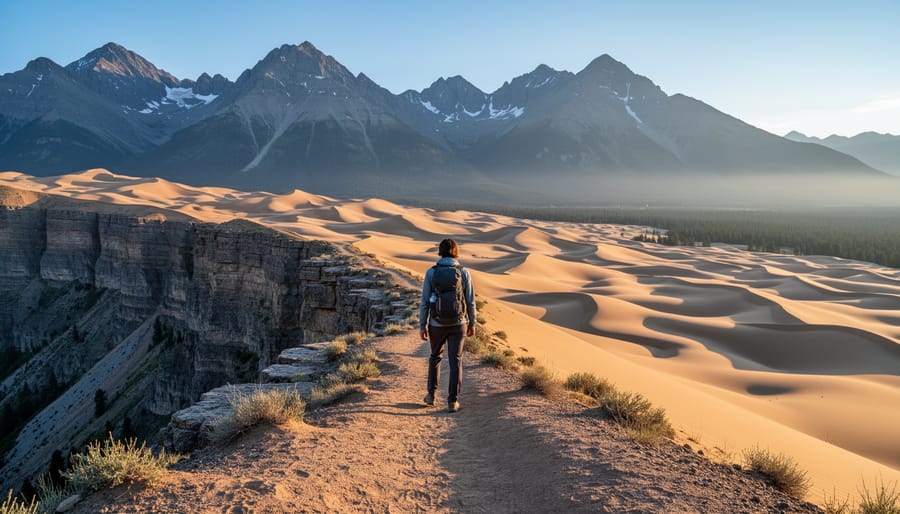
Colorado is home to four spectacular national park units that together protect everything from ancient cliff dwellings to the continent’s tallest sand dunes, and understanding how these parks connect to the state’s wider trail network will help you plan a trip that blends iconic destinations with legendary hikes like Barr Trail.
The national park system and Colorado’s recreation trails exist side by side, often overlapping in surprising ways. Mesa Verde National Park, Rocky Mountain National Park, Great Sand Dunes National Park and Preserve, and Black Canyon of the Gunnison National Park each offer distinct landscapes and experiences, while trails like the 13-mile Barr Trail up Pikes Peak give you that same sense of adventure on Forest Service land just outside the official park boundaries. Both systems share a common goal: preserving Colorado’s natural wonders while giving you access to explore them on foot.
If you’re planning a Colorado trip and wondering which national park to visit, or how a day hike on Barr Trail compares to trekking through Rocky Mountain, you’re asking the right questions. Each of the state’s four major park units delivers something different. Rocky Mountain serves up alpine lakes and tundra crossings. Mesa Verde takes you back 700 years into Ancestral Puebloan history. Great Sand Dunes lets you climb 750-foot sand mountains beneath snowy peaks. Black Canyon drops you into one of North America’s steepest gorges.
The beauty of Colorado’s public lands is that you don’t have to choose just one. A week here can easily combine a national park sunrise with an afternoon on a recreation trail, giving you the full spectrum of what makes this state unforgettable.
Why Visit Colorado’s National Parks
Colorado’s national parks pack more variety into one state than most people expect. You get everything from 14,000-foot peaks dusted with snow in July to sand dunes that reach 750 feet and ancient stone villages built into cliff faces 800 years ago. The elevation changes alone tell the story, parks here span from around 5,000 feet at Black Canyon of the Gunnison up to 14,259 feet at the summit of Longs Peak in Rocky Mountain National Park. That range creates wildly different ecosystems sometimes separated by just an hour’s drive.
What sets Colorado’s parks apart is accessibility paired with genuine wilderness. Rocky Mountain sits 90 minutes from Denver. Great Sand Dunes is a day trip from Colorado Springs. You can hike alongside bighorn sheep in the morning and grab dinner in a mountain town by evening. Yet step off the main routes and you’re in backcountry as remote as anywhere in the Lower 48.
The parks stay open year-round, though winter access varies. Rocky Mountain’s Trail Ridge Road closes with snow, but you can still snowshoe the lower valleys. Mesa Verde’s cliff dwelling tours pause in winter, yet the park remains open for those willing to brave the cold. This seasonal variety means you’re not locked into summer crowds, spring wildflowers and fall aspen color draw visitors who prefer quieter trails.
Beyond natural features, Colorado’s parks connect directly to the state’s adventure culture. Towns like Estes Park and Manitou Springs exist because of the nearby peaks and trails. That proximity to Pikes Peak and the Front Range trail system, including routes like Barr National Recreation Trail, means your national park trip easily extends into broader Colorado exploration.
Colorado’s National Park Sites
1. Rocky Mountain National Park
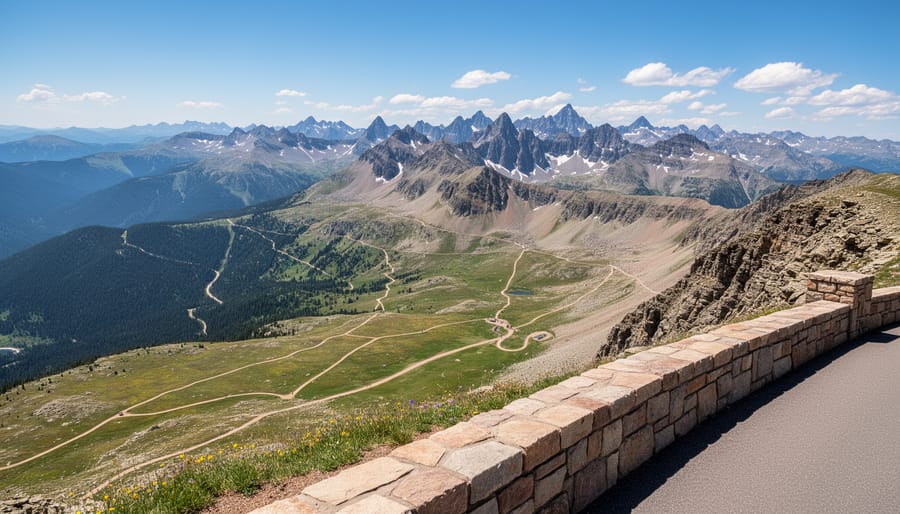
Rocky Mountain National Park sits less than 90 minutes northwest of Denver, claiming 415 square miles of Colorado’s Front Range with peaks topping 14,000 feet and ecosystems ranging from montane forests to alpine tundra. Trail Ridge Road, which climbs to 12,183 feet, is the highest continuous paved road in North America and typically opens late May through mid-October depending on snowpack. From this route you’ll spot elk herds, bighorn sheep, and possibly moose, especially during dawn and dusk hours when wildlife is most active near roadside meadows.
The Bear Lake Road corridor serves as the park’s most accessible hub, with trailheads leading to alpine lakes like Dream, Emerald, and Sky Pond. These routes stay busy on summer weekends, but you’ll find far fewer crowds if you start before 7 a.m. or arrive after 4 p.m. Longs Peak, Colorado’s northernmost fourteener at 14,259 feet, draws hundreds of climbers each summer weekend; the standard Keyhole Route requires predawn starts and covers 15 miles round-trip with nearly 5,000 feet of elevation gain.
Beyond the popular zones, Wild Basin on the park’s southeastern edge offers waterfall hikes and backcountry access with lighter traffic than Bear Lake. The park connects to broader Front Range trail systems, including routes extending south toward Pikes Peak and Colorado Springs that share similar granite terrain and montane environments. Rocky Mountain’s combination of dramatic peaks, accessible alpine lakes, and iconic national park landmarks like Trail Ridge Road makes it Colorado’s most-visited park unit, drawing nearly 4.5 million people annually who come for day hikes, photography, and the chance to experience true alpine wilderness within reach of the Front Range urban corridor.
2. Mesa Verde National Park
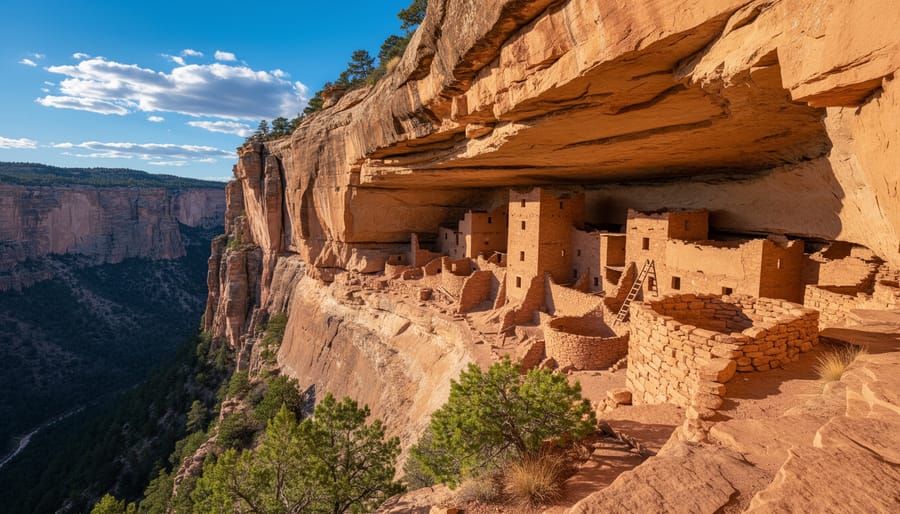
Mesa Verde stands apart from Colorado’s mountain parks by offering a window into human history rather than purely natural splendor. Tucked into the southwestern corner of the state near Cortez, this UNESCO World Heritage Site preserves the remarkable cliff dwellings built by Ancestral Puebloans between 600 and 1300 CE. The structures themselves, entire villages carved into alcoves beneath canyon rims, represent some of the best-preserved archaeological sites in North America.
Cliff Palace anchors the experience as the largest cliff dwelling on the continent, with 150 rooms and 23 kivas tucked into a massive alcove. Rangers lead tours that let you climb ladders and duck through doorways, connecting you directly to the lives of people who farmed these mesas centuries ago. The scale hits differently than photos suggest, standing beneath hand-laid stone walls that have weathered 700 winters makes the engineering achievement tangible.
Balcony House delivers the most adventurous tour, requiring a 32-foot ladder climb, crawling through a narrow tunnel, and scaling a 60-foot open cliff face with stone steps and handholds. It’s not for everyone, but the adrenaline adds intensity to the history lesson. For a mellower experience, Spruce Tree House remains accessible via a paved trail when tours aren’t running, letting you peer into rooms and imagine the daily rhythms of cliff-dwelling life.
The park sprawls across 52,000 acres of mesa and canyon country, with sites scattered throughout. Mesa Top Loop Road connects surface dwellings and overlooks where you can spot cliff structures across canyons. The landscape itself, pinyon-juniper woodland broken by sandstone cliffs, differs dramatically from Colorado’s alpine zones. Summer heat bakes the canyons, making spring and fall the sweet spots for visiting. Winter limits access but offers solitude for those willing to brave cold winds on the mesa top.
What sets Mesa Verde apart is its focus on cultural heritage. You’re not just hiking through wilderness, you’re walking through rooms where families cooked, stored grain, and held ceremonies. That human connection makes it essential for understanding Colorado’s deeper story beyond mountains and mining camps.
3. Great Sand Dunes National Park and Preserve
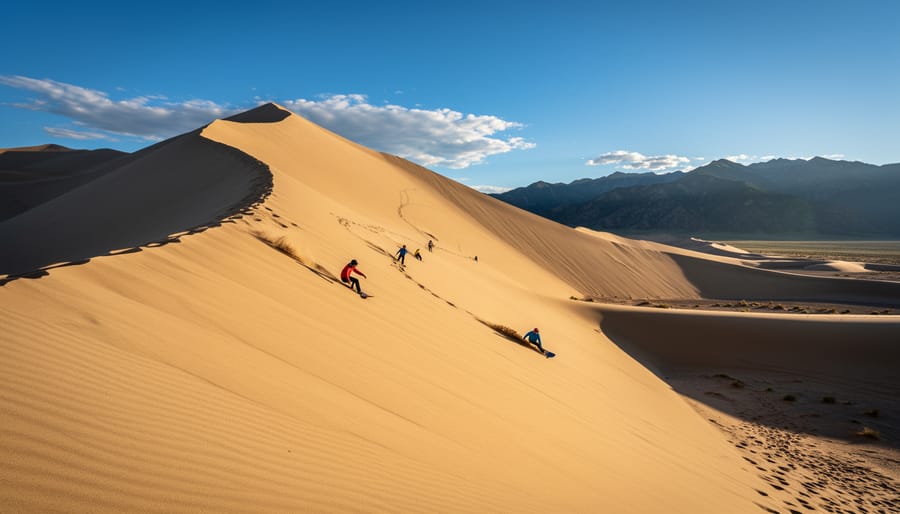
Rising from the San Luis Valley floor like a misplaced piece of the Sahara, Great Sand Dunes National Park and Preserve protects the tallest sand dunes in North America, some reaching 750 feet high. The contrast hits you immediately: massive golden dunes stacked against the snow-capped Sangre de Cristo Mountains, creating one of Colorado’s most photographed and genuinely surreal landscapes.
What makes this park unforgettable is that you can interact with it in ways most national parks don’t allow. Sandboarding and sand sledding are not just permitted but encouraged. Rent or bring a board and spend hours carving down the dunes. The sand absorbs your falls, making it surprisingly forgiving terrain for trying tricks you’d never attempt on snow.
Timing matters here more than almost anywhere else in Colorado. Visit late May through early July and you’ll catch Medano Creek at its seasonal peak, when snowmelt creates a shallow stream at the dune base. Kids wade and splash in water that’s typically ankle-deep and surprisingly warm by June, forming temporary beach conditions in the middle of the mountains. By late summer, the creek disappears entirely.
The hike to High Dune, the most commonly climbed peak, takes about two hours round trip but feels harder than the distance suggests. Sand swallows your footsteps, turning every step into a mini workout. Go early morning or late afternoon, midday summer sand temperatures regularly hit 140 degrees, hot enough to burn bare feet in seconds.
Beyond the main dune field, the preserve portion protects alpine lakes, forests, and grasslands extending into the Sangre de Cristos. Most visitors never venture past the sand, which means backcountry trails stay remarkably quiet. The park’s isolation in the San Luis Valley, three hours from Colorado Springs or Pueblo, keeps crowds manageable even in peak season.
4. Black Canyon of the Gunnison National Park
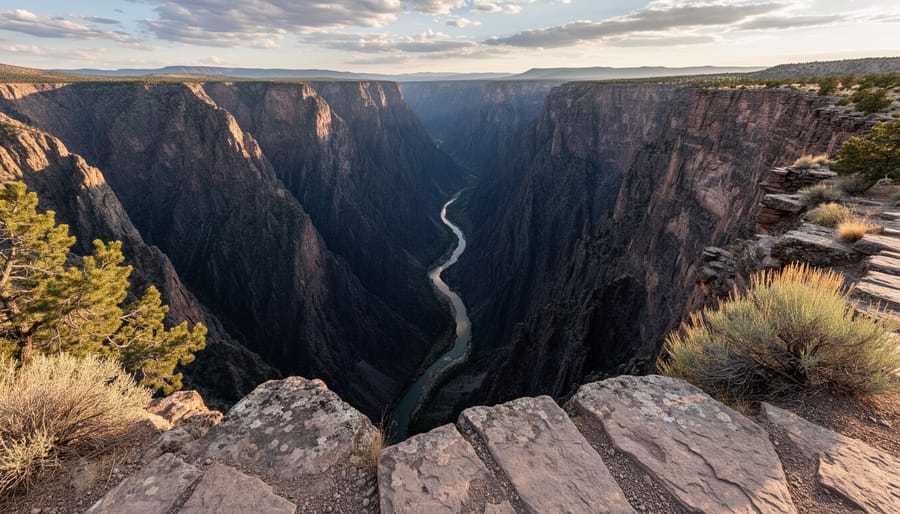
The Black Canyon of the Gunnison slices through western Colorado like a dark wound in the earth, with walls so steep and narrow that sunlight reaches the bottom for only minutes each day. This park protects twelve miles of the canyon’s most dramatic section, where 2,000-foot Precambrian rock faces drop nearly vertically to the Gunnison River below, a sight that still catches veteran Colorado hikers off guard.
Unlike Colorado’s busier parks, Black Canyon feels genuinely wild. The South Rim Road runs seven miles from the visitor center past a dozen overlooks, each revealing a different perspective on the canyon’s impossible geometry. Painted Wall View showcases Colorado’s tallest cliff at 2,250 feet, streaked with pink pegmatite that twists through the dark metamorphic rock. Chasm View sits at the narrowest point, where the canyon pinches to just 1,100 feet rim-to-rim with 1,800-foot walls, the sheer scale makes your stomach drop.
The North Rim sees maybe a tenth of South Rim visitors and requires a different approach. You’ll drive fifteen miles of gravel road from Crawford, but the payoff includes Exclamation Point, a jutting overlook where you’re standing on air above a thousand-foot drop. Most people visit May through October; winter closes North Rim entirely while South Rim stays open for those willing to navigate snow.
Serious scramblers tackle the inner canyon routes, not trails, but scrambles marked by cairns that drop steeply through cliffsides to the river. Warner Route is the “easiest” at eighty feet of chain-assisted descent per mile. These aren’t day-hike decisions. You’ll need a free wilderness permit from the ranger station and a realistic assessment of your comfort with exposure.
The light here shifts dramatically. Early morning gilds the east-facing walls while depths stay shadowed. Late afternoon reverses the effect, turning western cliffs gold against black eastern faces. Many Colorado photographers consider it the state’s most dramatic light show, and they’re not overselling it.
Connecting Trails and Recreation Areas
Colorado’s national parks are just one piece of the state’s incredible public lands puzzle. National recreation trails like Barr National Recreation Trail operate under a different designation but offer equally stunning wilderness experiences, often with easier access and fewer crowds than the marquee parks.
Barr Trail exemplifies this complementary relationship. Starting from Manitou Springs near Colorado Springs, this 13-mile route climbs to the summit of Pikes Peak through Pike National Forest land. It delivers the same alpine grandeur you’d find in Rocky Mountain National Park but sits within Forest Service boundaries rather than NPS jurisdiction. The trail connects to the Barr Camp midway point and intersects with routes throughout the Pikes Peak region, creating a network of high-country adventures.
Understanding these distinctions helps you plan smarter trips. National forests, BLM lands, and designated recreation trails often allow dispersed camping, permit dogs more freely, and charge no entrance fees, flexibility that national parks restrict to protect fragile resources. Near Great Sand Dunes, for instance, the surrounding Rio Grande National Forest offers backcountry camping and trail access that extends your adventure beyond park boundaries.
The beauty is that Colorado’s public lands work together. You might hike Barr Trail one day, explore Rocky Mountain’s alpine lakes the next, then camp in Roosevelt National Forest between the two. Each system has its purpose, and together they create endless opportunities for exploration across the state.
Planning Your Visit: Practical Information
Planning your visit to Colorado’s national parks requires some advance preparation, especially during peak summer months. All four parks charge entrance fees, currently $30 per vehicle for a seven-day pass at Rocky Mountain, Mesa Verde, and Black Canyon, while Great Sand Dunes charges $25. The America the Beautiful Annual Pass ($80) covers all of them and pays for itself after three visits, plus it works at hundreds of other federal sites across the country.
| Park Name | From Denver/Colorado Springs | Peak Season | Vehicle Fee |
|---|---|---|---|
| Rocky Mountain | 70 miles/115 miles | June, September | $30 |
| Great Sand Dunes | 230 miles/180 miles | May, September | $25 |
| Mesa Verde | 380 miles/330 miles | May, October | $30 |
| Black Canyon | 250 miles/200 miles | May, October | $30 |
Rocky Mountain National Park now requires timed-entry permits from late May through mid-October, booked through up to two months ahead. Mesa Verde’s cliff dwelling tours also need advance reservations during summer. Check each park’s website before your trip for current requirements.
Getting to the parks from Front Range cities is straightforward, though you’ll want to drive safely in Colorado mountain conditions. Rocky Mountain is easiest to reach year-round, while Mesa Verde and Black Canyon involve longer drives through remote areas. Great Sand Dunes sits about four hours south of Colorado Springs. Some travelers combine parks with scenic train routes for part of their journey.
Timing matters. The best months to visit depend on what you want, September offers cooler temps and golden aspens with smaller crowds, while June through August brings full access to high-elevation trails but requires navigating reservation systems and packed parking lots.
Local Tips from Colorado Adventurers
After years exploring Colorado’s parks, locals have refined their strategies for making the most of these incredible landscapes. Here’s the hard-won wisdom that separates a decent trip from an unforgettable one.
Start your park days ridiculously early, we’re talking trailheads by 5:30 a.m. in summer. You’ll beat the parking chaos at Rocky Mountain’s Bear Lake and catch wildlife when they’re actually moving around. Plus, that alpine sunrise hits different when you’ve got the trail to yourself.
- Spend at least one night in Denver or Colorado Springs before tackling high-elevation parks to reduce altitude sickness risk
- Pack layers for 40-degree temperature swings, even in July, mountain weather turns fast
- Visit Rocky Mountain mid-week in September after Labor Day for fall colors without the summer mobs
- Bring way more water than you think you need; the dry air at elevation dehydrates you faster than you realize
- Download offline maps before you go, cell service is nonexistent in most park areas
For a killer multi-park road trip, locals often combine Great Sand Dunes with Mesa Verde in a long weekend, since they’re only three hours apart in southern Colorado. Rocky Mountain and Black Canyon make another solid pairing if you’ve got four or five days, connected by scenic Highway 50.
When it comes to wildlife, give elk and bighorn sheep at least 75 feet of space, bears 100 yards minimum. Afternoon thunderstorms roll in almost daily June through August above treeline, so plan summit attempts for morning finishes. The folks who live here treat lightning with serious respect, if your hair stands up or you hear buzzing, you’re already in danger and need to descend immediately.
Frequently Asked Questions
Do I need reservations for Colorado’s national parks?
Rocky Mountain National Park requires timed entry reservations from late May through mid-October, while Mesa Verde requires tour reservations for cliff dwelling access. Great Sand Dunes and Black Canyon operate on first-come, first-served basis without advance reservations.
Which Colorado national park is best for families with young children?
Great Sand Dunes offers the most kid-friendly experience with easy beach-like sand play and seasonal Medano Creek wading. Rocky Mountain’s Bear Lake area provides short, paved trails suitable for strollers and young hikers.
Can I visit these parks in winter?
Rocky Mountain and Black Canyon remain open year-round, though Trail Ridge Road closes seasonally. Mesa Verde has limited winter access with most cliff dwellings closed, and Great Sand Dunes stays open but can be extremely cold with snow covering the dunes.
What’s the difference between national parks and national forests in Colorado?
National parks like Rocky Mountain have stricter regulations protecting ecosystems, require entrance fees, and prohibit activities like hunting and off-road vehicles. National forests allow more recreational uses including dispersed camping, mountain biking on most trails, and hunting in season.
Is the America the Beautiful Pass worth it for Colorado parks?
The $80 annual pass covers entrance fees at all four Colorado national parks plus dozens of other federal recreation sites across the state. If you plan to visit Rocky Mountain more than twice or combine multiple park visits, it pays for itself quickly.
Most Colorado parks welcome leashed pets on roads and developed areas, but trails and backcountry zones typically prohibit them to protect wildlife. Check specific park regulations before bringing your dog, as Mesa Verde’s archaeological sites have stricter pet restrictions than Rocky Mountain’s roadside pullouts.