
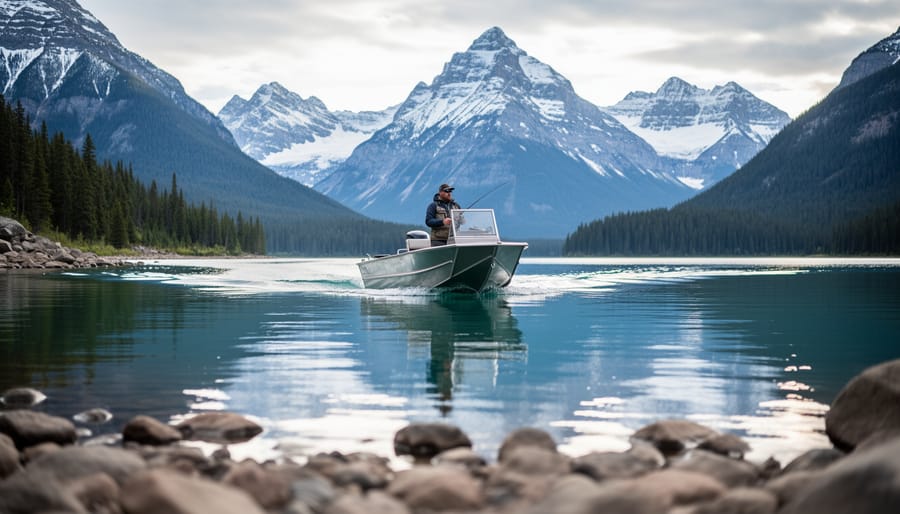
Colorado offers 27 major boating lakes spanning from high alpine reservoirs to sprawling prairie waters, giving you everything from wakeboarding on 3,000-acre playgrounds to quiet paddle excursions beneath 14,000-foot peaks. The best lakes for powerboating include Blue Mesa Reservoir, Horsetooth Reservoir, and Lake Granby, while wakeless gems like Turquoise Lake and Georgetown Lake deliver pristine paddling surrounded by scenic mountain views. Most lakes sit between 5,000 and 10,000 feet elevation, meaning you’ll need to adjust your engine’s carburetor and plan around a shorter May-through-September season when ice finally clears.
What makes Colorado boating different from other states? You’re launching at elevations where the air is thin and the scenery rivals anything in the Rockies. Weekend warriors pack the Front Range reservoirs from Denver and Fort Collins, while adventure seekers push farther west to find uncrowded coves and glass-smooth mornings. Whether you own a ski boat, pontoon, or kayak, you’ll find a launch ramp and a mountain vista waiting. This guide breaks down which lakes allow what kinds of boats, where to find the best facilities for your rig, and insider tips from locals who’ve spent decades exploring Colorado’s waterways.
Why Colorado’s Lakes Are Perfect for Boating Adventures
Colorado’s boating scene delivers something most states can’t match: pristine mountain-fed waters framed by peaks that soar above 14,000 feet. While coastal regions offer ocean access, Colorado’s high-altitude lakes provide crystal-clear visibility, smaller crowds at many locations, and scenery that transforms every outing into a visual feast.
The state’s geographic diversity creates distinct boating experiences. Summit County’s alpine reservoirs sit at elevations above 9,000 feet, where snowcapped peaks reflect in glassy morning waters perfect for sailing and fishing. Drop down to the Western Slope and you’ll find sprawling reservoirs like Blue Mesa, where open expanses invite powerboating and water skiing. The Front Range corridor offers convenient urban reservoirs where Denver and Fort Collins residents launch after work for quick evening sessions.
Water quality stands out as a major draw. Fed primarily by snowmelt rather than warm-weather runoff, Colorado lakes maintain cooler temperatures and exceptional clarity. You’ll spot fish swimming 15 feet below your hull at many locations, a sharp contrast to the murky waters common in Midwest and Southern states.
Activity options span the full spectrum. Adrenaline seekers flock to wake-allowed reservoirs for wakeboarding and tubing, while sailing enthusiasts appreciate consistent mountain breezes. Anglers pursue trophy trout and salmon, families seek protected coves for swimming, and photographers chase sunrise reflections. Whether you’re trailering a bass boat from out of state or renting a pontoon for your first time on the water, Colorado’s 2,000-plus lakes and reservoirs include options matched to your skill level and interests.
Top Colorado Boating Lakes
1. Lake Dillon
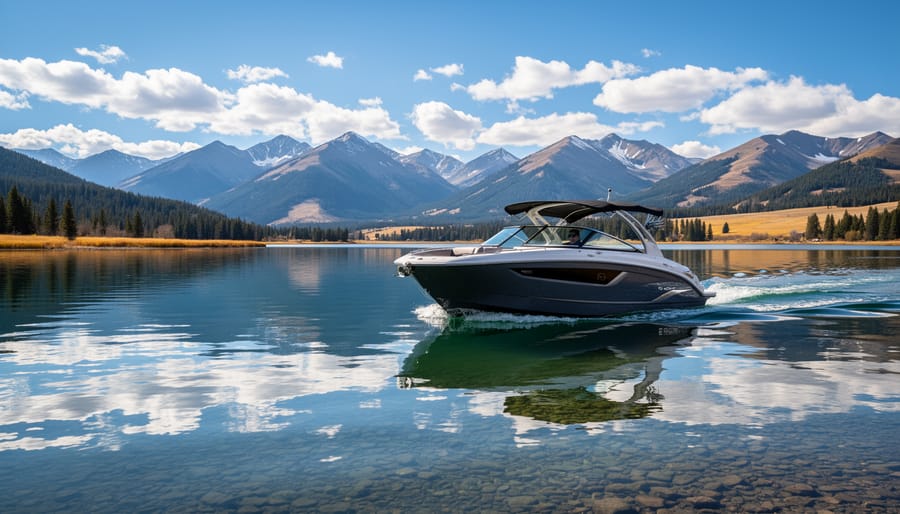
Lake Dillon sits at 9,017 feet elevation in Summit County, offering boaters a stunning mountain-rimmed experience just off Interstate 70. This 3,233-acre reservoir serves as Denver’s water supply, which means strict wakeless boating regulations, no waterskiing, wakeboarding, or high-speed activities allowed. Instead, you’ll find sailors, kayakers, paddleboarders, and anglers gliding across calm waters with the Continental Divide as your backdrop.
The Dillon Marina, located on the reservoir’s northwest shore, provides full-service amenities including boat rentals (sailboats, kayaks, and pontoons), launch facilities, and slip rentals for seasonal visitors. The marina’s sailing school operates throughout summer, making this an ideal spot for beginners wanting to learn in protected waters. Experienced sailors appreciate the consistent afternoon breezes that funnel through the valley, creating excellent sailing conditions without the crowds you’d encounter at lower-elevation lakes.
Fishing ranks as the other primary draw. Lake Dillon holds healthy populations of rainbow and brown trout, with kokanee salmon runs attracting serious anglers each fall. Multiple boat ramps circle the reservoir, the Frisco Bay Marina on the south end and the Peak One ramp near Frisco provide additional launch points beyond the main marina.
The lake’s accessibility makes it perfect for day trips from Denver (75 minutes) or as part of a Summit County weekend exploring Breckenridge and Keystone. Expect chilly water temperatures even in summer and afternoon thunderstorms that develop quickly at this altitude.
2. Grand Lake
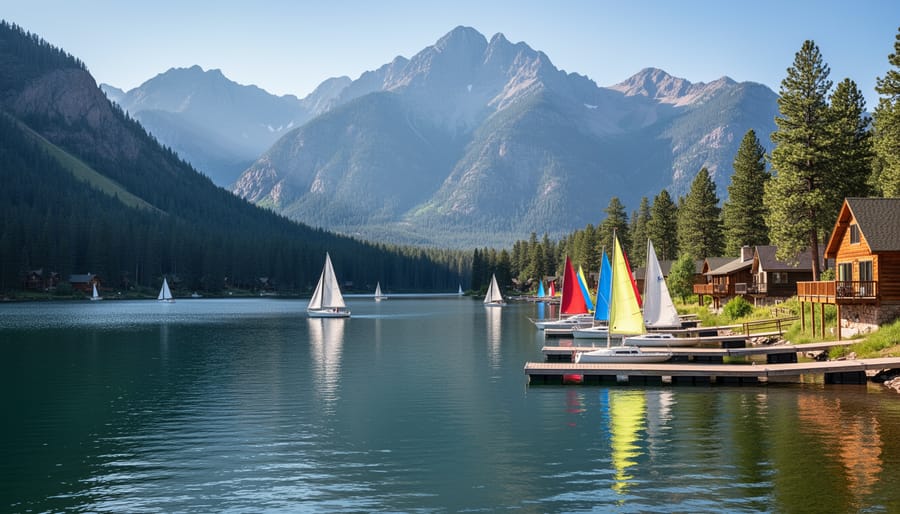
Grand Lake claims the title of Colorado’s largest natural lake, stretching over 500 acres at an elevation of 8,369 feet. Unlike many of Colorado’s reservoirs, this pristine alpine lake formed naturally, giving it a distinct character that draws boaters seeking an authentic mountain experience. Its location at the western entrance to Rocky Mountain National Park means you can anchor your boat with views of snow-capped peaks that rival any postcard.
The full-service Grand Lake Marina offers everything from kayak rentals to pontoon boats and fishing boats, making it easy to get on the water without trailering your own craft. Power boats, sailboats, jet skis, and paddleboards are all welcome here, one of the few Colorado lakes without wakeless restrictions in the main body. Wake sports enthusiasts appreciate the freedom, though many boaters stick to the western and southern portions to avoid heavy traffic near the marina.
The historic lakeside town adds serious appeal beyond the water. After a day of boating, you can walk to restaurants, ice cream shops, and shops housed in buildings dating back to the early 1900s. The combination of excellent boating access, diverse watercraft options, and that charming mountain town atmosphere makes Grand Lake feel like a proper vacation destination rather than just a day trip. Weekend summer crowds reflect its popularity, but weekday visits or early morning launches offer quieter conditions.
3. Blue Mesa Reservoir
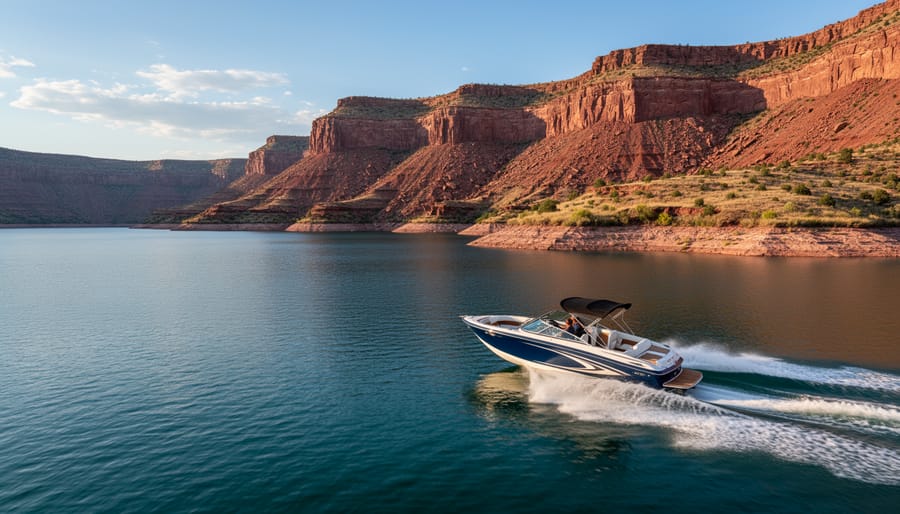
Blue Mesa Reservoir sprawls across 20 miles of western Colorado’s high country, making it the state’s largest body of water with over 96 miles of shoreline. Located within Curecanti National Recreation Area near Gunnison, this massive reservoir sits at 7,519 feet elevation and offers some of the most liberating boating conditions you’ll find in Colorado, no speed restrictions and plenty of open water for powerboating enthusiasts.
The reservoir’s sheer size means you can spend entire days exploring different arms and coves without feeling crowded, even during peak summer weekends. Sailors particularly appreciate the consistent afternoon winds that funnel through the canyon, while powerboaters enjoy the freedom to open up their throttles across the main basin. Three boat ramps provide access: Elk Creek Marina (the main hub with fuel, supplies, and rentals), Lake Fork, and Iola Basin.
What sets Blue Mesa apart is the dramatic canyon landscape surrounding the water. Steep hillsides of sagebrush and juniper rise from the shoreline, creating a stark beauty that’s distinctly different from the pine-forested lakes of the high country. The reservoir is also renowned for kokanee salmon fishing, drawing anglers who troll the deep waters.
Pack layers, even summer mornings start cool at this elevation, and afternoon thunderstorms can build quickly over the West Elk Mountains. The remoteness means planning ahead for fuel and supplies, but that same distance from major population centers keeps Blue Mesa feeling like a genuine escape.
4. Horsetooth Reservoir
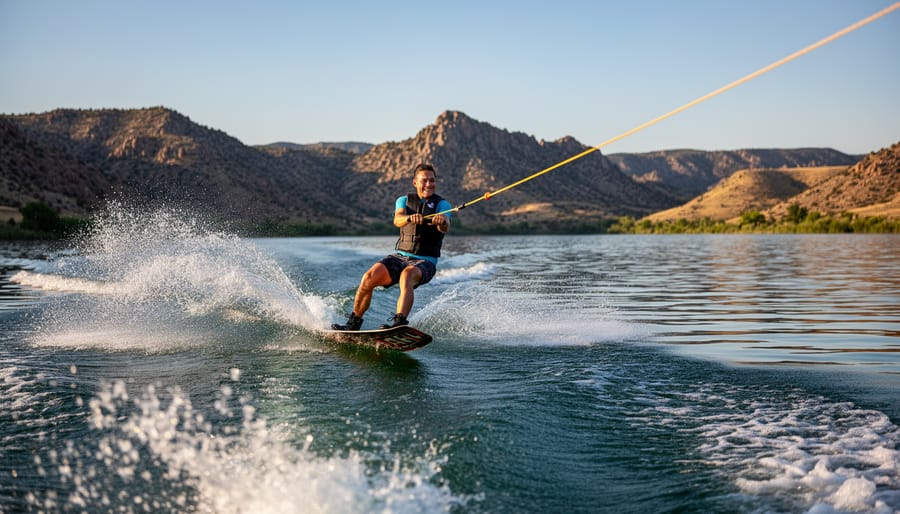
Horsetooth Reservoir sits just west of Fort Collins, making it one of the most accessible boating destinations for Front Range residents. The reservoir stretches roughly six and a half miles along the foothills, with distinctive sandstone rock formations providing a dramatic backdrop that gives the lake its name.
What makes Horsetooth particularly appealing to boaters is its wake-friendly status. Unlike many mountain reservoirs, this one allows wakeboarding, water skiing, and tubing, which draws crowds of watersports enthusiasts throughout summer. You’ll find three public boat ramps, Inlet Bay, South Bay, and Satanka Bay, each offering concrete launches and ample parking, though weekends fill up quickly during peak season.
The reservoir’s shape creates interesting boating conditions. The narrow channel means you’re never far from shore, and the variable wind patterns can shift from calm mornings to choppy afternoons as thermal winds pick up. Experienced boaters often hit the water early for glassy conditions, then enjoy the afternoon breeze for sailing.
Beyond watersports, Horsetooth offers excellent fishing for walleye, smallmouth bass, and rainbow trout. The rock formations along the western shore provide scenic exploration spots, and several coves work well for anchoring and swimming when you want a break from cruising.
Larimer County manages Horsetooth as part of a larger parks system, so you’ll need a daily or annual pass in addition to your state boating permit. The proximity to Fort Collins means full services are minutes away, making it practical for spontaneous half-day trips.
5. Chatfield Reservoir
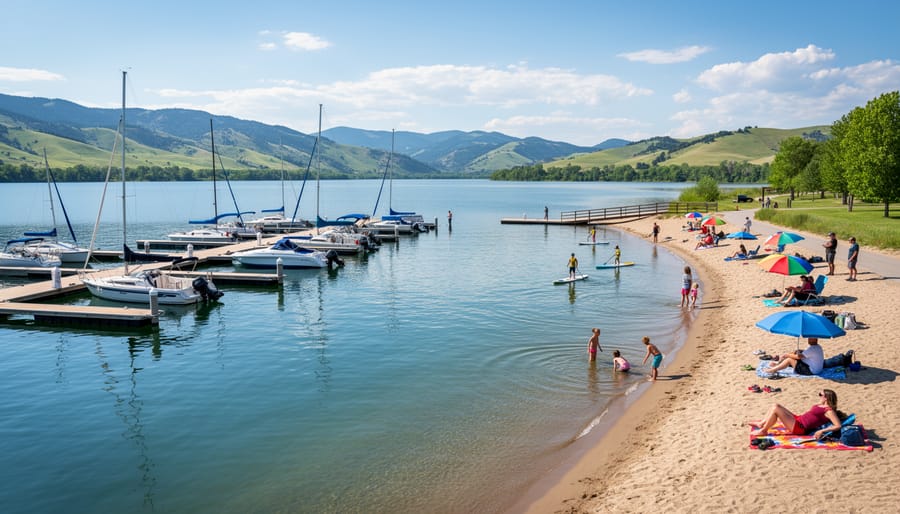
Chatfield Reservoir sits just 20 minutes south of downtown Denver, making it the go-to choice for Front Range boaters who want a quick water escape without the mountain drive. Located within Chatfield State Park, this 1,450-acre reservoir offers something rare among Colorado’s boating destinations: genuine convenience paired with solid facilities and diverse water activities.
The reservoir welcomes all types of watercraft, from kayaks and paddleboards to powerboats and sailboats. Multiple boat ramps provide easy access, though summer weekends can get crowded, arriving before 10 a.m. dramatically improves your parking and launch experience. The full-service marina rents boats and offers slips for seasonal users, plus a swim beach that families appreciate for combining boating with shore activities.
Water levels fluctuate more noticeably here than at higher-elevation lakes, particularly in late summer when irrigation demands peak. Still, the reservoir typically maintains adequate depth for boating through September. The relatively flat terrain means less dramatic scenery than mountain reservoirs, but the trade-off is warmer water temperatures and protection from high-altitude winds that can suddenly whip across alpine lakes.
Chatfield works best as a morning or evening destination when temperatures moderate and boat traffic thins. The park charges a daily vehicle pass unless you have a Colorado State Parks annual pass, which pays for itself after just three visits if you’re a regular Front Range boater.
6. Lake Granby
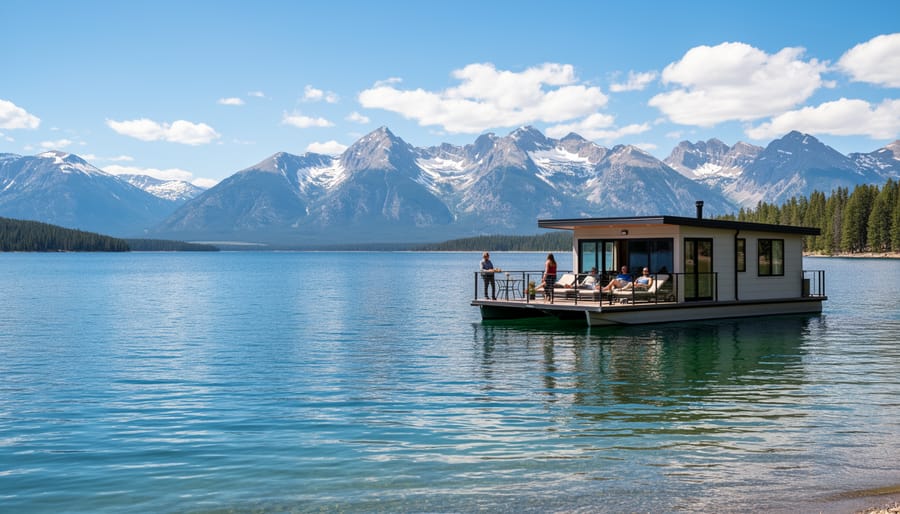
Lake Granby sprawls across 7,256 acres in Grand County, making it Colorado’s second-largest reservoir and a surprisingly peaceful escape despite sitting just minutes from the busier Grand Lake. The reservoir serves as part of the Colorado-Big Thompson Project, but what matters to boaters is its expansive open water, protected coves, and the Never Summer Mountains rising dramatically to the west.
This lake shines for multi-day adventures. Three marinas, Beacon Landing, Stillwater, and Trail Ridge, offer houseboat rentals ranging from 46 to 59 feet, letting groups spend several days exploring the reservoir’s 40 miles of shoreline without ever touching land. You’ll find secluded anchorages that feel genuinely remote, particularly along the northern arms where fingers of water push into forested valleys.
The size works in your favor here. While Grand Lake can feel crowded on summer weekends, Granby absorbs boats across its massive surface. Powerboats, sailboats, and pontoons all find room to spread out. Water skiers claim the southern basin’s open stretches, while anglers work the shallow bays for lake trout and salmon.
Launch at Arapaho Bay on the eastern shore for quickest access, or use Sunset Point on the west side to reach the quieter northern sections. The elevation sits at 8,280 feet, so expect cooler water temperatures than lower-elevation reservoirs, mid-60s Fahrenheit at peak summer, and afternoon winds that sailors appreciate but can catch inexperienced boaters off guard.
7. Navajo Reservoir
Straddling the Colorado-New Mexico border in the high desert of southern Colorado, Navajo Reservoir offers a dramatically different boating experience from the state’s mountain lakes. The reservoir’s lower elevation, around 6,100 feet, means noticeably warmer water temperatures throughout the summer, often reaching the mid-70s by July. This makes it one of the few Colorado lakes where you can comfortably swim and enjoy water sports without a wetsuit well into September.
The warmer, calmer waters have made Navajo a favorite among wakeboarders and water skiers. The reservoir’s long, protected arms provide excellent conditions for towing sports, with less chop than you’ll encounter on windier Front Range reservoirs. On summer weekends, you’ll find groups camped along the shoreline, setting up multi-day wakeboarding sessions from houseboats.
What really sets Navajo apart is its scenery. Instead of pine forests and granite peaks, you’re surrounded by red and tan sandstone cliffs rising directly from the water’s edge. The landscape feels more like Lake Powell than typical Colorado, dramatic canyon walls, hidden coves, and a remote atmosphere that makes it easy to find solitude even during peak season.
The trade-off for this unique setting is distance. Navajo sits about 350 miles from Denver, making it primarily a weekend or longer destination rather than a day trip. But if you’re looking for warm water, great wake conditions, and stunning desert canyon scenery, the drive rewards you with something special.
8. Cherry Creek Reservoir
Cherry Creek Reservoir stands out as Denver’s backyard boating playground, tucked into suburban Aurora just 11 miles from downtown. This 880-acre reservoir draws massive weekend crowds, you’ll share the water with dozens of other boats, but that accessibility makes it invaluable for Front Range residents craving a quick escape without a mountain drive.
The full-service Cherry Creek Marina offers everything from boat rentals and slip leases to fuel and a ship’s store, letting you show up empty-handed if needed. Powerboats, sailboats, jet skis, kayaks, and paddleboards all share the reservoir, though weekday mornings provide calmer conditions than Saturday afternoons when the lake resembles a parking lot.
What surprises many first-timers is the active sailboat racing scene. The Denver Yacht Club hosts regular regattas, and you’ll often spot colorful spinnakers flying across the water on summer evenings. The reservoir’s consistent afternoon winds, typically 10-15 mph from the west, create ideal sailing conditions.
Launch at the main boat ramp on the reservoir’s west side, where four lanes handle the steady traffic. Arrive before 9 a.m. on summer weekends to avoid an hour-long wait. The swim beach on the east shore attracts families, so respect the marked no-wake zones. Water levels fluctuate significantly, dropping 20-30 feet by late summer in dry years, which can expose rocky hazards near the shoreline. Pay attention to the buoys marking safe channels as the season progresses.
Practical Boating Information for Colorado Lakes
Before you launch your boat, understanding Colorado’s permit system and practical requirements will save you headaches at the ramp. Most state parks and reservoirs require a daily parks pass ($10) or an annual pass ($80), which covers vehicle entry but doesn’t always include boat-specific fees. Many popular lakes charge additional launching fees ranging from $5 to $10 per day, payable at the ramp or entrance station.
You’ll need a Colorado boating license if you were born on or after January 1, 1982, regardless of the type or size of motorized vessel you’re operating. Registration is another must: all motorized boats and sailboats over 12 feet require Colorado registration, displaying the numbers on both sides of the bow. If your boat is registered out-of-state and you’re visiting for less than 60 days, your home registration is valid.
| Lake | Boat Restrictions | Permit Requirements | Season | Best For |
|---|---|---|---|---|
| Lake Dillon | Wakeless only | State Parks Pass | May, Oct | Sailing, fishing |
| Blue Mesa | All watercraft | NPS fee or pass | Year-round (ice permitting) | Powerboating, sailing |
| Horsetooth | All watercraft | State Parks Pass + launch fee | May, Oct | Wakeboarding, skiing |
| Navajo | All watercraft | State Parks Pass | May, Nov | Wakeboarding, houseboating |
Invasive species inspections are mandatory statewide. Every boat entering Colorado waters must display a valid inspection sticker or receive a free inspection at designated stations before launching. This protects Colorado’s lakes from zebra and quagga mussels. Stations operate seasonally at major lakes and state borders, with some locations requiring appointments during peak summer weekends.
Altitude affects boat performance significantly. At elevations between 5,000 and 10,000 feet, engines lose roughly 3% power per 1,000 feet. You’ll notice slower acceleration and reduced top speeds compared to sea level operation. Carbureted motors may need jet adjustments, while fuel-injected engines typically compensate automatically.
Colorado Boating Regulations and Safety
Before launching on any Colorado lake, you need to know several state-specific regulations that differ from other states. Colorado Parks and Wildlife enforces these rules to protect both boaters and the state’s pristine waters.
All motorized boats and sailboats over 16 feet must display current Colorado registration or valid out-of-state registration. You can operate with your home state’s credentials, but if you’re in Colorado for more than 60 consecutive days, you’ll need to register here. Registration fees fund lake maintenance and safety programs across the state.
The most critical requirement is the mandatory aquatic nuisance species inspection. Colorado takes invasive species seriously, zebra and quagga mussels can devastate ecosystems and cost millions in damage. Every boat entering Colorado waters must pass an ANS inspection before launch, even if you just inspected it yesterday at another lake. Inspection stations operate at major lakes and along highways entering the state. Arriving with a boat that hasn’t been decontaminated carries serious fines.
- Life jackets required for all passengers under 13 years old; one USCG-approved device per person must be onboard
- Boating under the influence illegal with BAC of 0.08% or higher, same as driving
- Operators born after January 1, 1987 must complete a state-approved boating safety course
- Fire extinguisher required for boats with enclosed engine compartments or fuel tanks
- Navigation lights mandatory for operation between sunset and sunrise
High altitude affects your boat’s performance more than most people expect. Engines lose about three percent of their power for every 1,000 feet above sea level. At 7,500 feet, your motor produces roughly 20 percent less power than at sea level, which means slower acceleration and reduced top speed. Carbureted engines may need adjustment, while fuel-injected models typically compensate automatically. Your boat will also sit slightly higher in the water due to lower air density, which can affect handling. Factor this into your trip planning, especially when towing skiers or wakeboarders.
When to Go: Seasonal Considerations
Colorado’s prime boating season runs from late May through September, when most lakes reach comfortable water temperatures and marinas operate at full capacity. June through August deliver the warmest weather and longest days, though expect afternoon thunderstorms, particularly in July and August, that can develop quickly in the mountains. Plan morning outings to avoid these predictable weather patterns.
Spring runoff significantly impacts water levels and clarity from April into early June. Snowmelt swells reservoirs but creates murky conditions and cooler temperatures that limit comfort for water sports. By mid-June, most lakes clear up and warm enough for swimming and wakeboarding.
Altitude profoundly affects lake temperatures. Even in summer, high-elevation lakes like Dillon rarely exceed 65°F, while lower reservoirs such as Navajo can reach the mid-70s. Early fall, September into October, offers gorgeous conditions with fewer crowds, calmer waters, and stunning aspen foliage, though services start scaling back after Labor Day.
For planning your Colorado adventure beyond boating season, check our month-by-month guide to mountain events. Some die-hard boaters launch in April or late October, but expect limited facilities, colder conditions, and potential access restrictions at higher elevations.
Local Tips from Colorado Boaters
Seasoned Colorado boaters know that altitude affects everything, your boat’s engine will lose about 3% of its power for every 1,000 feet of elevation, so don’t expect the same performance you’d get at sea level. Many veterans recommend re-jetting carbureted engines or adjusting fuel injection systems for consistent operation above 5,000 feet. You’ll also burn through fuel faster than expected, so always carry extra.
The invasive species inspection process isn’t just bureaucratic hassle, Colorado takes aquatic nuisance species seriously after seeing devastation in neighboring states. Locals suggest cleaning your boat thoroughly between lake visits even within Colorado, and if you’re coming from out of state, schedule your mandatory inspection appointment online before you arrive rather than showing up and hoping for availability.
Don’t underestimate how quickly weather changes in the mountains. That calm morning can turn into whitecaps and dangerous conditions within an hour. Experienced boaters watch the western horizon constantly and head for shore when they see dark clouds building, even if it means cutting the day short. Lightning at altitude is no joke.
For first-timers, the Front Range reservoirs like Chatfield and Cherry Creek offer the gentlest learning curve with consistent conditions, multiple access points if you need to bail out, and nearby services. Save the high-country destinations like Dillon and Grand Lake for when you’re comfortable with mountain boating’s unique challenges.
Finally, respect wakeless zones religiously. These aren’t suggestions, they protect fragile shorelines and wildlife habitat that Colorado’s boating community values deeply.
Frequently Asked Questions
Can out-of-state visitors boat on Colorado lakes?
Yes, out-of-state boaters are welcome on Colorado lakes. You’ll need to register your boat in Colorado if you plan extended stays, or obtain a temporary use permit for shorter visits. All boats entering Colorado must pass an invasive species inspection before launching.
Do I really need an invasive species inspection every time?
Absolutely. Colorado requires all motorized and non-motorized watercraft to undergo inspection before launching at any lake. The inspections prevent zebra and quagga mussels from infesting Colorado waters, and failing to comply carries significant fines.
How does altitude affect my boat’s performance?
Higher elevation means thinner air, which reduces engine power by roughly 3% per 1,000 feet of elevation. You’ll notice decreased acceleration and top speed, so plan accordingly when choosing boat size and expect longer takeoff distances at lakes above 5,000 feet.
Which lakes are best for beginners?
Chatfield and Cherry Creek Reservoirs offer calm conditions, full-service marinas with rentals, and easy access for first-timers. Lake Dillon is excellent for learning in a wakeless environment, while Horsetooth provides good facilities with slightly more challenging conditions.
Where can I rent a boat if I don’t own one?
Most major lakes have marina rentals including Grand Lake, Blue Mesa, Horsetooth, Chatfield, and Cherry Creek. Rental options range from pontoon boats and fishing boats to kayaks and stand-up paddleboards, with advance reservations recommended during summer weekends.
Can I camp near the lake with my boat?
Many Colorado boating lakes offer campgrounds within their state parks or recreation areas, including Chatfield, Blue Mesa, Horsetooth, and Navajo Reservoir. Some locations provide boat-in camping for a true wilderness experience, though spots fill quickly during peak season.
These questions cover the essentials most visitors wonder about before their first Colorado boating trip. The invasive species inspection requirement surprises many newcomers, but it’s taken seriously statewide. Rangers and marina staff are generally helpful in explaining the process, and most inspection stations operate efficiently during busy periods. Planning ahead for altitude effects and securing boat rentals early will save frustration, especially if you’re visiting during July or August when demand peaks across all the popular lakes.