
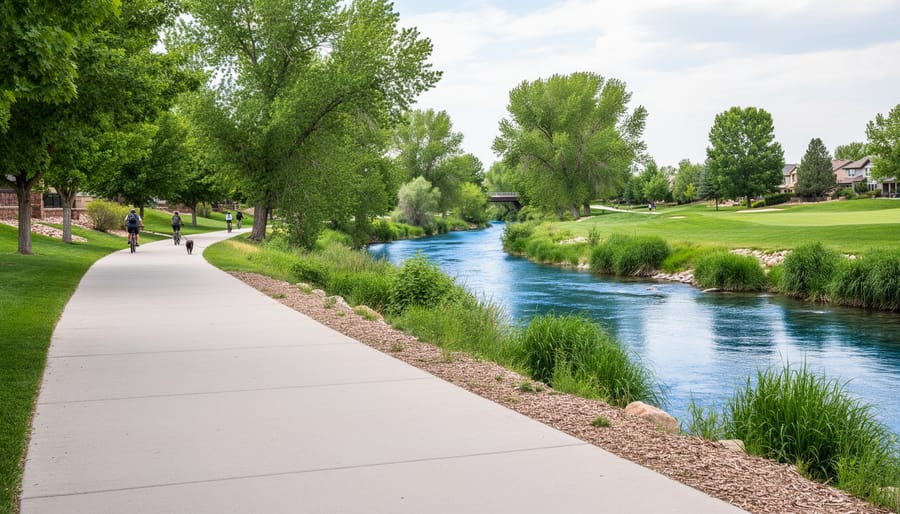
Trail #78 along the Big Dry Creek corridor runs 2.3 miles through Westminster, Colorado, connecting Lowell Boulevard to Federal Boulevard with a smooth, paved surface perfect for cycling, running, and walking. This segment stands out for its wide concrete path, minimal street crossings, and year-round accessibility, making it one of the most practical choices in the metro area’s extensive trail network.
What you’ll find here is different from the mountain trails featured in our Colorado trail guide. This is an urban greenway that delivers consistent quality without the drive time. The path follows Big Dry Creek’s tree-lined banks, passing through neighborhood parks and open space that locals have relied on for decades. You won’t get mountain views, but you will get a reliable training route or commute option that’s maintained year-round.
The Westminster Parks department keeps the surface in excellent condition, and the trail connects seamlessly to other Big Dry Creek segments for extended rides. Whether you’re logging training miles, introducing kids to cycling, or simply need a dependable place to clear your head after work, Trail #78 delivers exactly what metro-area users need most: easy access and zero drama.
Why Visit Dry Creek Trail #78
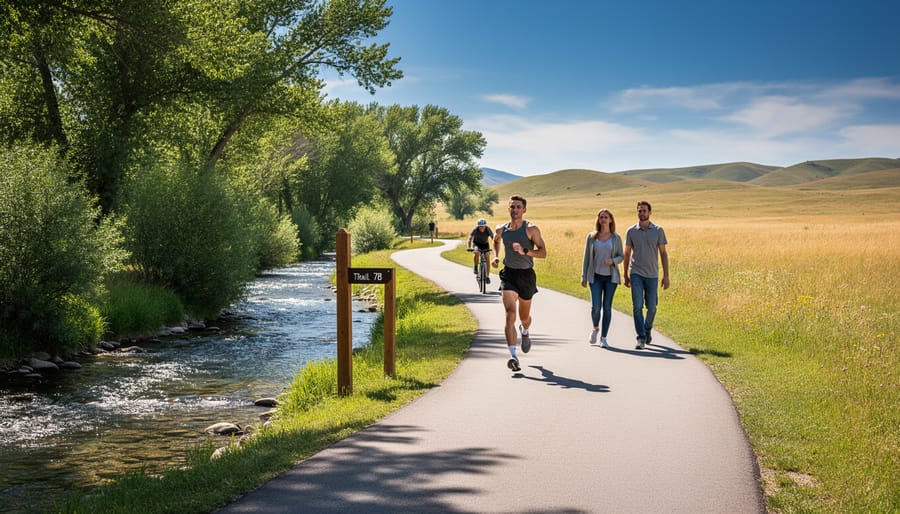
Trail #78 stands out among Denver metro area paths because it delivers genuine nature immersion without requiring a mountain drive. This paved segment accommodates everyone, from parents pushing strollers to experienced cyclists training for events, thanks to its gentle grades and smooth surface that never exceeds a 5% slope.
What makes this section special is how it bridges urban convenience with authentic riparian habitat. You’re never more than twenty minutes from major Westminster neighborhoods, yet cottonwood groves along the creek corridor host migrating songbirds each spring and fall. Red-winged blackbirds nest in the cattails, while great blue herons fish the shallows most mornings before 9 AM.
The connectivity factor proves invaluable for locals. Trail #78 links directly to Westminster City Park and Big Dry Creek Park, letting you combine a nature walk with playground time, picnics, or community events. Commuters use it year-round to reach schools and shopping areas without fighting traffic.
Unlike some Big Dry Creek segments that hug roads or cut through industrial zones, this stretch preserves a genuine greenway feel. The southern prairie sections offer unobstructed Front Range views, Longs Peak stands out clearly on crisp days, while northern wooded areas provide summer shade and wind protection.
Colorado’s 300 days of sunshine mean you can realistically visit any month. Winter ice melts faster here than on mountain trails, and the low elevation stays comfortable when high country routes demand snowshoes.
Top Highlights Along Trail #78
1. Trailhead Access at Big Dry Creek Park
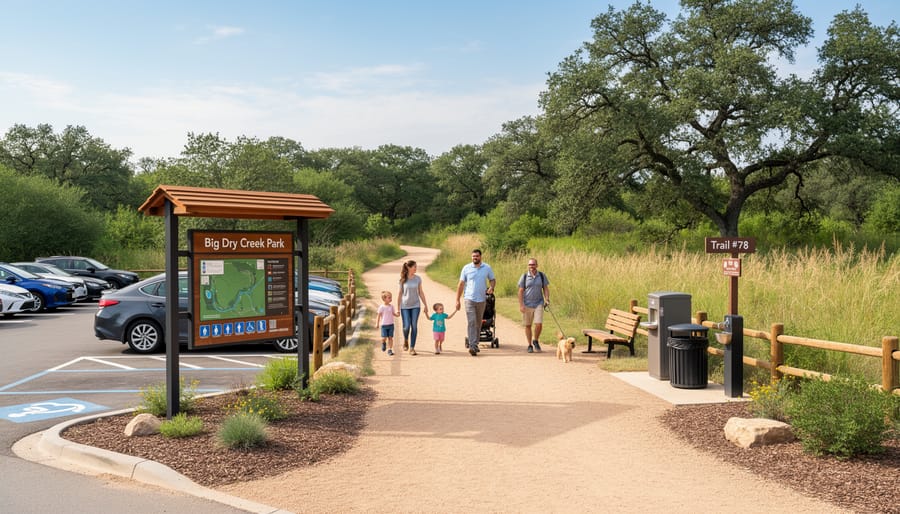
The northern trailhead at Big Dry Creek Park serves as the most family-friendly entry point to Trail #78, and it’s easy to see why it’s the top choice for first-time visitors. You’ll find a dedicated parking lot with about 30 spaces right off 112th Avenue, rarely full except on perfect Saturday mornings in May or September.
What sets this trailhead apart is the complete package of amenities clustered within a few steps of the trail itself. Clean restrooms with accessible facilities stay open year-round during daylight hours. Parents appreciate the modern playground equipment that gives kids a chance to burn energy before or after the walk. Several covered picnic tables with grills make this spot ideal for combining a trail outing with a casual lunch.
The paved trail surface begins immediately from the parking area, with clear signage marking distances and directions. There’s minimal elevation change in the first quarter-mile, making it particularly welcoming for strollers, wheelchairs, and anyone testing their trail legs. A drinking fountain near the playground provides water fill-ups before heading out.
This trailhead’s gentle introduction to the system, combined with facilities that support extended stays, explains why you’ll often see multigenerational groups starting here.
2. Riparian Habitat Viewing Areas
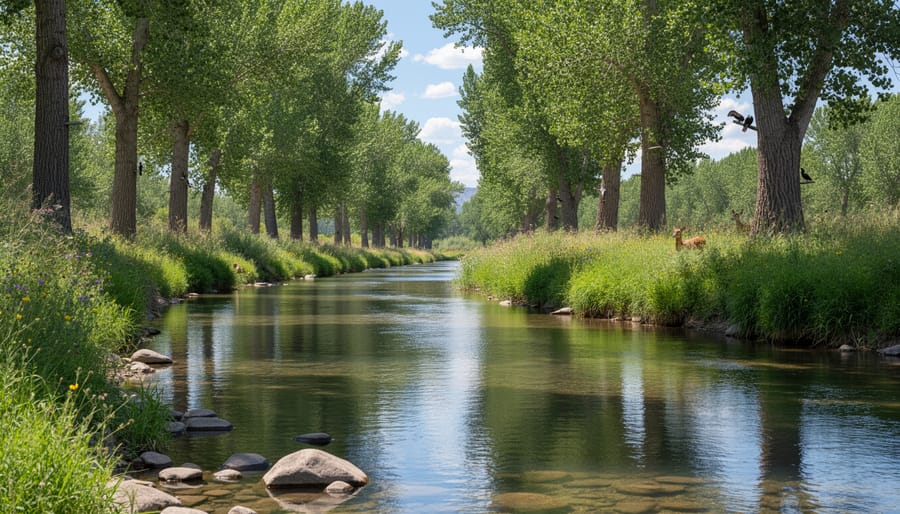
The trail’s riparian zones offer some of the best nature watching along this urban greenway. Mature cottonwoods create shaded canopies above the creek corridor, where native willows and shrubs provide cover for wildlife year-round.
Birdwatchers regularly spot red-winged blackbirds, great blue herons, and various songbirds throughout the warmer months. Spring and fall migrations bring even greater diversity, with warblers and flycatchers passing through the corridor. Early mornings deliver the most activity, when rabbits forage along the trail edges and white-tailed deer occasionally emerge from the thickets to drink.
The best viewing happens before 9 AM or during the golden hour before sunset, when animals are most active and the angled light creates ideal photography conditions. Bring binoculars and move slowly through these sections, wildlife spooks easily with sudden movements or loud conversation.
Late spring through early summer showcases the cottonwoods in full leaf, their rustling canopy creating dappled shade that makes these stretches particularly inviting during hot afternoons. The contrast between sun-drenched prairie segments and these cooler, greener pockets gives the trail surprising ecological variety for an urban setting.
3. Westminster City Park Connection
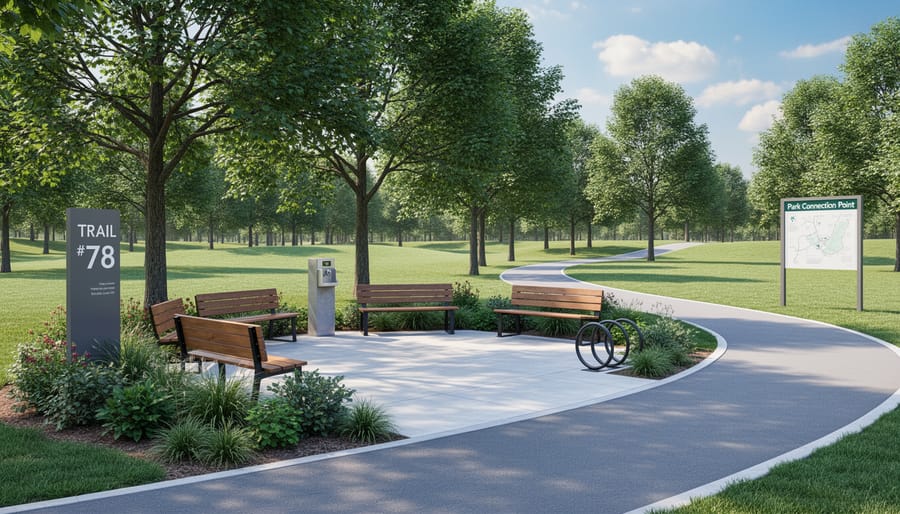
Westminster City Park marks a strategic midpoint along Trail #78 where you’ll find a welcome cluster of amenities that make it the trail’s most popular rest stop. The park connection sits roughly 1.8 miles from the northern trailhead, perfectly positioned for casual walkers looking for a turnaround point or through-hikers needing a break before continuing south.
You’ll spot the connection by the distinctive shade structures, crucial during summer months when the open prairie sections offer little relief from the sun. Water fountains here stay operational from April through October, and the park’s restroom facilities beat the portable toilets found at other access points. Picnic tables scattered under mature cottonwoods provide actual seating, not just a patch of grass.
What makes this spot particularly valuable is its gateway function. From Westminster City Park, you can branch off onto the Lower Church Lake Trail system or connect to neighborhood paths that lead to local coffee shops and restaurants within a half-mile walk. Regular users treat this junction as a base camp, park here and you’ve got trail options in three directions, plus the park’s own amenities as backup.
4. Open Prairie Vistas
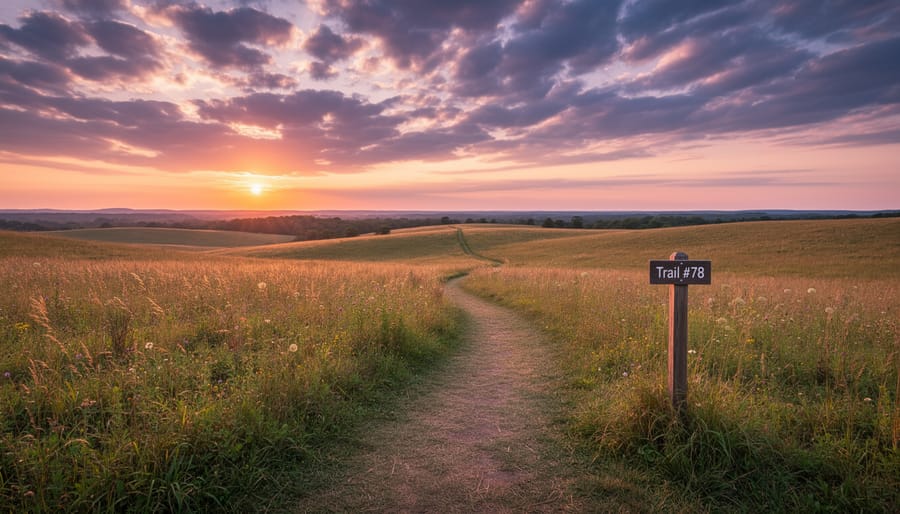
The southern stretches of Trail #78 open into Colorado’s signature prairie landscape, where tallgrass meadows meet unobstructed Front Range views. Unlike the shaded riparian zones farther north, these segments offer expansive sky and horizon, a stark, beautiful contrast that shifts the trail’s entire character. On clear days, you’ll trace the mountain silhouette from Longs Peak south to Pikes Peak, with prairie grasses rippling in the foreground.
Spring transforms these open sections into wildflower showcases. Late April through June brings waves of pasqueflowers, prairie coneflowers, and wild lupine depending on moisture levels. The color display peaks mid-May most years, creating genuinely photo-worthy stops along what’s otherwise a humble urban trail.
Sunset visits here are unmatched. The western exposure and lack of tree cover mean you’ll catch the full alpenglow sequence as light washes across the peaks. Photographers favor the hour before sunset when sidelight brings out texture in both the grasses and distant snowfields. Bring layers, wind picks up as temperatures drop, especially during shoulder seasons.
5. Fitness Stations and Exercise Zones
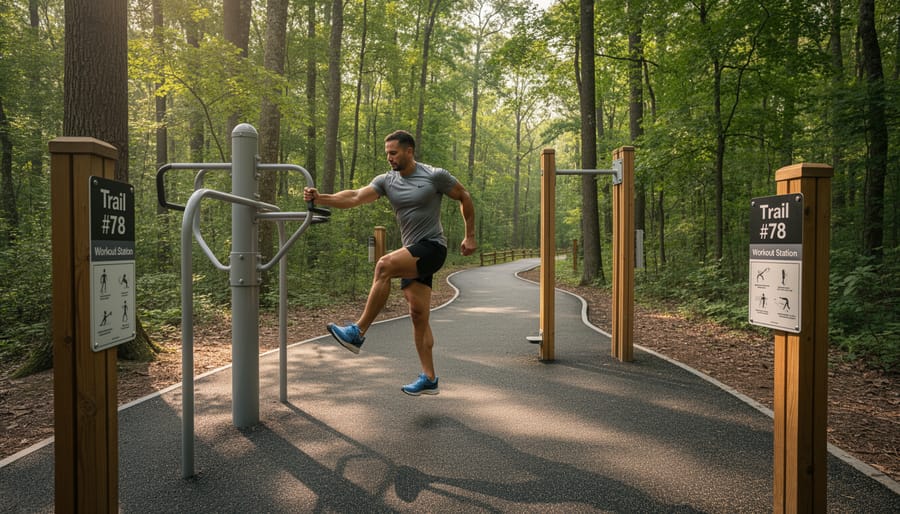
The fitness stations along Trail #78 turn a simple walk into a full-body workout opportunity. You’ll find several designated exercise zones spaced throughout the trail, each equipped with outdoor fitness equipment that’s free to use and accessible year-round.
The main fitness area near Westminster City Park features pull-up bars, dip stations, balance beams, and core exercise platforms. Equipment is powder-coated steel designed to withstand Colorado weather, with illustrated instruction panels showing proper form for each station. The stations are positioned off the main trail surface to prevent congestion while remaining visible and inviting.
Distance markers appear every quarter-mile along the entire segment, making it easy to track your pace or plan interval training. Regular runners appreciate the clearly marked mile indicators and the relatively flat profile that supports consistent pacing.
The equipment sees heaviest use during early mornings and after-work hours when joggers incorporate strength exercises into their runs. Unlike gym equipment, these stations accommodate bodyweight exercises only, no weights or resistance bands needed. The open-air setting and surrounding natural scenery make fitness feel less like a chore and more like play, especially for families introducing kids to outdoor exercise.
Practical Information for Visiting
Trail #78 runs approximately 3.2 miles along the Big Dry Creek corridor through Westminster, connecting several established neighborhoods with natural open space. You’ll find dedicated parking at Big Dry Creek Park on the northern end (104th Avenue and Simms Street) and additional access with limited street parking at Westminster City Park near the middle section. Neighborhood access points exist along Lowell Boulevard and Federal Boulevard, though these lack formal parking facilities.
The trail remains open year-round from dawn to dusk with no entry fees or permits required. There are no Big Dry Creek Trail fees for pedestrian or bicycle use. The paved concrete surface stays in good condition throughout most seasons, though spring snowmelt occasionally creates puddles in low-lying sections, and summer storms can temporarily flood creek crossings.
| Feature | Details |
|---|---|
| Parking Locations | Big Dry Creek Park (104th/Simms), Westminster City Park (mid-trail) |
| Trail Surface | Paved concrete, 10-12 feet wide |
| Distance & Elevation | 3.2 miles one-way, minimal elevation change (under 50 feet) |
| Accessibility | ADA-compliant, wheelchair and stroller friendly |
| Best Seasons | Spring and fall for weather; winter accessible when dry |
The smooth, wide surface meets ADA standards and accommodates wheelchairs, strollers, and mobility devices comfortably. Cyclists should maintain reasonable speeds (under 15 mph) and call out “on your left” when passing walkers. Dogs need leashes no longer than six feet.
Bring water year-round since drinking fountains operate seasonally (typically May through October). Summer visits require sunscreen and a hat for exposed prairie sections. Winter users should check conditions after storms, as ice patches form in shaded areas and snow removal isn’t immediate.
Local Tips from the Community
Regular trail users know the best time to go is weekday mornings before 9 AM, when you’ll often have long stretches to yourself and catch the best wildlife activity. Local runners prefer the northbound direction in the afternoon to keep the sun at their backs.
Community members share these practical insights:
- Park at Big Dry Creek Park’s north lot for easiest restroom access and shade during summer months
- Bring a light jacket year-round, the open prairie sections catch surprisingly strong afternoon winds
- Check creek levels after spring storms; the trail stays open but low sections near Westminster City Park can flood temporarily
- For the best Front Range sunset views, position yourself at the southern prairie vista around 7 PM in summer
- Winter ice forms first under the cottonwood canopy where shade lingers, carry traction devices from December through February
- The fitness stations near mile marker 2.3 are least crowded before 7 AM and after 6 PM
- Local favorite post-trail stop: The Human Bean coffee stand on 120th Avenue, a five-minute drive from the northern trailhead
For longer adventures, seasoned cyclists connect south to Trail #80 at Zuni Street, creating a 12-mile loop back through Federal Heights. Early morning riders in April and May consistently report the highest deer sightings along the riparian sections, move quietly and scan the cottonwood groves.
Trail Safety and Etiquette
Trail #78 follows simple multi-use path rules that keep everyone safe and the experience pleasant. Cyclists should stay below 15 mph and call out “on your left” when passing walkers. Pedestrians stick to the right side, leaving the left lane clear for faster traffic. Dogs must remain on leashes six feet or shorter, wildlife along the creek can trigger chases, and off-leash encounters cause tension with other trail users.
Lightning poses a real risk on exposed prairie stretches with limited shelter. If you hear thunder, head immediately to your vehicle or the nearest building. The creek itself rarely presents danger in normal conditions, but respect any closure signs after storms. Westminster Parks and Recreation posts alerts at trailheads when conditions deteriorate.
For emergencies, call 911 and reference your location by the nearest mile marker or street crossing. Cell coverage is reliable throughout the trail corridor. If you’re driving to the trailhead, the same principles from drive safely tips for Colorado roads apply, watch for pedestrians and cyclists near access points.
Frequently Asked Questions
Trail #78 attracts visitors with varying needs and experience levels, so we’ve compiled answers to the questions local rangers and park staff hear most often.
How difficult is Trail #78?
The trail is flat, paved, and rated easy for all abilities. There are no significant elevation changes, making it accessible for strollers, wheelchairs, and beginner cyclists.
Can I bring my dog?
Dogs are welcome but must remain on leash at all times. Waste stations are located at major access points, and you’re responsible for cleaning up after your pet.
Where are restrooms located?
Permanent restroom facilities are available at Big Dry Creek Park (north trailhead) and Westminster City Park (mid-trail). Portable facilities may be available seasonally at other access points.
Is the trail open in winter?
Yes, Trail #78 remains open year-round. The paved surface is maintained but may have ice patches during cold snaps, so cleated shoes or studded bike tires help in winter months.
How long does it take to complete the trail?
Walking the full segment takes 90 minutes to two hours at a leisurely pace. Cyclists typically cover it in 20 to 30 minutes, while runners complete it in 30 to 45 minutes.
Does Trail #78 connect to other Big Dry Creek segments?
Yes, it links seamlessly to adjacent numbered segments both north and south, allowing you to extend your journey through the full Big Dry Creek National Recreation Trail system.
These practical details help you plan your visit with confidence, whether you’re exploring solo or bringing the whole family.
Trail #78 offers something increasingly rare in Colorado’s growing Front Range corridor: easily accessible nature that doesn’t require driving into the mountains or battling weekend crowds. Whether you’re squeezing in a lunchtime walk, introducing kids to outdoor adventure, or starting a fitness routine, this segment delivers genuine connection to natural spaces without barriers or complications.
The trail’s real value lies in its everyday usability. It’s there when you need it, predictable, maintained, and welcoming to everyone from first-time walkers to serious cyclists. As you explore, remember that these urban greenways survive through collective care. Pack out what you bring in, yield to fellow trail users, and notice the seasonal changes that make each visit different.
Colorado’s outdoor treasures aren’t just in the high country. They’re also flowing quietly through neighborhoods, waiting for anyone willing to step outside and discover them.