
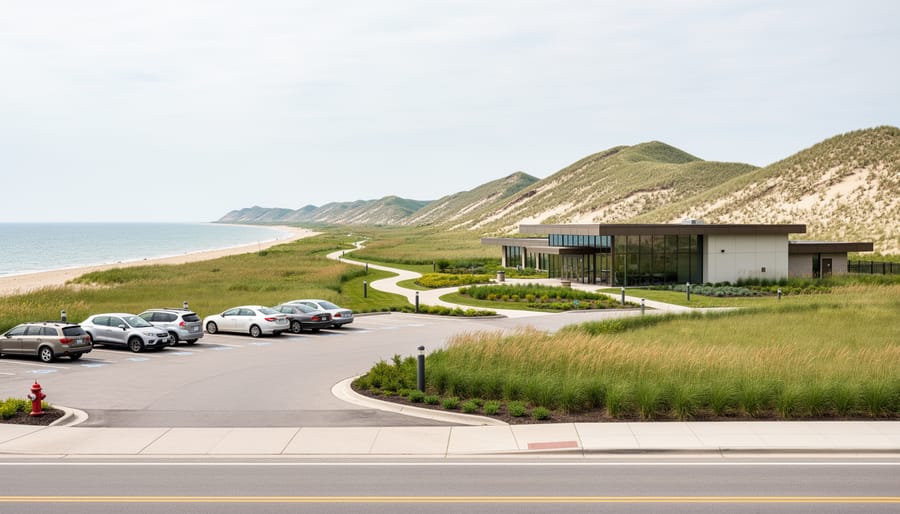
Getting to Indiana Dunes National Park is straightforward: the main Indiana Dunes Visitor Center sits at 1215 IN-49, Porter, IN 46304, perfectly positioned between US Highway 20 and Interstate 94. You’ll need an entrance pass (standard passes run $15 to $25, an annual pass is $45, or use your America the Beautiful Pass), and the visitor center welcomes guests daily with parking for 100 vehicles plus dedicated RV and bus spaces.
This slice of shoreline and wilderness stands out among the best national parks for sheer accessibility. Located less than an hour from Chicago, Indiana Dunes offers families and adventure seekers an easy escape without the cross-country road trip. The park’s 15 miles of Lake Michigan coastline, towering sand dunes, and prairie ecosystems pack serious natural beauty into a compact footprint.
Whether you’re planning your first visit or returning for another dunes hike in 2026, understanding the logistics makes all the difference. The right pass saves you time at the gate. Knowing where to park means you can head straight to the trails or beach. And pinpointing the visitor center location helps you grab maps, ranger advice, and restroom breaks before you explore. This guide walks through each step so you arrive ready to hike, swim, or simply breathe in that lake breeze.
What You’ll Need Before You Go
Before you head to Indiana Dunes National Park, gather a few essentials to ensure smooth entry and a productive stop at the visitor center. Most important is your entrance pass, every visitor needs one, no exceptions. You’ve got three options:
- Standard Pass ($15-$25): Valid for a single visit, covers all passengers in your vehicle
- Annual Pass ($45): Unlimited entries to Indiana Dunes for one year from purchase date
- America the Beautiful Pass (FREE-$250): Grants access to all federal recreation sites nationwide, with senior passes at the lower end and standard annual passes around $80
You can purchase any of these passes at the visitor center upon arrival or online through the National Park Service before your trip. The visitor center accepts credit cards, debit cards, and cash for on-site purchases.
Consider your vehicle type when planning your visit. The visitor center parking lot accommodates 100 standard vehicles plus dedicated spaces for RVs and buses, but it fills up during peak times. If you’re driving an oversized vehicle, those designated spots are your best bet. Standard cars, SUVs, and trucks fit comfortably in the main lot.
Pack a small bag for your visitor center stop: bring water, snacks for the road, and a phone or camera to capture trail maps and park information. Downloading the NPS app beforehand gives you offline access to trail details and alerts. A notebook helps if you want to jot down ranger recommendations or mark spots on physical maps they provide inside.
With your pass secured and vehicle considerations covered, you’re ready to navigate to the park.
Important Safety and Planning Warnings

Before heading to Indiana Dunes National Park, plan around a few critical access realities. Traffic congestion on Interstate 94 and US Highway 20 can add significant time to your arrival during summer weekends and holiday periods, so build buffer time into your schedule. Seasonal weather shifts matter: winter ice and lake-effect snow can make northern Indiana roads treacherous between November and March, while spring flooding occasionally affects low-lying access roads near the park. Secure your entrance pass before you arrive, showing up without a Standard Pass ($15, $25), Annual Pass ($45), or America the Beautiful Pass will cost you time at the gate and potentially delay your entire visit.
If you’re driving an RV or bus, check your vehicle dimensions beforehand. The visitor center offers dedicated RV and bus spaces, but oversized rigs may struggle with tight turns on State Road 49 and surrounding local roads. Apply the same road trip safety principles you’d use for mountain driving: know your vehicle’s clearance, watch for cyclists and pedestrians on park roads, and keep your gas tank above half once you leave the interstate. Peak-season parking constraints mean you might need a backup plan, some visitors park at nearby beaches or trailheads if the main lot is full, adding walking time to your day.
Step-by-Step: Getting to Indiana Dunes National Park
Step 1: Secure Your Entrance Pass
Before you hit the road, sort out your entry pass, you can’t enter Indiana Dunes National Park without one. You have three options. The Standard Pass runs $15 to $25 depending on where you buy it and covers your vehicle for seven consecutive days. If you’re planning multiple visits or a longer stay, grab the Annual Pass for $45, which is valid for a full year at Indiana Dunes. For serious park-goers who visit national parks across the country, the America the Beautiful Pass is the smartest buy: prices range from free for certain eligibility groups up to $250 for lifetime options, and it grants access to all federal recreation sites nationwide.
Purchase your pass online before you leave, check the official National Park Service page for current entrance pass prices and ordering options. You can also buy passes at the Indiana Dunes Visitor Center when you arrive, though lines can slow you down during busy weekends. Have your payment method ready; most locations accept cards, but cash works too. Once you’ve secured your pass, display it on your dashboard or keep your receipt handy, rangers check at entry points and parking areas.
Step 2: Navigate to the Indiana Dunes Visitor Center
The Indiana Dunes Visitor Center sits on Indiana State Road 49 at the 1215 IN-49 address in Porter, making it your essential first stop. You’ll find it tucked between two major arteries: US Highway 20 to the south and Interstate 94 to the north. This central placement means you can approach from multiple directions, whether you’re coming from Chicago to the west, South Bend to the east, or Indianapolis to the south.
If you’re using GPS or a mapping app, enter the full address, 1215 IN-49, Porter, IN 46304, to route directly to the visitor center lot. State Road 49 runs north-south through the park, so you’ll be watching for the visitor center signs once you’re on that corridor. Most travelers find the approach straightforward: exit the interstate system onto local roads, connect to IN-49, and follow signage.
From the Chicago area, expect to navigate eastward through northwest Indiana until you connect with State Road 49. Those driving from Michigan or eastern points will approach from the opposite direction but still converge on the same stretch of IN-49. The visitor center’s location between the two highways creates a natural funnel, reducing the chance you’ll overshoot your destination. Keep your entrance pass ready and your parking strategy in mind as you close in.
Step 3: Park at the Visitor Center
The visitor center parking lot sits directly off State Road 49, making it easy to pull in once you’ve arrived. The parking lot holds 100 vehicles with designated spaces for buses and RVs near the entrance, look for marked bays if you’re driving anything larger than a standard car or SUV.
Arriving early gives you the best shot at a convenient spot, especially on summer weekends and holidays when the lot fills by mid-morning. If the main lot is full, you’ll need to wait for a space to open up or consider visiting a different park entrance and returning to the visitor center later in the day. The lot doesn’t have overflow parking, so patience matters during peak times.
Once parked, note your location relative to the visitor center building, the lot can feel sprawling when you’re eager to hit the trails. Lock your vehicle, grab any items you’ll need inside (wallet for pass purchase, phone for maps), and head toward the main entrance. The center sits prominently at the north end of the lot, and you’ll see clear signage directing you to the doors.
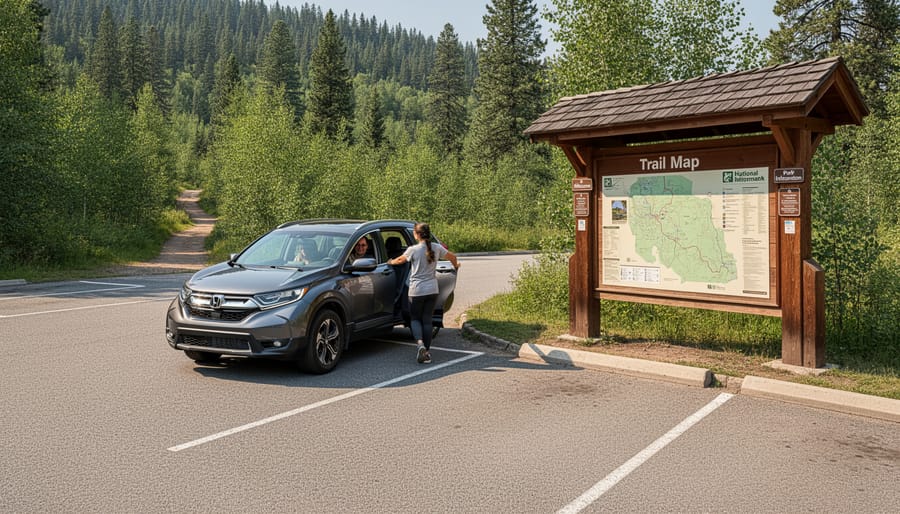
Step 4: Check In at the Visitor Center
Once you step through the doors, you’re greeted by rangers and staff who can answer questions, point you toward specific trails or beaches, and help you make the most of your visit. The center is open daily, so you can count on finding someone to assist you no matter when you arrive.
Inside, grab a park map and current trail conditions sheet from the information desk. These resources show you which trails are accessible, where recent weather might have caused closures, and which beaches are best for swimming or exploring. If you’re planning a hike ask about difficulty levels and estimated times, rangers know the terrain and can match suggestions to your experience and schedule.
Take a few minutes to browse the exhibits showcasing the park’s ecology, history, and unique dune formations. This context helps you appreciate what you’ll see on the trails and beaches. The center also has restrooms, water fountains, and a small selection of field guides and maps for purchase if you want more detailed information.
Before heading out, confirm your entry pass is valid and visible in your vehicle. Double-check your chosen trail or beach location on the map, note any warnings about tides or trail conditions, and you’re set to explore Indiana Dunes National Park with confidence.
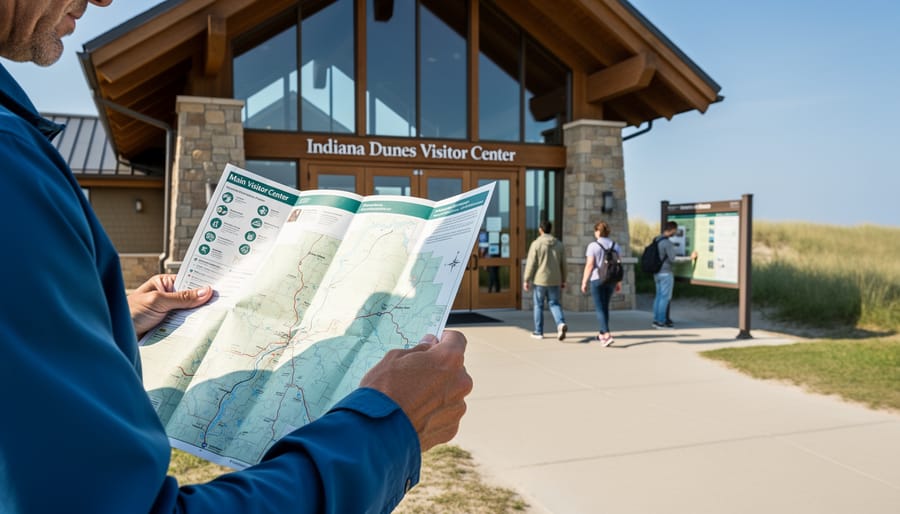
Confirming You’re Ready to Explore
Before you head out to explore, take two minutes to run through this final checklist. You’ve made the trip to Porter, Indiana, now make sure everything’s in order so you can focus on enjoying the dunes, trails, and beaches without hassle.
First, double-check your entrance pass. Whether you bought the Standard Pass, secured an Annual Pass, or brought your America the Beautiful Pass, confirm it’s displayed on your dashboard or tucked in your wallet if you’re entering on foot. Rangers conduct spot checks, and having your pass ready saves time and avoids a $15, $25 scramble at the gate.
Next, verify your vehicle is properly parked within the visitor center lot’s marked spaces. With 100 standard spots plus designated RV and bus areas, the lot fills quickly on weekends and holidays. If you’re parked legally and your pass is visible, you’re set.
Finally, make sure you grabbed the essentials from the visitor center: a trail map, current weather and beach condition updates, and any ranger-recommended routes based on your fitness level and interests. The staff can steer you toward less-crowded trails if the popular spots are packed, or suggest family-friendly beach access if you’ve got kids in tow.
Once you’ve checked these boxes, you’re officially ready. The lakefront stretches ahead, 15 miles of trails wind through diverse ecosystems, and towering dunes await. Lock your car, pocket that map, and go explore what makes this national park a Midwest treasure.
Steps at a Glance
Getting to Indiana Dunes National Park becomes simple when you break it into these quick steps:
- Purchase your entrance pass online or plan to buy at arrival, Standard Pass runs $15, $25, Annual Pass is $45, or use your America the Beautiful Pass
- Drive to the Indiana Dunes Visitor Center at 1215 IN-49 in Porter, Indiana, positioned between US-20 and I-94
- Arrive early during summer and weekends to claim one of the 100 parking spaces (RV and bus spots available)
- Stop inside the visitor center, open daily, to grab trail maps and get oriented before heading out
- Head to your chosen trail or beach area with your valid pass displayed
This streamlined approach keeps your arrival stress-free and gets you exploring faster. Once you’ve mastered park access, you can apply similar planning strategies to other outdoor adventures, the same preparation mindset that makes biking tips valuable works here too. The key is having your pass sorted and knowing the visitor center location before you leave home, which eliminates the two most common arrival hiccups.
Visitor Questions About Getting to the Park
Do I really need to buy a pass before I arrive?
Yes, all visitors must have a valid entrance pass to enter Indiana Dunes National Park. You can purchase a Standard Pass ($15-$25), Annual Pass ($45), or use an America the Beautiful Pass (FREE-$250, including Senior Passes) at the entrance or in advance.
How early should I arrive to find parking at the visitor center?
The visitor center parking lot holds 100 vehicles plus dedicated bus and RV spaces, so arriving by mid-morning on weekends and summer days gives you the best chance of securing a spot. Weekdays and off-season visits typically have better availability throughout the day.
What are the visitor center hours?
The Indiana Dunes Visitor Center at 1215 IN-49 in Porter is open daily. Stop in to pick up maps, ask rangers about trail conditions, and get oriented before heading out to explore the park.
Can I bring my RV or large vehicle to the park?
Yes, the visitor center parking lot includes designated spaces for buses and RVs. Just be aware that parking capacity is limited during peak times, so plan to arrive earlier in the day if you’re driving a larger vehicle.
Many travelers also wonder about seasonal considerations when planning their visit. Winter and early spring typically see lighter crowds, making parking and navigation easier, though you’ll want to check weather conditions before heading out from Colorado or other distant states. Summer weekends bring the heaviest traffic, especially to beach areas, so building in extra time for your arrival helps avoid frustration.
If you’re concerned about pass types, remember that the America the Beautiful Pass covers entrance to all national parks and federal recreation sites, making it worthwhile if you’re planning multiple park visits throughout the year. Seniors can get versions of this pass at reduced rates or even free, depending on eligibility. The visitor center staff can answer specific questions about which pass makes the most sense for your travel plans and how long you intend to explore Indiana Dunes.
For those driving in from out of state, the park’s location on State Road 49 between US Highway 20 and Interstate 94 makes it accessible from multiple directions, though specific route recommendations depend on where you’re starting. The visitor center serves as your command post, stop there first to confirm you’re properly permitted, grab current trail maps, and ask rangers about conditions before venturing deeper into the park’s beaches, dunes, and trails.
Getting to Indiana Dunes National Park doesn’t have to be complicated. With your entrance pass secured, whether it’s a Standard Pass, Annual Pass, or America the Beautiful Pass, and the visitor center address (1215 IN-49, Porter, IN 46304) plugged into your GPS, you’re already halfway there. The visitor center sits conveniently on State Road 49 between US-20 and I-94, making it accessible from multiple directions. Once you arrive, the 100-vehicle lot gives you a solid chance at parking, even on busier days.
The best part? You’re now ready to experience one of the Midwest’s most underrated natural treasures. Whether you’re driving in from Colorado for a cross-country adventure or coming from nearby cities, Indiana Dunes rewards the journey with stunning lakefront trails and landscapes that rival destinations anywhere in the country.
We’d love to hear how your trip goes. Share your access tips, favorite trails, or parking hacks with the adventure community, your insights help fellow travelers make the most of their national park visits. Safe travels, and enjoy every moment at the dunes.