
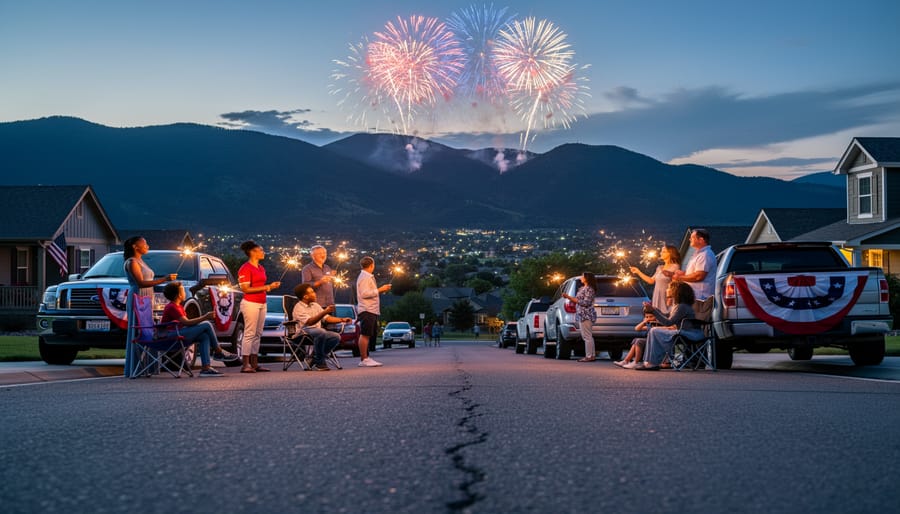
Colorado’s Fourth of July celebrations kick off as early as 7:30 a.m. with athletic events and stretch past 9:30 p.m. when the last fireworks fade over the mountains. The state’s wide elevation range and sprawling geography mean that Fort Collins runners are crossing the FireKracker 5K finish line before families in Westminster have even started their coffee.
For 2026, the timing landscape breaks into three distinct windows. Morning celebrations like Fort Collins’ Independence Day Community Celebration begin at 7:30 a.m. with the FireKracker 5K and Stars & Stripes Golf Tournament, perfect for athletes who want to beat the heat. Mid-morning to noon events draw families with young children; Superior’s 4th of July Celebration at Community Park runs from 9 a.m. to noon, wrapping up before naptime becomes a crisis. The evening block dominates the calendar, with Westminster’s celebration running 4:00 PM to 10:00 PM and fireworks scheduled for approximately 9:15 p.m., while Denver and Colorado Springs anchor their programming around nightfall spectaculars like the Star Spangled Symphony and Fourth of July Fireworks.
Altitude and city size shift these schedules more than you’d expect. Mountain towns like Cripple Creek launch their fireworks earlier to accommodate visitors driving back down winding roads, while Front Range cities can push later into the evening. Planning your route between multiple celebrations requires accounting for summer afternoon thunderstorms that roll through between 2:00 and 5:00 p.m., potentially delaying or relocating outdoor activities.
When Colorado’s 4th of July Events Take Place: The Quick Answer
Colorado’s 4th of July events span a full day, starting as early as 7:30 a.m. and wrapping up after 10 p.m. in many communities. Morning kicks off with athletic events like Fort Collins’ FireKracker 5K and Stars & Stripes Golf Tournament at 7:30 a.m., giving runners and golfers a chance to celebrate before the heat sets in. Mid-morning festivities follow, with towns like Superior opening their Community Park celebration at 9 a.m. and running through noon.
Afternoon and evening events build momentum from mid-afternoon onward. Westminster’s 2026 celebration runs 4:00 p.m. to 10:00 p.m., while Denver and Colorado Springs host concerts and festivals that lead into evening fireworks displays. Fireworks typically light up between 9:00 and 9:35 p.m. across the state, with Westminster fireworks at 9:15 p.m. and Cripple Creek launching their show over the historic town center. Most community festivities fall somewhere in that 9 a.m. to 10 p.m. window, though exact timing depends on your chosen city and event type.
Colorado’s 4th of July Timing Windows by Event Type
Early Morning Athletic Events (7:00 a.m. – 10:00 a.m.)
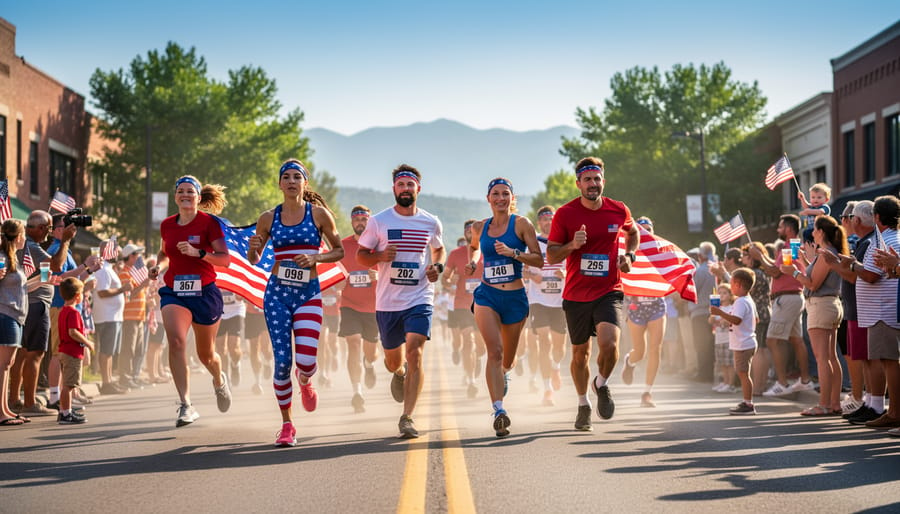
Colorado’s earliest Independence Day events kick off before most fireworks crews even arrive. Fort Collins sets the pace with its FireKracker 5K at 7:30 a.m. alongside the Stars & Stripes Golf Tournament starting at the same hour. These dawn celebrations take advantage of Colorado’s coolest temperatures, critical when you’re running or swinging clubs at 5,000 feet or higher.
The early start serves multiple purposes beyond comfort. Morning races finish before afternoon thunderstorms roll in, a near-daily pattern across the Front Range in July. Golfers complete their rounds while dew still clings to the fairways, and both events free up participants to join family festivities later in the day. Athletes often finish their 5K, shower, and still make a 9:00 a.m. pancake breakfast or community parade.
These athletic events also claim prime downtown real estate before it’s needed for parade routes and vendor setups, making the 7:00 to 10:00 a.m. window ideal for road closures that won’t disrupt midday traffic.
Mid-Morning to Noon Community Celebrations (9:00 a.m. – 12:00 p.m.)
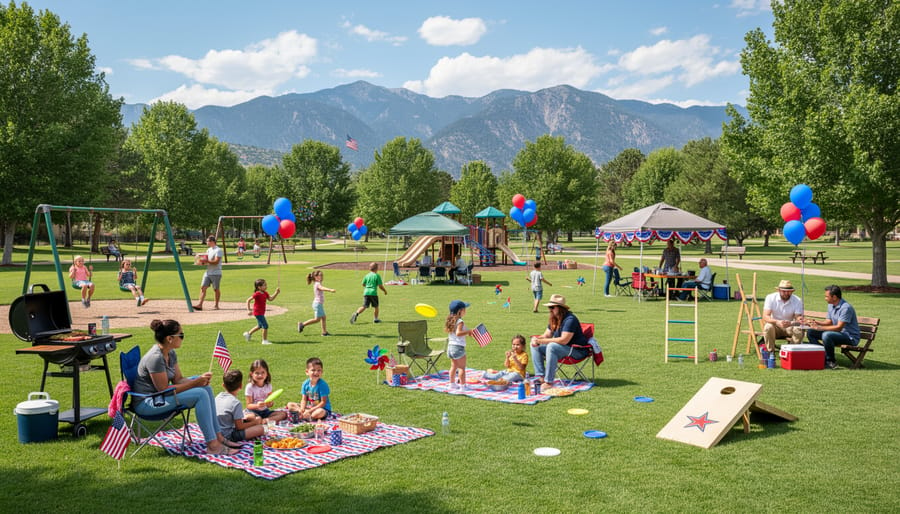
Mid-morning celebrations draw families looking to beat afternoon heat while kids are fresh and engaged. The Superior event runs 9 a.m. to noon at Community Park, packing bounce houses, face painting, live music, and vendor booths into a concentrated three-hour window. This compact schedule lets parents plan a full day, grab breakfast, hit the morning parade or festival, then pivot to afternoon plans elsewhere.
Other Colorado towns follow a similar pattern. Smaller communities often anchor mid-morning slots with pancake breakfasts in fire station parking lots, bike decorating contests at 10 a.m., and water balloon tosses before lunch. These windows work well for toddlers and elementary-age children who tire quickly in Colorado’s intense high-altitude sun. Organizers know crowds thin out by noon as families head home for naps or lunch, making cleanup easier and freeing afternoon hours for private gatherings. If you’re targeting low-stress, kid-focused celebrations without navigating evening crowds or staying up past bedtime for fireworks, the 9-to-noon slot delivers.
Afternoon and Evening Festivals (4:00 p.m. – 10:00 p.m.)
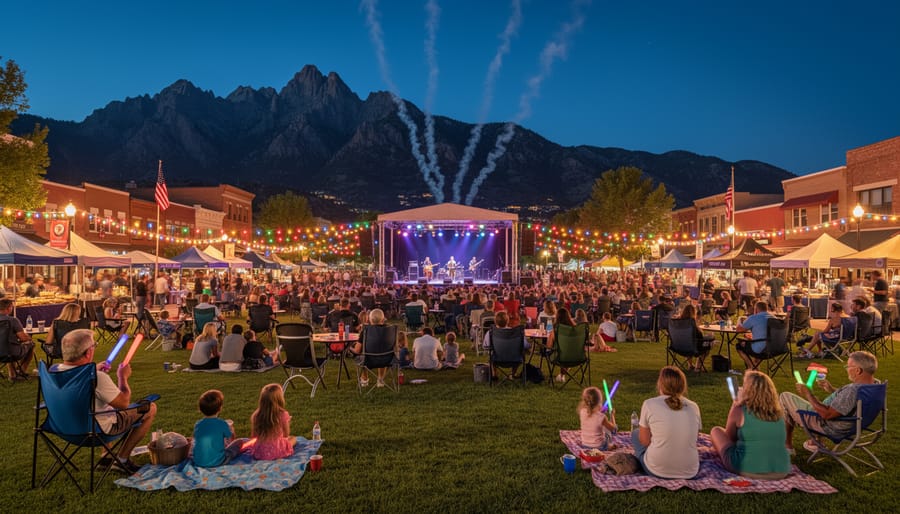
As afternoon temperatures peak and mountain shadows lengthen, Colorado’s 4th of July celebrations shift into festival mode. The late-afternoon window captures families who skipped the morning heat and groups looking for food, live music, and a prime spot for fireworks. Westminster runs 4 p.m. to 10 p.m. on Saturday, July 4th, 2026, giving visitors a full six-hour block of entertainment before its 9:15 p.m. fireworks finale. Denver offers concerts and festivals scattered across parks and downtown plazas, each building momentum as dusk approaches. Colorado Springs anchors its celebration with the Star Spangled Symphony, an orchestral performance that pairs classical repertoire with patriotic favorites and transitions seamlessly into a fireworks display over the Pikes Peak region.
This timing window works because it bridges the daytime family crowd and the adult-focused evening audience. You can arrive at 4 or 5 p.m., claim a blanket spot, grab dinner from food trucks, let kids burn energy on inflatables, and settle in as the sky darkens. Parking fills quickly after 6 p.m. at most venues, so earlier arrival pays off. These events deliver the classic 4th of July experience: live bands, vendor booths, and a countdown to the fireworks that cap the night.
Fireworks Timing Across Colorado Cities
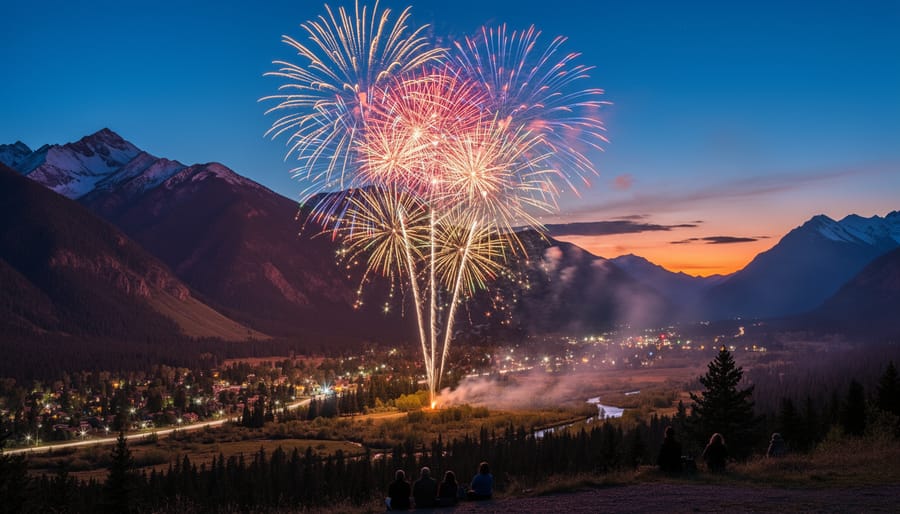
Most Colorado fireworks displays light up the sky between 9:00 p.m. and 9:35 p.m., taking advantage of the state’s late summer sunset. This timing window allows the sky to darken sufficiently for the pyrotechnic displays while still keeping families out at a reasonable hour.
| City | Event Type | Event Start | Fireworks Time |
|---|---|---|---|
| Westminster | Community Celebration | 4:00 PM | Approx. 9:15 PM |
| Colorado Springs | Star Spangled Symphony | Evening | After Concert |
| Cripple Creek | Mountain Town Celebration | All Day | Over Town |
| Denver | Various Festivals | Varies | 9:00-9:30 PM Range |
Westminster’s 2026 celebration offers one of the most predictable schedules, with fireworks set for approximately 9:15 p.m. following a full afternoon and evening of festivities. Cripple Creek takes a different approach, launching fireworks directly over the historic town in a display that fills the mountain valley, though exact timing varies based on darkness.
Colorado Springs coordinates its fireworks with the Star Spangled Symphony, meaning the display follows the orchestral performance rather than a fixed clock time. Denver’s various neighborhood celebrations typically aim for the 9:00 to 9:30 p.m. window, though specific venues may adjust based on their event flow.
The consistency across cities makes planning easier. If you’re aiming to catch fireworks in multiple locations, the tight timing window means you’ll need to pick one show and commit, rather than trying to hop between displays.
What Shifts 4th of July Event Timing in Colorado
Altitude and Daylight Hours
Colorado’s elevation creates a unique advantage for Independence Day celebrations. At 5,000 to 6,000 feet across the Front Range and even higher in mountain towns, the state sits well above sea level where the air stays cooler after dark. This natural climate control means families can comfortably gather outdoors through the evening without the oppressive heat that cuts celebrations short in lower-elevation states.
The extended summer daylight plays an equally important role in timing. On July 4th, sunset doesn’t arrive until around 8:30 p.m. across most of Colorado, with civil twilight stretching past 9:00 p.m. This late fade gives event organizers a practical window to run festivals, concerts, and family activities well into the evening before transitioning to fireworks. Westminster’s celebration capitalizes on this pattern, running from 4:00 PM through fireworks at approximately 9:15 p.m. when darkness finally settles enough for a proper display.
The combination of comfortable temperatures and lingering daylight explains why Colorado communities can pack more into a single day than most states, starting with morning races and building through afternoon festivals to late-evening pyrotechnics without forcing attendees to choose between events.
City Size and Event Scope
City size plays a significant role in how Colorado communities structure their 4th of July celebrations. Denver and Colorado Springs spread festivities across multiple venues and extended time blocks, accommodating tens of thousands of attendees with afternoon concerts, evening festivals, and coordinated fireworks displays that require substantial crowd-control infrastructure. These metro celebrations often run from mid-afternoon through 10:00 p.m., allowing staggered arrival times and giving visitors flexibility to explore different activity zones throughout the evening.
Smaller mountain towns like Cripple Creek take a different approach rooted in community tradition and practical constraints. With limited parking, fewer staff resources, and a more intimate town footprint, these celebrations typically condense activities into shorter, more focused windows. Cripple Creek’s fireworks over the town create a centralized viewing experience rather than the sprawling festival grounds you’ll find in major metros. Superior demonstrates another small-town model, running its Community Park celebration from 9 a.m. to noon, a compact morning schedule that works for a population of around 13,000 and avoids competing with larger regional displays later in the day.
The timing patterns reflect each community’s capacity to manage crowds and maintain the celebration’s character, whether that’s an all-day metro experience or a concentrated mountain-town gathering.
Weather and Safety Considerations
Colorado’s summer weather pattern directly shapes when communities schedule their 4th of July events. Afternoon thunderstorms develop regularly across the Front Range and mountain regions between 2 p.m. and 6 p.m. during early July, bringing lightning, heavy rain, and occasional hail. This predictable weather window explains why Superior schedules its celebration from 9 a.m. to noon and Fort Collins starts athletic events at 7:30 a.m., both communities wrap up core activities before storms typically arrive.
Fire restrictions create the second major timing constraint. Many Colorado counties implement Stage 1 or Stage 2 fire bans during dry summers, which can delay or relocate fireworks displays. Mountain towns sometimes cancel fireworks entirely when conditions turn extreme, while Front Range cities with professional pyrotechnic crews and prepared launch sites typically proceed with shows around 9:15 p.m. Westminster’s scheduled fireworks time reflects this careful calculation between full darkness and safety protocols.
Communities also stagger timing to manage crowd safety. Smaller mountain venues like Cripple Creek favor compact evening programs when volunteer fire departments and limited law enforcement can concentrate resources. Larger metro areas spread programming across 12-hour windows, reducing strain on parking, emergency services, and infrastructure. This practical risk management means your safest bet for avoiding weather disruptions sits in that early morning window before noon, while the most reliable fireworks displays happen in cities with professional teams and backup dates built into permits.
Planning Your 4th of July Day in Colorado: Region-by-Region Timing
Front Range Events (Denver, Westminster, Superior, Fort Collins)
The Front Range corridor puts four distinct celebration styles within an easy drive, each tailored to different energy levels and crowd preferences.
Fort Collins kicks off earliest with its FireKracker 5K and Stars & Stripes Golf Tournament at 7:30 a.m., ideal for athletes who want to finish a morning workout and still have the entire day ahead. The city’s Independence Day Community Celebration builds from there with mid-morning family activities.
Superior offers the most compact window: its 2026 4th of July Celebration at Community Park runs 9 a.m. to noon, perfect for families with young children who need to be home before afternoon heat or naptime. This condensed schedule packs games, food, and entertainment into three hours without stretching into the evening.
Westminster anchors the other end of the timeline with its 2026 celebration running 4:00 PM to 10:00 PM on Saturday, July 4th. Arrive in late afternoon for festival activities, stake out your spot before sunset, and settle in for fireworks launching around 9:15 p.m. This schedule works well if you’re chasing a morning event elsewhere first.
Denver spreads its offerings across the metro area with concerts and festivals at various times, giving you flexibility to design a custom itinerary. Most major Denver events cluster between late afternoon and evening to accommodate work schedules and build toward nighttime fireworks.
The 90-minute drive separating Fort Collins from Denver means committed planners can genuinely hit two or even three celebrations in one day by riding the timing wave north to south.
Pikes Peak Region (Colorado Springs, Cripple Creek)
Colorado Springs’ Star Spangled Symphony anchors the Pikes Peak region’s Independence Day schedule with an evening timeline that lets visitors enjoy mountain scenery during daylight before the main event. The symphony concert typically begins in late afternoon, building toward a choreographed fireworks finale after dark. Expect crowds to arrive by early evening to claim lawn space, with the fireworks display launching around 9:15 to 9:30 p.m. once full darkness settles over the city.
Cripple Creek offers a mountain town alternative with a more compressed celebration window. Perched at 9,494 feet elevation, this historic mining town hosts daytime festivities that transition into an evening fireworks show launched directly over the town’s Victorian-era buildings. The higher altitude means cooler temperatures even in July, so late-afternoon and evening events remain comfortable for families. Fireworks over the town create a unique viewing experience compared to stadium displays in larger cities.
Both locations benefit from the region’s clear summer air and dramatic backdrops. Colorado Springs provides the full-day festival atmosphere, while Cripple Creek delivers a concentrated celebration ideal for visitors who want the quintessential small-town Colorado experience without committing an entire day.
Multiple-Event Strategy
Colorado’s highway network lets you stack multiple celebrations into a single Fourth. Start with Fort Collins’ 7:30 a.m. FireKracker 5K, then drive south on I-25 (about 60 minutes) to catch Superior’s Community Park festival from 9 a.m. to noon. After lunch, head to Westminster for their 4:00 p.m. to 10:00 p.m. celebration and stay for the 9:15 p.m. fireworks, just a 20-minute drive from Superior. Alternatively, take Highway 24 west after an early Denver concert to reach Cripple Creek’s mountain fireworks show by evening. Plan 90 minutes between stops for parking and restroom breaks, and check live traffic before departing each venue since highway congestion builds throughout the day.
After the Fireworks: What to Know About Post-Event Timing
The fireworks finale marks the start of your next challenge: getting home without spending an hour in a parking lot. Expect major venues like Colorado Springs’ Symphony Hall and Denver’s city parks to take 45 minutes to an hour for parking areas to clear. Arriving families often stake out spots by 7 p.m., which means everyone leaves at once around 9:30 or 10 p.m.
If you’re staying overnight in a mountain town like Cripple Creek, restaurant kitchens typically close by 9 p.m., even on the 4th. Pack snacks or plan a late picnic rather than counting on finding dinner after the show. Fort Collins and Denver offer more late-night options, food trucks near event sites often serve until 11 p.m., and downtown areas keep select restaurants open past midnight.
Consider this efficient exit strategy:
- Leave five minutes before the finale if you prioritize quick departure over the last burst, cutting your wait time by half.
- Walk to secondary lots or street parking two blocks away rather than fighting for spots adjacent to the venue.
- Use ride-share pickup zones a quarter-mile from the event center where fewer people compete for drivers.
- Plan your next morning around Colorado’s other summer attractions, scenic train routes or early hiking, rather than sleeping late after the late night.
Superior’s noon end time means you can catch an afternoon event elsewhere without post-fireworks traffic, though most communities schedule their main celebrations on the same day. Westminster’s 10 p.m. close gives you a similar window to transition smoothly.
July doesn’t end with Independence Day. Amtrak routes through the Rockies, county fairs, outdoor concerts, and rodeos fill the rest of the month. Treat the 4th as your kickoff to Colorado’s peak summer season rather than the only date on your calendar.
What to Do Afterward
After the fireworks fade and you’ve soaked in Colorado’s Independence Day celebrations, take a few smart steps to wrap up your holiday smoothly. Check your surroundings for personal belongings before leaving, chairs, blankets, and water bottles easily get left behind in the post-fireworks shuffle.
Give yourself extra time to exit parking areas. Major events like Westminster’s celebration and Colorado Springs’ Star Spangled Symphony draw thousands, and lots can take 30 to 45 minutes to clear. If you’re near downtown Denver or Fort Collins, consider walking to a nearby restaurant or coffee shop and waiting out the initial traffic surge.
Stay hydrated and watch for signs of overheating, especially if you spent hours in the afternoon sun at higher elevations. Colorado’s dry air and intense UV exposure can sneak up on you.
Check local event websites the next morning for any lost-and-found updates if you’re missing something. Many communities post details within 24 hours. Finally, if a specific celebration captured your interest, bookmark that city’s event page now, Colorado’s mountain towns and Front Range cities often repeat successful formats year after year, making next July’s planning much easier.
Key Details to Know
Colorado’s 4th of July events require strategic planning beyond just checking start times. These practical details will help you make the most of your celebration day:
- Parking fills by 6:00 p.m. at major venues, arrive at least two hours early for evening fireworks shows
- Mountain town events like Cripple Creek’s fireworks often have limited cell service, so download maps and event details before arrival
- Most Front Range celebrations allow coolers and lawn chairs, but confirm individual event policies as Westminster and Colorado Springs have different restrictions
- Fire restrictions change daily during Colorado’s dry season, check county fire bans the morning of July 4th even for official displays
- Some communities spread celebrations across July 3rd-5th weekend, giving you multiple chances to catch fireworks if weather disrupts your planned day
If you’re planning a longer Colorado adventure around Independence Day, consider pairing your celebration with multi-day train rides through the mountains. The Georgetown Loop and Durango & Silverton railways offer scenic departures throughout early July, letting you combine patriotic festivities with Colorado’s historic rail experiences.
Common Questions About 4th of July Event Timing in Colorado
Timing questions dominate planning conversations as Colorado’s 4th of July approaches, and the answers directly impact your experience. The most common concerns involve arrival times, parking strategies, and managing the unpredictability that comes with outdoor mountain celebrations.
How early should I arrive to secure good spots for fireworks?
Plan to arrive 90 minutes to two hours before the scheduled fireworks time for popular shows like Westminster’s 9:15 p.m. display or Colorado Springs’ Star Spangled Symphony. Front Range venues fill quickly, and parking lots near City Park or Community Park locations reach capacity by late afternoon on July 4th.
Do Colorado cities hold 4th of July events on July 3rd or 5th if the holiday falls mid-week?
Most Colorado communities stick to July 4th regardless of the day of the week, as verified by Westminster, Superior, and Fort Collins scheduling their 2026 celebrations on Friday, July 4th. Some smaller mountain towns may add a second celebration on the nearest weekend, but the main events happen on Independence Day itself.
Where can I find last-minute schedule changes due to weather?
Check individual city websites and social media accounts the morning of July 4th, as Colorado’s afternoon thunderstorms can delay or relocate fireworks shows. Fire restrictions imposed during dry conditions sometimes shift celebrations to alternative dates with only 24-48 hours notice.
Can I attend multiple events in one day across different cities?
Colorado’s highway system makes a multi-event strategy feasible: start with Fort Collins’ 7:30 a.m. FireKracker 5K, drive to Superior’s 9 a.m. to noon celebration at Community Park, then finish with Westminster’s 4:00 p.m. to 10:00 p.m. event and fireworks. The Front Range communities sit close enough for this approach to work without excessive drive time.
Parking strategy matters more than many visitors anticipate. Cities like Denver and Colorado Springs experience traffic congestion starting around 3:00 p.m. as families claim prime viewing areas for evening concerts and fireworks. Consider arriving during the noon to 2:00 p.m. window when families with young children have left morning events but before the evening crowd builds. Alternative transportation through RTD light rail or city shuttles eliminates parking concerns entirely in metro areas.
Weather contingency planning deserves attention beyond just checking forecasts. Colorado’s mountain climate produces sudden afternoon storms between 2:00 p.m. and 6:00 p.m. during summer months, and organizers may hold fireworks displays until storms pass rather than cancel outright. This pushed Westminster’s show to 10:15 p.m. in past years when clouds lingered. Bring layers and rain gear even if morning skies look clear, and have a backup indoor activity planned such as a morning scenic ride on one of Colorado’s historic railways if severe weather forces cancellations.
Schedule flexibility gives you the best chance of catching Colorado’s 4th of July celebrations regardless of which city you choose or what timing challenges arise.
Colorado’s Independence Day celebrations give you a full 14-hour window to find your perfect celebration, whether you’re lacing up running shoes at 7:30 a.m. or staking out a fireworks viewing spot at 9 p.m. The state’s timing diversity means early risers can hit Fort Collins races, families can enjoy Superior’s mid-morning festivities, and night owls can catch Westminster’s late fireworks, all on the same day if you’re ambitious enough to string them together.
Your best move is matching event windows to your energy rhythm rather than forcing yourself into a celebration style that doesn’t fit. Morning athletic events suit those who want to participate and still have their whole day free, while afternoon festivals work for families with young kids who won’t make it to 9:15 p.m. fireworks. Evening-only attendees can sleep in, explore Colorado during daylight hours, then arrive fresh for the main show.
This timing flexibility extends beyond the Fourth itself. Colorado’s summer calendar runs deep with July trip ideas that let you build a full month of exploration around whatever celebration schedule suits you best, mountain mornings, festival afternoons, or starlit evenings across the state.