
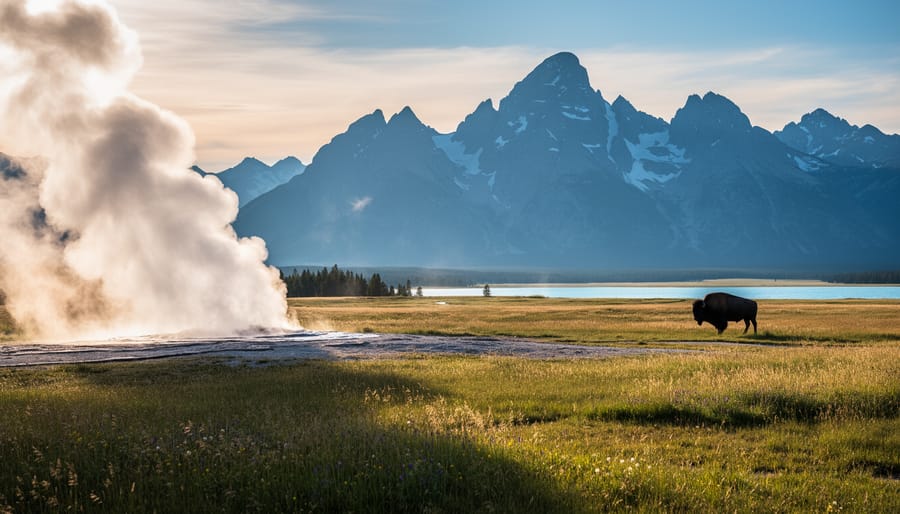
Wyoming is home to six remarkable National Park Service sites that showcase some of America’s most dramatic landscapes: two iconic national parks (Yellowstone and Grand Teton), two national monuments (Devils Tower and Fossil Butte), one national recreation area (Bighorn Canyon), and one national historic site (Fort Laramie). Together, these protected areas span millions of acres and preserve everything from the world’s first national park to sacred Indigenous landmarks, ancient fossils, and frontier history. While most visitors know about Yellowstone’s geysers and the Tetons’ jagged peaks, Wyoming’s complete national parks list reveals hidden gems like the monolithic tower that inspired Close Encounters or the crystalline lake beds where 50-million-year-old fish fossils tell the story of a subtropical Wyoming.
Planning a comprehensive Wyoming NPS tour requires understanding that these sites span the entire state, from the volcanic plateau of Yellowstone in the northwest to the Oregon Trail ruts at Fort Laramrie in the southeast. You’ll need anywhere from a long weekend to cover the northwest cluster (Yellowstone and Grand Teton are just 10 miles apart) to two weeks for exploring all six properties. Current conditions for 2026 include high wildland fire danger at Grand Teton, temporary shower closures at Fishing Bridge RV Park through late September, and the usual bear activity protocols requiring 100-yard distances from both black and grizzly bears year-round.
This guide walks through each of Wyoming’s National Park Service sites with the detail you need to plan visits, understand what makes each unique, and navigate the practical realities of exploring these protected landscapes in 2026.
Wyoming’s Complete National Park Service Sites: What to Know
Wyoming’s relationship with the National Park Service runs deeper than most visitors realize. While the state is home to just two official national parks, Yellowstone and Grand Teton, its complete NPS portfolio includes six distinct sites spanning multiple categories: national parks, national monuments, a national recreation area, and a national historic site.
Understanding these categories matters because each offers a different experience. National parks like Yellowstone and Grand Teton protect vast wilderness ecosystems with comprehensive visitor facilities. National monuments such as Devils Tower and Fossil Butte focus on specific natural or cultural features with more intimate experiences. Bighorn Canyon National Recreation Area emphasizes water-based recreation, while Fort Laramie National Historic Site preserves frontier military history.
What makes Wyoming exceptional for national park tourism isn’t just the famous names, it’s the diversity. You can watch geysers erupt in the morning, explore 50-million-year-old fossils by afternoon, and camp beside dramatic canyon walls by evening, all within the same state. This guide covers all six Wyoming NPS sites, giving you the complete picture to plan your adventure beyond just the household names.
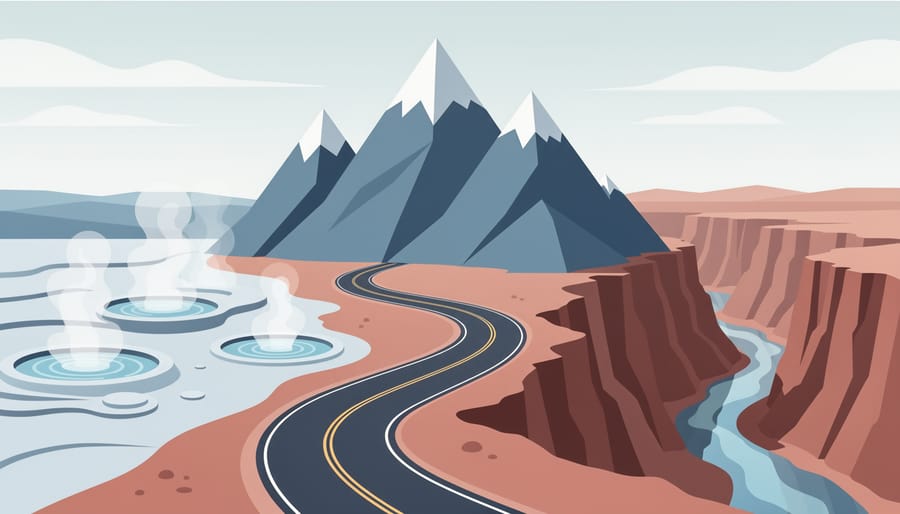
Wyoming’s National Parks
1. Yellowstone National Park
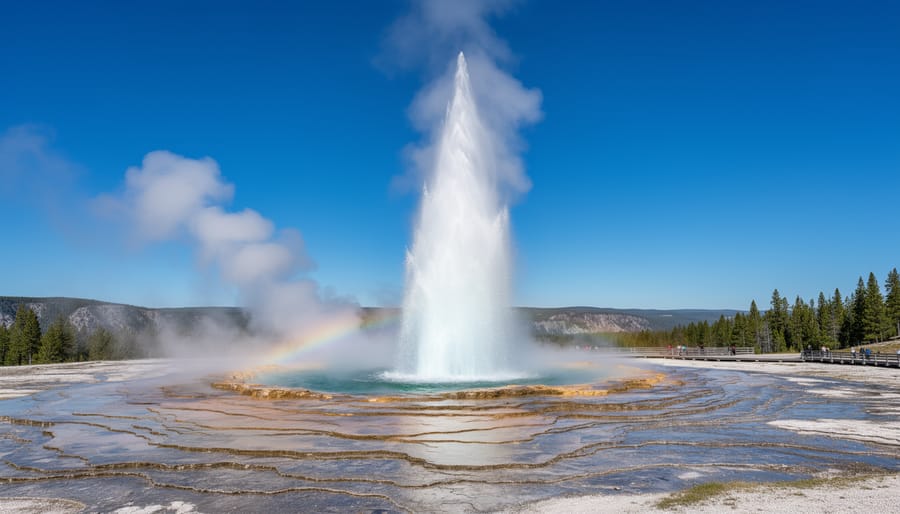
Yellowstone stands as America’s first national park, established in 1872, and remains one of the planet’s most extraordinary geothermal wonderlands. Straddling Wyoming, Montana, and Idaho, though predominantly in Wyoming, the park sits atop a supervolcano that fuels over 10,000 hydrothermal features, from explosive geysers to bubbling mud pots and rainbow-hued hot springs.
The park’s crown jewel, Old Faithful, erupts roughly every 90 minutes, shooting boiling water up to 180 feet into the air. But it’s just one of more than 500 geysers in the park. The Grand Prismatic Spring, larger than a football field, dazzles with its vivid orange, yellow, and blue bacterial mats. The Grand Canyon of the Yellowstone carves a dramatic yellow-and-pink gorge where the Yellowstone River plunges over two major waterfalls, including the 308-foot Lower Falls.
Wildlife viewing here rivals anywhere in the Lower 48. Lamar Valley, often called America’s Serengeti, offers your best shot at spotting wolves, grizzly bears, and vast bison herds at dawn. The Hayden Valley also teems with wildlife, including elk and occasional bear activity along the Yellowstone River.
- Old Faithful and Upper Geyser Basin for concentrated geothermal activity
- Grand Canyon of the Yellowstone for dramatic waterfalls and canyon views
- Lamar Valley for prime wolf and bear watching
- Grand Prismatic Spring for otherworldly colors
- Mammoth Hot Springs for terraced travertine formations
Seasonal considerations matter here. Summer (June through August) brings peak crowds but full facility access. Spring offers newborn wildlife and active geysers against snow, while fall delivers fewer visitors and rutting elk. Winter transforms Yellowstone into a snow-coach and snowmobile destination, with steaming geysers creating ethereal ice sculptures. Most roads close November through April, except the northern route through Mammoth.
2. Grand Teton National Park
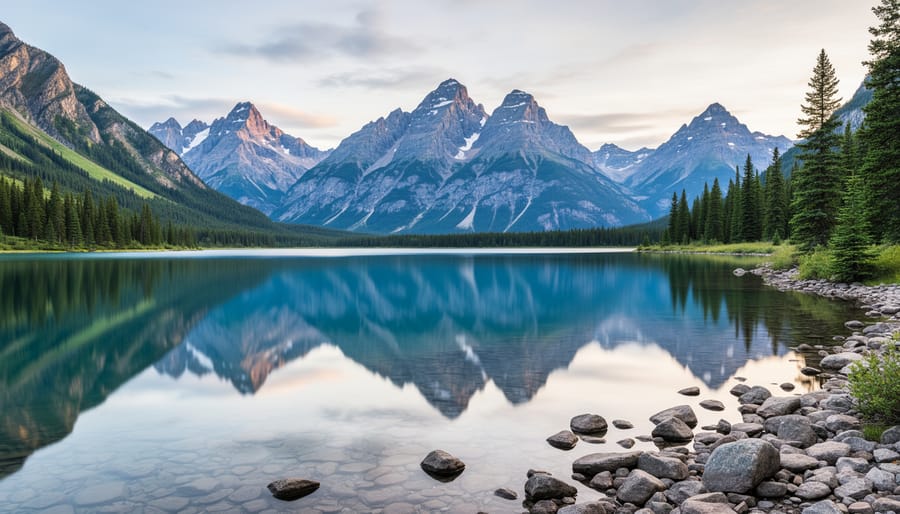
Grand Teton National Park rises from the valley floor in one dramatic sweep, no foothills softening the impact, just raw peaks punching skyward. This compactness makes the park surprisingly accessible: you can stand on the valley floor at Jenny Lake, hike into alpine lakes beneath 13,770-foot Grand Teton by lunch, and return in time to watch the alpenglow turn the range copper and gold. Unlike Yellowstone’s sprawling thermal features, Grand Teton delivers pure mountain majesty, glacier-carved canyons, crystalline lakes reflecting jagged summits, and the Snake River winding through sagebrush flats where moose wade and trumpeter swans nest.
The park’s trail system suits every ambition. Cascade Canyon from Jenny Lake rewards moderate hikers with waterfalls and wildflower meadows, while the steep push to Lake Solitude filters out casual strollers. Down valley, the Taggart Lake loop offers front-row Teton views without the elevation gain, perfect for families or anyone easing into altitude. String Lake’s shoreline trail stays flat and calm, ideal for a rest day between bigger efforts.
Safety in bear country isn’t optional here; carry bear spray on every hike, make noise in brushy areas, and store food properly whether you’re camping or day-tripping. As of September 2026, the park’s wildland fire danger sits at HIGH, so check current conditions before heading out and follow any restrictions on campfires or trail access.
Seasonal timing shapes your experience. The Teton Park Road opens fully by early May, but snow lingers on high passes into July, plan alpine hikes for late summer when trails clear and wildflowers peak. September offers thinner crowds and bugling elk, though afternoon thunderstorms roll in fast. Winter transforms the park: cross-country skiers glide across frozen lakes, and the Tetons wear their starkest, most sculptural beauty under deep snow.
Wyoming’s National Monuments
3. Devils Tower National Monument
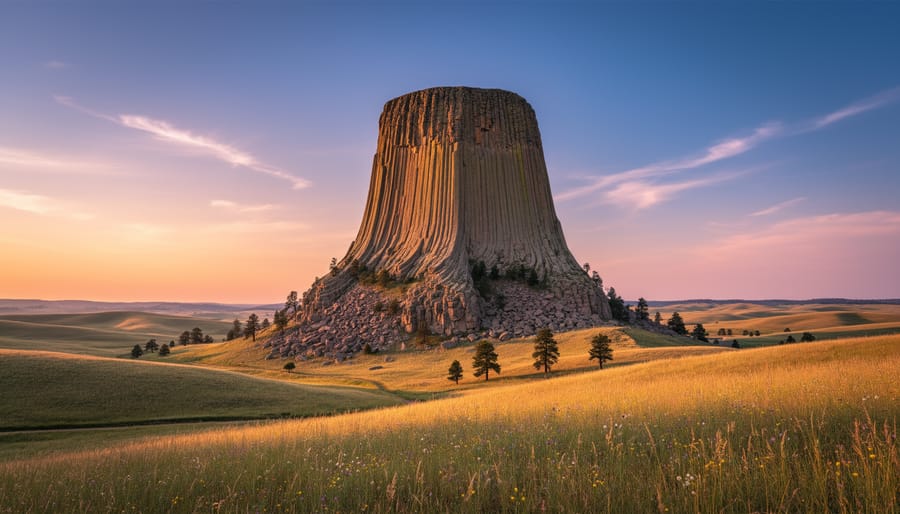
Rising 867 feet from the Wyoming prairie, Devils Tower is one of the most distinctive landmarks in the American West. This volcanic plug, formed roughly 50 million years ago when molten rock cooled and cracked into its signature hexagonal columns, became the nation’s first national monument in 1906.
The Tower holds deep spiritual significance for over 20 Indigenous nations, including the Lakota, Cheyenne, and Kiowa, who continue to conduct ceremonies here. June is considered a sacred month, and the National Park Service requests that climbers voluntarily avoid the Tower during this time out of respect for these cultural practices.
For climbers, Devils Tower is legendary. Over 5,000 people attempt the summit each year, tackling routes that range from moderate to expert level. If you’re not a climber, you can still experience the monument up close on the Tower Trail, a paved 1.3-mile loop around the base that offers stunning views of the columns from every angle. The Red Beds Trail (2.8 miles) and Joyner Ridge Trail (1.5 miles) provide different perspectives from further out, winding through ponderosa pine forests with prairie dog towns along the way.
The visitor center explains the geology, climbing history, and cultural importance through exhibits and ranger programs. Most people spend two to four hours here, though climbers obviously stay longer. The monument sits in northeastern Wyoming, about 30 miles from Interstate 90, making it an easy addition to a Black Hills or Wyoming national parks road trip.
4. Fossil Butte National Monument
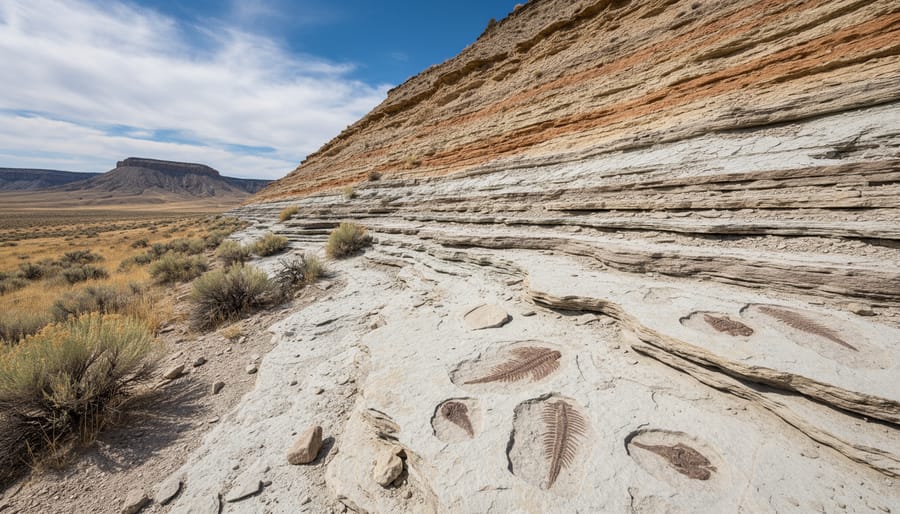
Tucked away in southwestern Wyoming near Kemmerer, Fossil Butte National Monument preserves one of the world’s richest deposits of Eocene-era fossils, remarkable specimens that lived 50 million years ago when this high desert was covered by a vast subtropical lake. The site protects not just fossils, but an extraordinary window into ancient life, with fish, insects, plants, and even bats preserved in stunning detail within layers of limestone.
The visitor center serves as your introduction to the monument’s paleontological treasures. Well-curated exhibits display hundreds of fossils discovered here, including perfectly preserved fish skeletons, stingrays, turtles, and palm fronds that look freshly pressed despite their age. Rangers often demonstrate fossil preparation techniques, showing how scientists carefully remove rock matrix to reveal these ancient organisms. The exhibits explain how Fossil Lake formed and why conditions created such exceptional preservation, you’ll understand the difference between this site and typical fossil beds where only fragments survive.
Two main hiking trails let you explore the landscape where these discoveries happen. The 2.5-mile Historic Quarry Trail climbs through sagebrush terrain to an old fossil excavation site, offering views across the basin and interpretive signs explaining the geology. The shorter Fossil Lake Trail (1.5 miles) provides a gentler walk with panoramic vistas. Both trails are exposed with minimal shade, so bring water and sun protection, elevation here exceeds 7,500 feet.
What sets Fossil Butte apart for science enthusiasts is the continuing research. Paleontologists still conduct digs each summer, and the monument’s contribution to understanding Eocene ecology remains significant. Unlike many parks where fossils are just historical context, here they’re the main event.
National Recreation Areas and Historic Sites
5. Bighorn Canyon National Recreation Area
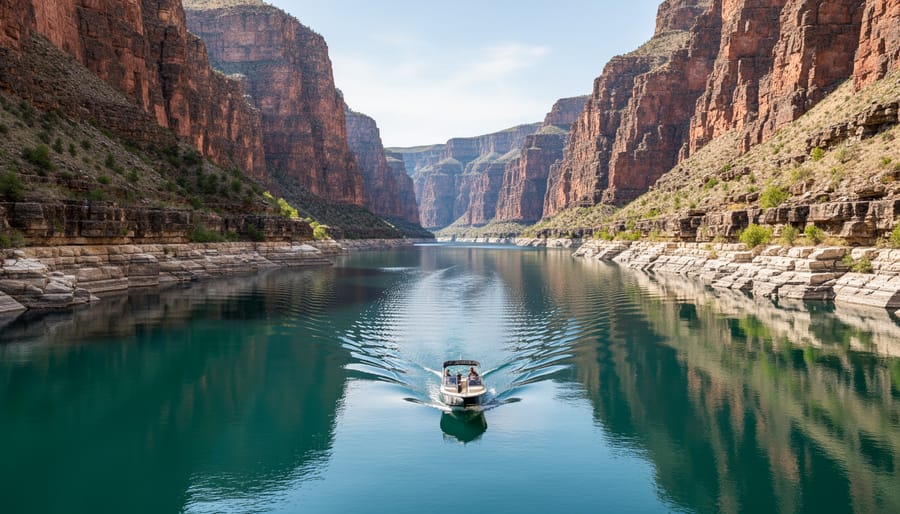
Bighorn Canyon cuts a 55-mile gash through the high desert where Wyoming meets Montana, creating one of the region’s most dramatic but least-visited national recreation areas. The canyon’s sheer limestone walls drop up to 1,000 feet to the turquoise waters of Bighorn Lake, a massive reservoir that serves as the centerpiece for boating, fishing, and water-based recreation.
From Wyoming’s south district, you’ll access the canyon through Lovell, where the Horseshoe Bend area offers boat ramps, a marina, and the easiest entry point for exploring the water. The 71-mile-long lake stretches deep into Montana, with calm bays perfect for paddling and steep-walled sections that reward motorboat exploration. Walleye, smallmouth bass, and trout thrive here, making it a fishing destination that sees far fewer anglers than Wyoming’s famous rivers.
The Wyoming side also provides land-based experiences: the Bighorn Canyon Visitor Center in Lovell sets the geological and historical context, while the three-mile round-trip hike to the canyon overlook delivers sweeping views without the crowds you’d face at Yellowstone or Grand Teton. If you’re planning a multi-park Wyoming road trip and need help coordinating permits and route planning note that Bighorn Canyon requires no entry fee or advance reservations, making it an easy addition to your itinerary.
6. Fort Laramie National Historic Site
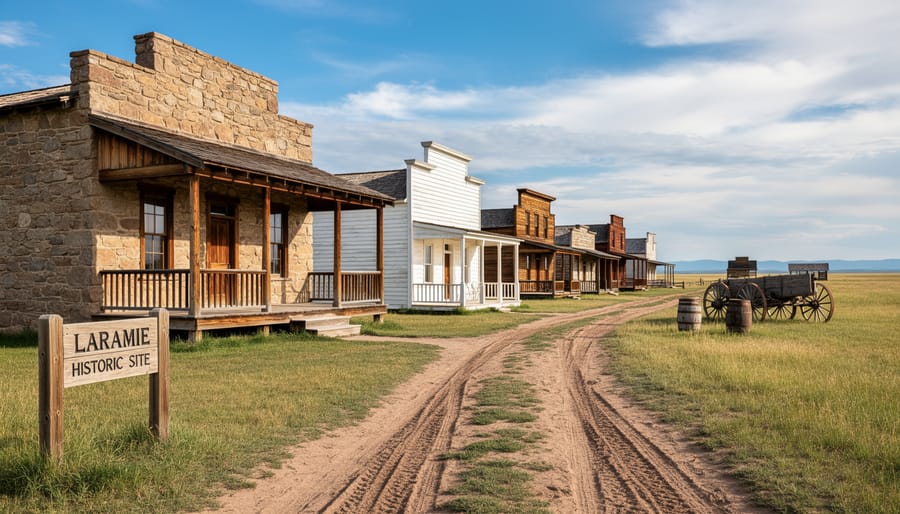
Fort Laramie played a pivotal role in westward expansion, serving as a crucial military post from 1834 through 1890. The site protected Oregon Trail emigrants, housed treaty negotiations with Plains Indian tribes, and functioned as a supply depot during the Indian Wars. Walking these grounds, you’ll grasp how the frontier military operated and why this location mattered so much to 19th-century American history.
Eleven original structures remain standing, including the commissary storehouse, cavalry barracks, and Old Bedlam, the oldest standing military building in Wyoming. The restored officers’ quarters let you peek into frontier military life, complete with period furnishings that show the contrast between officer comfort and enlisted soldier hardship. Rangers lead tours explaining daily routines, tensions between the military and Indigenous nations, and the post’s strategic importance along the Platte River crossing.
Living history programs run during summer months, featuring interpreters in period dress who demonstrate military drills, blacksmithing, and laundry techniques. These demonstrations bring the 1870s garrison to life far better than static exhibits could.
History enthusiasts appreciate Fort Laramie for its authentic preservation and the depth of stories embedded here, from the 1851 Treaty Council that drew 10,000 Plains Indians to the site, to Crazy Horse’s surrender nearby in 1877. The visitor center bookstore carries excellent titles on frontier military history and the complicated legacy of westward expansion.
Practical Information for Visiting Wyoming National Parks
Current Conditions and Closures (September 2026)
As of September 2026, several temporary closures affect visitor services at Wyoming’s national parks. The shower facilities at Fishing Bridge RV Park in Yellowstone will be closed from September 21 through September 27 for maintenance work. Guests may use the nearest shower facilities at Grant Village Camper Services about 25 miles away, or the shower facilities at Old Faithful Lodge or Old Faithful Inn.
Active paving operations at Lake Lodge Cabins area will close certain roadway sections from approximately 8:00 a.m. to 5:00 p.m. daily, so plan alternate routes or visit outside those hours if you’re staying there.
At Grand Teton, the current wildland fire danger level is HIGH, which may affect trail access and campfire restrictions. Check the Grand Teton current conditions page before your visit for the latest fire updates, road closures, and bear activity alerts. Bear activity remains significant throughout most months, with both black and grizzly bears near roads, trails, and backcountry areas, so carry bear spray and maintain the required 100-yard distance from all bears.
Local Tips for Making the Most of Your Visit
Experienced Wyoming park visitors know that success comes down to planning smart and staying flexible. Early morning starts between 6 and 7 a.m. get you prime wildlife viewing windows and parking spots at popular trailheads before tour buses arrive. If you plan a national parks road trip consider the less-obvious combinations: Devils Tower pairs well with the Bighorn Canyon loop, while Fossil Butte makes a perfect stop between Yellowstone and Grand Teton if you’re driving the southern route.
- Download offline maps for cell-dead zones, especially in the Lamar Valley and Bighorn Canyon areas
- Carry bear spray everywhere, not just on backcountry trails, bears cross roads and parking lots regularly
- Fill your gas tank at every opportunity; 100-mile stretches between stations are common
- Pack layers even in summer, afternoon thunderstorms can drop temperatures 30 degrees in minutes
- Bring multiple water containers; high elevation and dry air dehydrate you faster than you realize
Weather preparation goes beyond checking forecasts. Wyoming’s high-elevation climate means snow can fall any month at Yellowstone and Grand Teton, so review seasonal packing tips before you commit to your gear list. The state’s notorious wind affects more than just your comfort, it can close roads and make hiking dangerous even when skies are clear.
Wildlife safety extends beyond the 100-yard bear distance requirement currently in effect. Bison cause more injuries than bears, moose are surprisingly aggressive during calving season, and even elk will charge if you crowd them during rut. The best tip from locals: if an animal changes its behavior because of you, you’re too close.
Frequently Asked Questions
Which Wyoming national park should I visit first?
For first-time visitors, Yellowstone offers the most iconic experiences with geothermal features found nowhere else on earth, while Grand Teton delivers more dramatic mountain scenery and easier wildlife viewing. If you can, visit both since they’re connected by a scenic parkway.
How many days do I need to explore Wyoming’s national parks?
Plan at least 3-4 days for Yellowstone and 2-3 days for Grand Teton to see the main highlights without rushing. If you want to include Devils Tower and Fossil Butte, add another 1-2 days for each.
What’s the best time of year to visit Wyoming national parks?
Late spring (May-June) and early fall (September-October) offer fewer crowds, active wildlife, and pleasant weather. Summer brings peak crowds but full facility access, while winter offers solitude and unique experiences like snow coach tours in Yellowstone.
Do I need a 4WD vehicle to visit these parks?
No, regular passenger cars can access all major roads and viewpoints at Wyoming’s national parks. However, high-clearance vehicles help for rough backcountry access roads and during early or late season when conditions can be unpredictable.
Are pets allowed in Wyoming’s national parks?
Pets are permitted in developed areas, campgrounds, and along roads but must stay on leash and are prohibited on trails, boardwalks, and in backcountry areas. Service animals are allowed everywhere with proper documentation.
How do I plan a multi-park itinerary in Wyoming?
Start with Yellowstone and Grand Teton since they’re adjacent, then add Devils Tower (4 hours northeast of Yellowstone) or Fossil Butte (2 hours south of Grand Teton) depending on your route. An America the Beautiful Annual Pass covers entrance fees for all sites and costs the same as two separate park entries.
These answers reflect what experienced Wyoming visitors wish they’d known before their first trip. The parks sit farther apart than many realize, so building in drive time matters when you’re planning your days. Weather shifts quickly in the mountains, even in summer, so pack layers regardless of when you visit.