
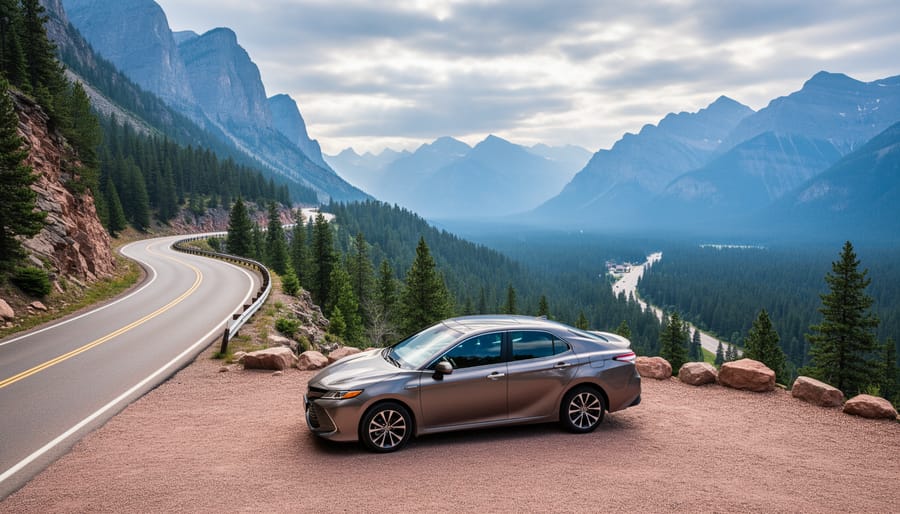
Planning a multi-park road trip from Colorado into the broader American national parks system requires three critical steps: verifying entrance requirements and pass coverage, securing timed-entry reservations at high-demand parks, and mapping realistic routes that account for distance and seasonal access. Colorado’s central location makes it an ideal launching point for Western circuits that stretch into Utah, Wyoming, Arizona, and New Mexico, but the logistics quickly become complex when you’re juggling different reservation systems, entry protocols, and park-specific rules across state lines.
The difference between a smooth cross-border park tour and a frustrating scramble usually comes down to preparation. Many Colorado travelers assume that their Colorado escapes translate directly to other states, only to arrive at a park gate and discover they need a reservation they didn’t know existed or that their day-use pass doesn’t cover the amenities they planned to access. Rocky Mountain National Park’s timed-entry system, active from late May through mid-October, is a prime example: two reservation tiers (Timed Entry for general access, Timed Entry + Bear Lake Road for the most popular corridor) mean you need to understand what each unlocks before you book.
This guide walks you through the exact materials, safety checks, and verification steps required to confidently plan and execute a multi-park road trip that spans state lines. You’ll learn how to coordinate entry systems, avoid common pitfalls with pass coverage, and build routes that respect both your timeline and the unpredictable realities of mountain and desert driving.
What You’ll Need Before You Hit the Road
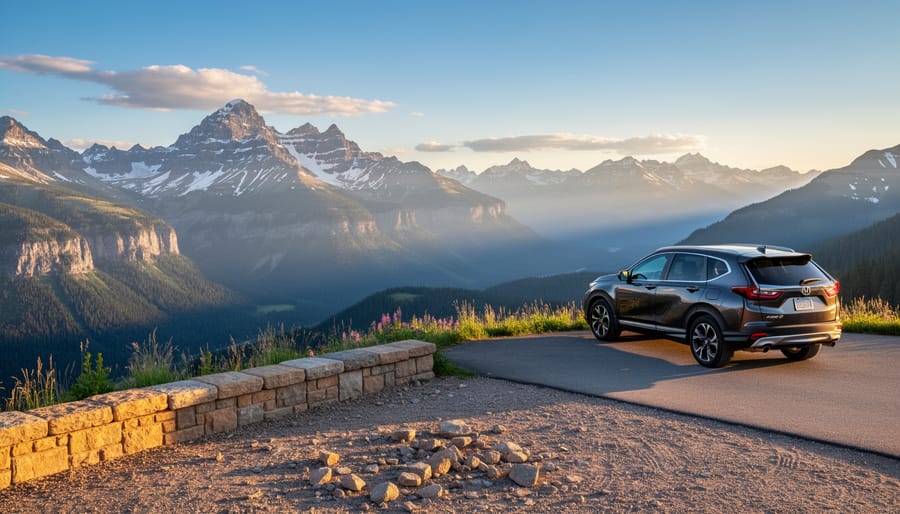
Before you load up the car and leave Colorado’s familiar mountain terrain, you’ll need to gather the right documents, passes, and tools that work across multiple park systems. Cross-border national park road trips involve different entry requirements, reservation platforms, and navigation challenges than exploring a single park close to home.
Essential Passes and Entry Documents
Start with the America the Beautiful pass, which covers entrance fees and standard amenity fees at Federal recreational sites, including national parks. At $80 for a year, it’s your most cost-effective option if you’re visiting more than two fee-charging parks on your trip. Most sites managed by the National Park Service are free to visit, but some require an entrance pass, and the parks worth the long drive from Colorado typically charge fees.
For parks you’ll visit repeatedly or want to support specifically, consider park-specific annual passes. These work only at their designated park but sometimes include perks the America the Beautiful pass doesn’t cover. Research each park on your circuit to determine whether it requires an entrance fee or pass before you leave.
Reservation and Timed-Entry Systems
Some high-traffic sites may require a reservation, so you’ll need accounts on and any park-specific booking platforms. Rocky Mountain National Park will implement its 2026 timed-entry reservation system beginning May 22, 2026, requiring reservations to enter during certain hours from late May through mid-October. The system offers two options: Timed Entry (access to all areas except Bear Lake Road Corridor) and Timed Entry + Bear Lake Road (full park access). Print or screenshot all confirmation emails, cell service disappears quickly once you leave populated areas.
Must-Have Gear and Documentation
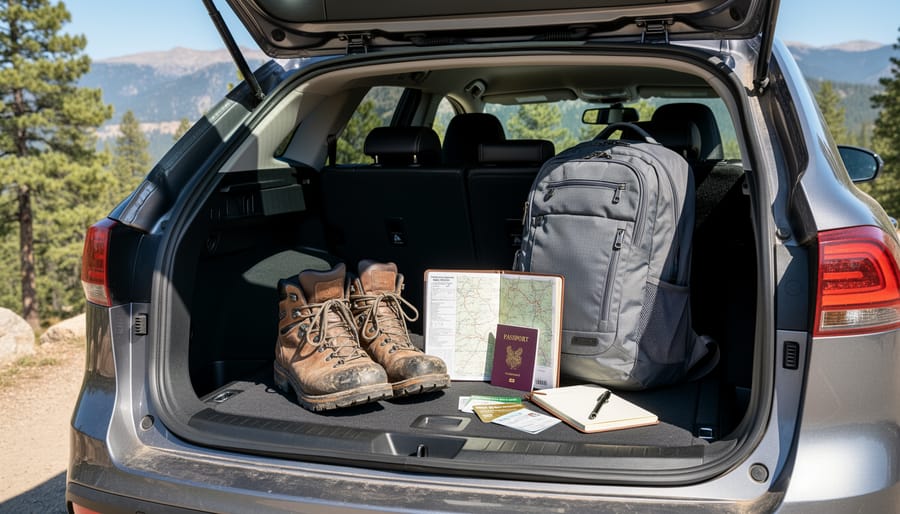
Pack this checklist before departure:
- America the Beautiful pass or individual park passes
- Printed reservation confirmations for all timed-entry parks
- Valid ID and passport if crossing into Canada or Mexico
- Vehicle registration and insurance documentation
- Offline maps downloaded for areas without cell coverage
- Any park-specific permits for backcountry camping or special activities
Download offline GPS maps for your entire route. Mountain passes, remote stretches between parks, and international border zones frequently have zero cell service. A paper atlas as backup isn’t old-fashioned, it’s smart planning when you’re navigating unfamiliar terrain across state and potentially international lines.
If your route crosses into Canada for parks like Waterton or into Mexico, verify current passport and vehicle documentation requirements well before your departure date, as these change and processing times vary.
Important Warnings and Restrictions to Know
Before you accelerate out of Colorado on your multi-park road trip, take these warnings seriously. The transition from Colorado’s terrain to parks across different states and elevations introduces hazards that can derail your plans or put you at risk.
High-Altitude and Elevation Shifts
Starting from Colorado’s already-elevated base means you’re acclimated to thin air, but crossing into lower-elevation parks and then climbing back up creates stress on your body. Headaches, nausea, and fatigue hit harder when you’re moving between extremes. If you’re linking Rocky Mountain National Park with lower-desert parks in Utah or Arizona, plan rest days to let your system adjust. Children and travelers with respiratory conditions need extra monitoring during these transitions.
Seasonal Road Closures Block Your Route
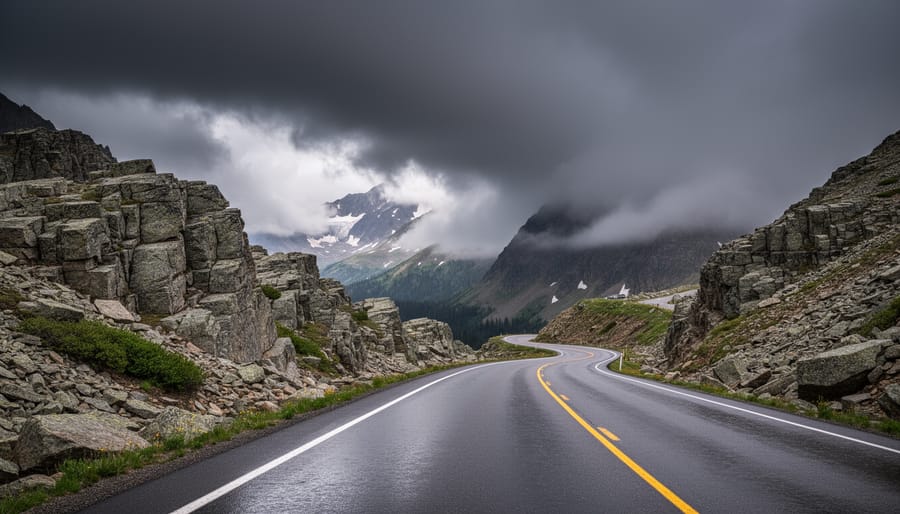
Mountain passes on your Colorado-to-neighboring-states route close without warning based on snow, ice, and avalanche danger. These dangerous roads in Colorado and Wyoming shut down entire circuits between October and May. Check current road status for every pass on your route the morning you drive it, not just when you plan. A closure at Beartooth Highway or Trail Ridge Road forces hundred-mile detours that destroy your timeline.
Wildlife and Remote Route Realities
Each park region presents different animal risks. Colorado elk, Wyoming bison, and bear country across Montana and New Mexico demand vigilance. Keep 25 yards from bison, 100 yards from bears, and never approach wildlife for photos. Cell service vanishes for 50-plus-mile stretches between parks. Download offline maps before you leave coverage, and carry a physical road atlas as backup.
Fuel stations space out dramatically on remote routes connecting parks. Never pass a gas station below half-tank when crossing Nevada, Wyoming, or southern Colorado backcountry. Running dry in 95-degree heat or 20-degree cold creates life-threatening situations hours from help.
Step-by-Step: Planning Your Cross-Border National Park Road Trip
Step 1: Choose Your National Park Circuit
Start by narrowing down the region you want to explore. Colorado’s central location makes it an ideal launchpad for three major circuits. The Colorado-Utah-Arizona loop takes you through dramatic canyon country, connecting Colorado’s mountain parks with Arches, Canyonville, and Grand Canyon. The Colorado-Wyoming-Montana route follows the spine of the Rockies northward to Yellowstone and Glacier, keeping you in alpine terrain. The Colorado-New Mexico corridor heads south through high desert landscapes to Carlsbad Caverns and White Sands.
Pick your circuit based on what landscapes excite you most and how much time you have. A tight weekend loop might stay within Colorado and southern Wyoming, while a two-week adventure could tackle the full Utah-Arizona sweep. Consider mixing national parks with BLM lands and national monuments along the way, they often require no reservations and break up long drives between major parks.
Write down your must-see parks first, then build connecting routes around them. Don’t try to hit everything. Three to five parks on a single trip lets you actually experience each one rather than just collecting entrance stamps. Check a physical map to visualize elevation changes and mountain passes between parks, which affect drive times more than raw mileage suggests.
Step 2: Check Entry Pass Requirements for Each Park
Before you finalize your park circuit, you need to know which sites will actually charge you to enter. Most National Park Service sites are free to visit, but the marquee parks, including many across the American West, require an entrance fee or pass.
Start by listing every park on your planned route. Then check the official NPS website for each park to see whether it charges an entrance fee. You’ll encounter three types of sites: parks with standard entrance fees, parks requiring only parking or amenity fees, and completely free-entry areas.
The America the Beautiful annual pass covers entrance fees and standard amenity fees at all Federal recreational sites, including national parks. If you’re visiting three or more fee-charging parks on your road trip, this pass typically pays for itself compared to buying individual park entry fees. Some parks also offer park-specific annual passes that cover only that single location, useful if you plan multiple visits to one park throughout the year, but less practical for a multi-park circuit.
Write down which parks need paid entry and whether your America the Beautiful pass covers them. This prevents surprises at entrance stations and helps you budget accurately. You’ll also discover which parks on your route let you explore for free, giving you flexibility to add spontaneous stops without worrying about additional costs.
Step 3: Identify Reservation and Timed-Entry Requirements
Not every national park operates on a first-come, first-served basis anymore. Before you finalize your road trip circuit, you need to identify which parks on your route require advance reservations or timed-entry permits, missing this step can mean showing up to a closed gate.
Start with the park closest to home: Rocky Mountain National Park. If your trip falls between late May and mid-October, you’ll need to navigate Rocky’s reservation system. The park’s timed-entry begins May 22, 2026 requiring reservations during certain hours throughout peak season. Understanding how this works prevents wasted days.
For each additional park on your itinerary, visit the official National Park Service website and check the “Plan Your Visit” section. Look specifically for reservation systems, timed-entry windows, or permit requirements. Some parks restrict access only to specific high-traffic areas or trails, while others require reservations park-wide during summer months.
Create a simple spreadsheet listing each park, whether it requires reservations, which months or dates those requirements apply, and where to book. This becomes your master checklist. Pay attention to whether reservations are needed for entry, camping, specific trails, or activities like ranger-led tours. The requirements vary wildly between parks, and assuming one system applies everywhere leads to disappointment when you discover Zion’s shuttle reservation differs entirely from Arches’ timed entry.
Step 4: Book Your Reservations Within the Proper Windows
Timing matters. Once you’ve identified which parks require reservations, book them as soon as the booking windows open, popular parks sell out within hours. Check each park’s website for its specific reservation release schedule. Rocky Mountain National Park, for example, releases 2026 timed-entry permits in rolling windows, so mark those dates on your calendar and set reminders.
Coordinate your bookings to match your road trip sequence. If you’re entering Rocky Mountain on June 10 and reaching Arches three days later, secure both reservations before finalizing accommodations. This prevents the frustration of having a hotel booked near a park you can’t actually enter.
Study cancellation policies before you commit. Most federal recreation sites allow cancellations up to a certain number of days before your entry date, but some forfeit fees or impose strict deadlines. Screenshot your confirmation emails and check whether reservations are transferable to different dates if weather or mechanical issues force a route change.
Build a spreadsheet linking each park reservation to its confirmation number, entry time window, and cancellation deadline. This single reference sheet keeps you organized when juggling multiple parks across several states and prevents the common mistake of missing a narrow entry window because you forgot which two-hour slot you booked three months earlier.
Step 5: Map Your Route and Calculate Drive Times
Start by opening a mapping tool like Google Maps or a dedicated road trip planner to plot each park on your circuit. Calculate the driving distance between consecutive stops, then divide by a conservative speed, 50 mph for mountain highways works better than assuming interstate pace. If your route crosses high passes or climbs significant elevation (Rocky Mountain National Park sits above 7,500 feet, and Trail Ridge Road peaks over 12,000), add 20-30% more time to account for slower climbing, weather delays, and stops to let your vehicle cool or passengers acclimate.
Identify realistic overnight stops between parks rather than pushing marathon drives. A six-hour driving day leaves energy for short hikes and still gets you to your next destination before dark. Check whether you’ll need camping reservations or hotel bookings at gateway towns, and secure those alongside your park entries. Build a one-day buffer into your itinerary, weather closures, wildlife jams, or a trail you don’t want to leave can derail tight schedules. Download offline maps for each segment since cell service drops frequently on remote park roads.
Step 6: Prepare for Border Crossings (If Applicable)
If your road trip extends to Glacier National Park (Montana) and Waterton Lakes National Park (Alberta, Canada), you’ll cross an international border. Before you go, research current passport and entry requirements for both the U.S. and Canada, as documentation rules change periodically. Check whether your vehicle insurance covers cross-border travel, and confirm your cell phone plan works in Canada to avoid roaming charges. Review customs regulations for bringing food, camping gear, or other supplies across the border. Download offline maps for the Peace Park region, since cell service near the border can be spotty. Allow extra time at the crossing, especially during peak summer travel, and verify the hours of operation for your chosen port of entry, some remote crossings have limited schedules.
How to Verify Your Plan Is Road-Ready
Before you load up the car and leave Colorado, walk through this final verification sequence to confirm every critical piece of your cross-border national park adventure is in place. Missing even one element can derail a carefully planned trip, so treat this checklist as your road-ready certification.
- Confirm all timed-entry reservations via email. Pull up your confirmation messages for Rocky Mountain (if traveling May 22-mid-October 2026) and any other parks requiring timed entry. Screenshot or print each one with your reservation number, date, and time window. Verify the names match your ID and that you’ve booked the correct reservation type (Timed Entry or Timed Entry + Bear Lake Road for Rocky Mountain).
- Verify pass activation and expiration dates. Check your America the Beautiful pass or park-specific annual passes to ensure they’re active for your entire trip window. If your pass expires mid-trip, you’ll need to purchase a new one or pay individual entrance fees at parks visited after expiration.
- Download offline maps for all park areas. Cell service disappears quickly once you leave Colorado’s Front Range. Download Google Maps offline areas for each park and the connecting routes between them. Save park-specific trail maps and PDFs from official park websites to your phone.
- Check current road and weather conditions 48 hours before departure. Visit each park’s official website or call ranger stations to confirm roads are open. Mountain passes can close unexpectedly due to snow, even in summer. Build flexibility into your timeline if conditions look questionable.
- Ensure emergency contacts and roadside assistance information is accessible. Save your insurance provider’s roadside number, local park emergency contacts, and a trusted person’s info who knows your itinerary. Keep physical copies in your glove box since phones die or lose signal.
Double-check your accommodations are confirmed with reservation numbers saved. If you’re camping, verify site numbers and check-in procedures for each location. Pack a printed itinerary with addresses, confirmation numbers, and phone contacts for every stop. Review your vehicle’s maintenance history and confirm you’ve got a spare tire, jack, and basic tools. Finally, assemble backup plans: alternative routes if a road closes, nearby towns with lodging if weather forces a delay, and rainy-day activities if a park shuts down a key area.
Frequently Asked Questions
Does the America the Beautiful pass work at all national parks?
Yes, the America the Beautiful pass covers entrance fees and standard amenity fees at Federal recreational sites, including all national parks that charge admission. This makes it the most cost-effective option if you’re planning to visit multiple parks on your road trip, since it covers the entire National Park Service system rather than requiring separate entrance fees at each location.
What happens if I miss my timed-entry reservation?
Missing your timed-entry window typically means you won’t be admitted to the park during that time slot, and you’ll need to book a new reservation if any are available. Rocky Mountain National Park’s 2026 timed-entry system requires arrival during your designated time, so plan extra travel buffer to avoid losing your reservation due to delays.
Can I visit Rocky Mountain National Park without a reservation?
During the off-season or outside timed-entry hours, yes. Starting May 22, 2026, Rocky Mountain National Park requires timed-entry reservations to enter during certain hours of the day through mid-October, but you can visit without a reservation during early morning, late evening, or outside the timed-entry season.
How far in advance should I book reservations for summer travel?
Book as soon as reservations open for your target parks, especially for high-traffic destinations during peak summer months. Popular parks often fill within hours or days of their booking windows opening, so set calendar reminders and be ready to reserve the moment availability goes live.
Do I need separate passes for parks in different states?
No. The America the Beautiful pass works at national parks across all states, so one pass covers your entire multi-state road trip circuit. However, you’ll still need to research and book any required timed-entry reservations separately for each park on your route, regardless of which state they’re in.
Beyond these common questions, remember that reservation policies and entry requirements can shift from year to year. Always verify current requirements directly with each park on your itinerary a few weeks before departure, even if you booked months in advance. Park websites and provide the most up-to-date information on what’s required for entry, and checking again closer to your trip prevents surprises at the gate.
Thorough planning is what separates a stressful scramble from a seamless adventure when you’re tackling multiple American national parks from Colorado. By understanding each park’s entry system, securing your timed-entry reservations well before peak season, and mapping routes that account for realistic driving distances and elevation changes, you’ll spend more time soaking in views and less time worrying about logistics.
If you’re new to multi-park road trips, start close to home. Rocky Mountain National Park makes an excellent proving ground, master the 2026 park visit reservation system there before expanding your circuit into Utah, Wyoming, or beyond. Each park you add teaches you something about coordinating passes, booking windows, and route planning that’ll serve you on bigger adventures.
We’d love to hear from Colorado travelers who’ve already completed cross-border national park circuits. Share your favorite routes, reservation strategies, and lessons learned in the comments, your insights help the whole community plan better trips.