
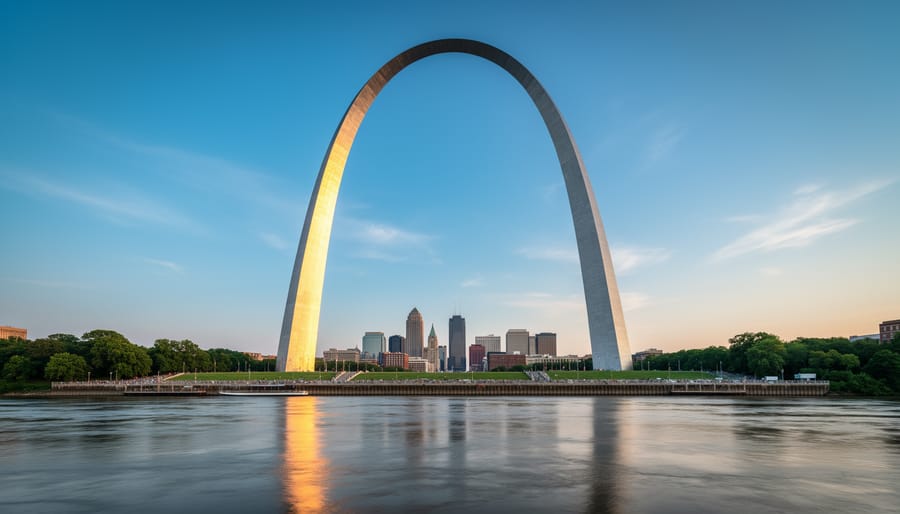
Gateway Arch National Park sits on 91 acres of prime St. Louis riverfront and delivers something rare: a genuinely iconic American landmark you can ride to the top of, paired with museum galleries that trace westward expansion, all without paying an entrance fee to explore the grounds. The gleaming 630-foot steel arch has anchored the Mississippi River skyline since 1965, and today this urban national park offers visitors the chance to tram up through the monument’s hollow legs, walk beneath its soaring span, and understand the complicated history of westward migration through thoughtful exhibits below.
Most travelers visiting from Colorado or other mountain states expect a quick photo stop, but Gateway Arch National Park rewards a half-day commitment. The grounds open at 5am and stay accessible until 11pm year-round, giving early risers and sunset chasers room to experience the monument in changing light. The Visitor Center operates from 9am to 6pm daily, with extended Friday and Saturday hours until 8pm during summer months. The park closes only three days annually: Thanksgiving, Christmas, and New Year’s Day.
This isn’t backcountry wilderness or rugged trail networks. Gateway Arch National Park thrives as an urban green space where history, architecture, and river views converge in the heart of a revitalized downtown corridor. Whether you’re road-tripping across the Midwest or adding a city stop to your travel rotation, the Arch delivers a experience that balances monument tourism with genuine national park storytelling.
Why Gateway Arch National Park Should Be on Your Travel List
Gateway Arch National Park breaks the mold of what most people expect from a national park. Instead of requiring a multi-day backcountry trek or a drive deep into wilderness, this 91-acre urban park sits right in downtown St. Louis, making it one of the most accessible national parks in the system. You can visit on a layover, incorporate it into a cross-country road trip, or make it the centerpiece of a long weekend exploring the Midwest.
The park’s centerpiece, the 630-foot stainless steel Gateway Arch, is an engineering marvel that stands as the tallest arch in the world. Designed by architect Eero Saarinen and completed in 1965, it’s both a triumph of mid-century design and a monument to America’s westward expansion. That combination of architecture, history, and symbolism creates something you won’t find in Yellowstone or Yosemite.
Families appreciate the variety. You can ride a tram to the top, explore an underground museum at no cost, watch a documentary about the Arch’s construction, tour the historic Old Courthouse where the Dred Scott case was tried, and still have time to picnic along the Mississippi River. The entire visit can fit comfortably into an afternoon, or you can linger for a full day.
Adventure seekers from Colorado and beyond find the Arch compelling for different reasons. It’s a chance to experience a landscape defined by human ambition rather than geological forces, to stand at the symbolic starting point of westward journeys, and to capture perspectives of American history that don’t exist in the Mountain West. The park also offers a refreshing contrast to high-altitude hikes, no acclimatization required, just curiosity and comfortable shoes.
Top Experiences at Gateway Arch National Park
1. Tram Ride to the Top of the Gateway Arch
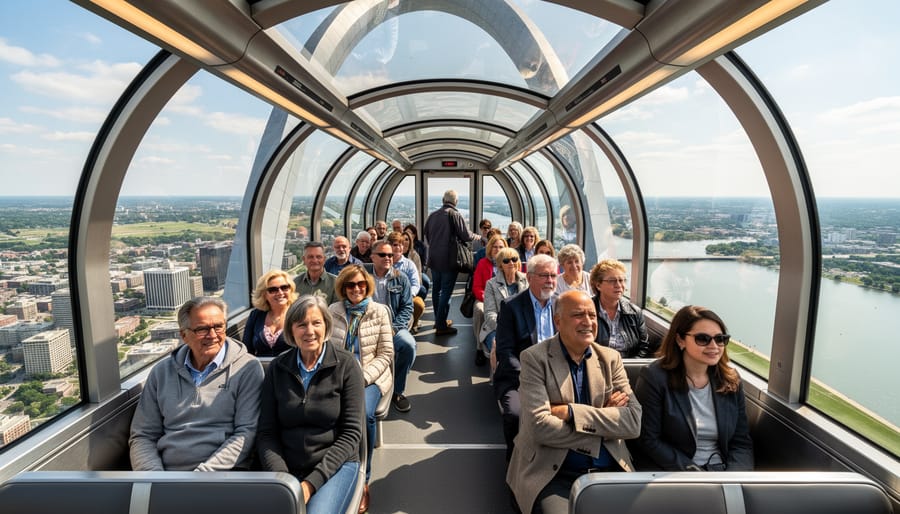
The tram ride to the top of the Gateway Arch is the park’s most iconic experience and the reason most visitors make the trip. This isn’t your typical elevator, you’ll ride in a unique pod-style transportation system that holds up to five passengers in each compact, barrel-shaped capsule. The 4-minute journey to the top takes you through the north or south leg of the Arch, with the pods moving on a track system similar to a Ferris wheel as they ascend the monument’s curve.
Once you reach the observation deck at 630 feet, you’ll find 16 windows on each side offering sweeping views of St. Louis and the Mississippi River below. The Gateway Arch is 630 feet tall, making it taller than the Statue of Liberty and the Washington Monument. On clear days, you can see up to 30 miles across the river into Illinois and across the city’s historic neighborhoods and modern skyline.
You’ll have roughly 45 minutes to one hour at the top before taking the tram back down, giving you plenty of time to soak in the views, snap photos through the curved windows, and appreciate the engineering marvel from the inside. For first-time visitors, this ride transforms the Arch from a monument you photograph from below into an experience you genuinely understand, the structure’s scale, the boldness of its construction, and the strategic importance of St. Louis as America’s gateway to westward expansion all become vividly clear from that vantage point.
2. Museum at the Gateway Arch
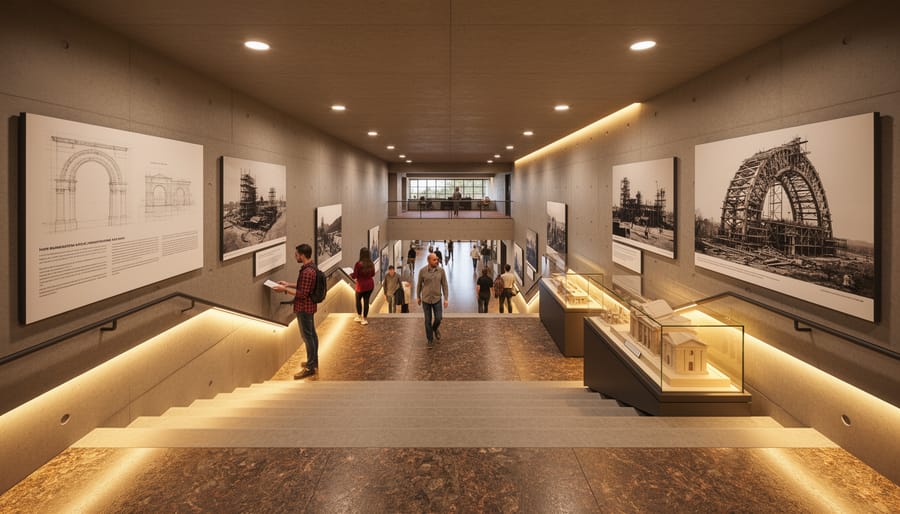
Beneath the Gateway Arch lies a 46,000-square-foot underground museum that brings St. Louis’s pivotal role in westward expansion to life through immersive exhibits and compelling artifacts. The museum, redesigned and expanded in recent years, tells the story of how this riverfront city became the literal launching point for thousands of pioneers, traders, and explorers heading west in the 1800s.
Interactive galleries let you step into a frontier outpost, examine authentic covered wagons, and explore the lived experiences of the diverse groups who shaped the westward movement, from Indigenous peoples whose lands were crossed to enslaved individuals seeking freedom, from European immigrants to daring entrepreneurs. Touch screens and multimedia displays throughout the museum make history tangible rather than abstract, especially engaging for kids who can test their frontier decision-making skills through interactive stations.
The exhibits don’t shy away from the complex realities of expansion, presenting multiple perspectives on this transformative period. You’ll find personal journals, period photographs, and rare artifacts like surveying equipment used by Lewis and Clark’s Corps of Discovery. No fee to browse museum or access the Visitor Center, making this an exceptional value for families and budget-conscious travelers.
Plan at least 45 minutes to explore the full museum, though history enthusiasts often spend considerably longer reading the detailed interpretive panels and watching the short documentary segments integrated throughout the exhibits.
3. Gateway Arch Grounds and Riverfront
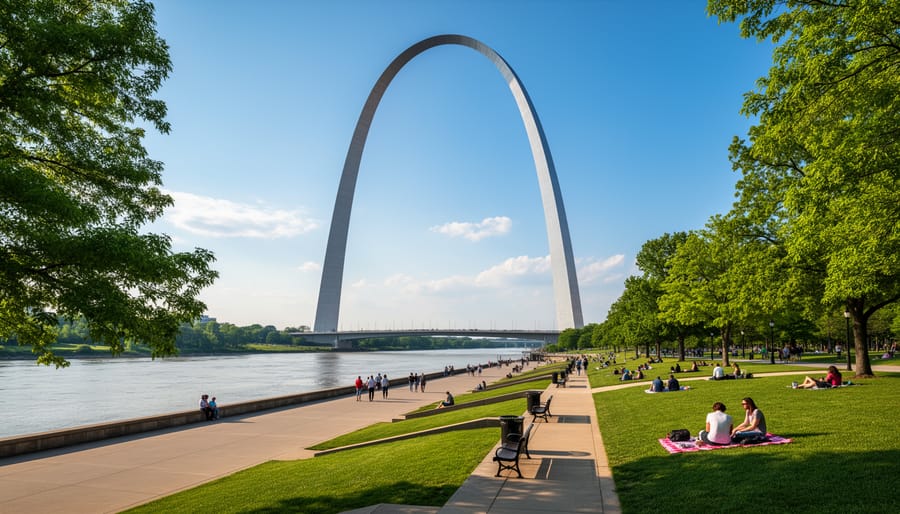
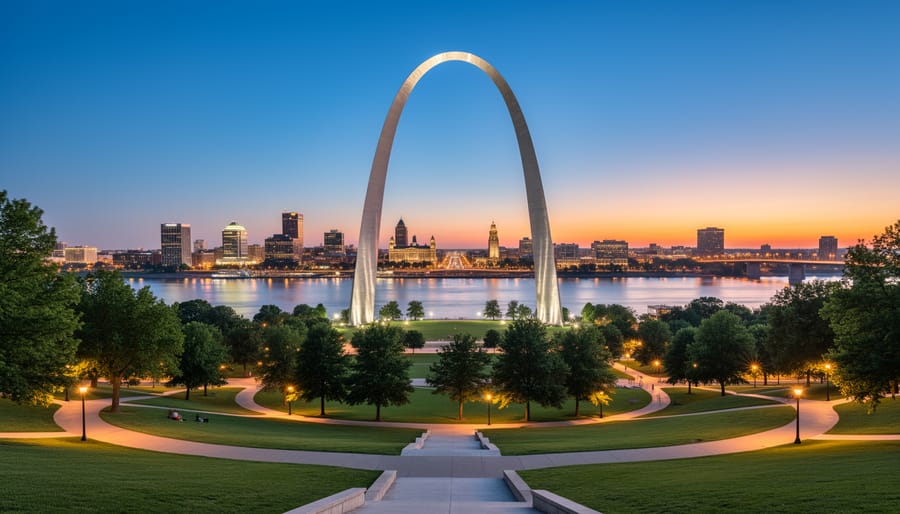
The 91-acre park grounds offer a surprisingly expansive green space right in downtown St. Louis, stretching along the Mississippi River with the Arch as its centerpiece. Wide pedestrian paths connect the north and south ends of the park, perfect for leisurely walks where you can take in the monument from constantly changing angles. Open lawns invite picnicking and relaxation, especially on mild spring and fall days when locals and visitors spread out blankets between the riverside and the Arch’s base.
The Mississippi Riverfront itself provides a completely different perspective than the monument-focused views. Walking east toward the water reveals the working river, barges passing, the Eads Bridge spanning overhead, and the Illinois shoreline in the distance. Several viewpoints along the river wall make excellent spots for photography, particularly at sunrise when golden light hits the Arch’s stainless steel curves.
Public art installations dot the grounds, including sculptures and commemorative plaques that tell pieces of St. Louis’s westward expansion story. The Luther Ely Smith Square on the park’s western edge features fountains and additional gathering space.
For the best photos, position yourself on the Grand Staircase looking west during late afternoon, the Arch frames against a clear sky with the Old Courthouse behind it. Early morning visits mean smaller crowds and softer light. The north leg area typically has fewer people than the more trafficked south side near the main entrance, offering quieter moments to appreciate the monument’s scale from ground level.
4. Old Courthouse

The Old Courthouse stands just west of the Gateway Arch as a powerful counterpart to the monument’s celebration of westward expansion. This Greek Revival building, completed in 1862, witnessed some of the most consequential legal battles in American history, most notably the Dred Scott case trials in the 1840s and 1850s, which challenged the institution of slavery and became a catalyst for the Civil War.
Step inside and you’ll find yourself beneath a stunning cast-iron dome, beautifully restored to showcase the building’s architectural craftsmanship. The rotunda alone is worth the visit, with intricate details and soaring spaces that transport you back to the 19th century.
The courthouse now houses several permanent exhibits exploring St. Louis’s role in westward expansion and the struggle for civil rights. You’ll encounter displays about the Dred and Harriet Scott freedom suits, women’s suffrage trials held in these very courtrooms, and the building’s evolution from territorial courthouse to national landmark. Interactive exhibits help visitors grasp the human stories behind landmark legal decisions.
Admission is free, and rangers are often available to answer questions about the building’s history and significance. The courthouse operates on the same schedule as the main Visitor Center, making it easy to incorporate into your Gateway Arch visit. Many travelers find the courthouse adds essential historical context to their park experience, revealing layers of American history beyond the monument itself.
5. Documentary Film Experience
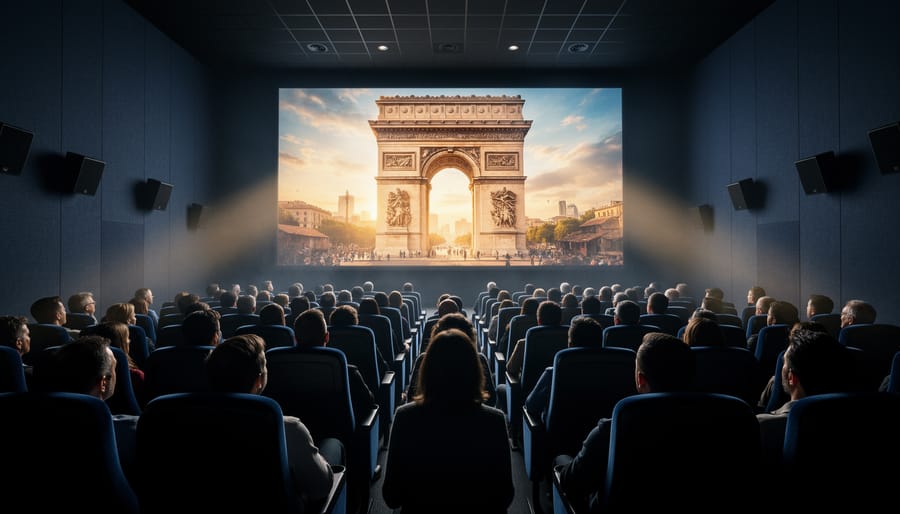
The Tucker Theater inside the Visitor Center screens Monument to the Dream, a 35-minute documentary that chronicles the ambitious engineering feat behind the Gateway Arch’s construction. The film takes you through the entire process, from Eero Saarinen’s winning design in 1947 through the final placement of the stainless steel keystone section in 1965. You’ll see actual footage of workers balancing on narrow platforms hundreds of feet above the ground, the innovative construction techniques that made the world’s tallest arch possible, and the mathematical precision required to join the two legs at the top.
What makes this documentary valuable is the way it transforms your understanding before heading up in the tram. Once you know how those curved legs were built, with creeper derricks that climbed the structure as it rose, and engineering calculations done without modern computers, the ride to the top becomes more than just a view. You’re ascending through a monument that shouldn’t have been buildable with 1960s technology, yet stands today as a testament to human ingenuity.
The film runs continuously throughout the day, and admission is included with Tram Ride to the Top tickets or available separately at the ticket center. Plan to watch it before your tram time if possible.
6. Ranger-Led Programs and Tours
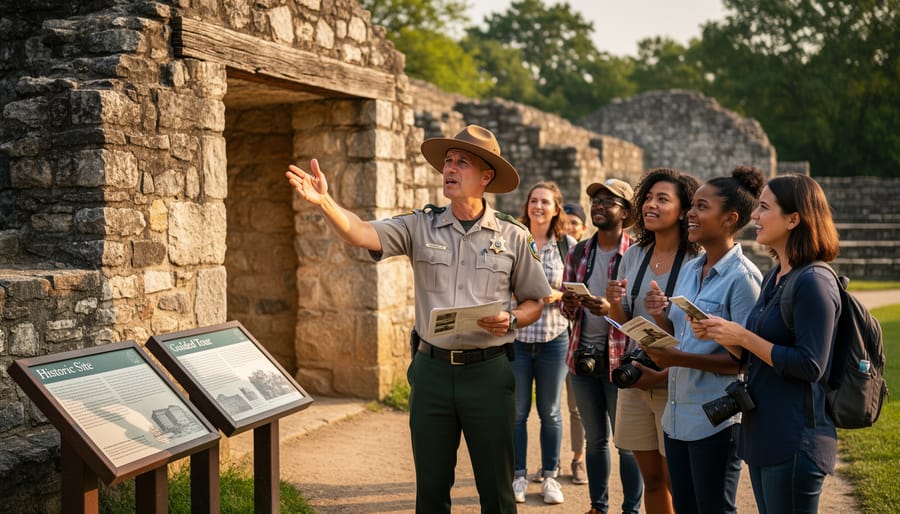
Park rangers at Gateway Arch National Park offer free educational programs that bring the site’s history and significance to life beyond what you’ll absorb on your own. These ranger-led experiences range from guided walking tours of the Arch grounds to talks that dive into westward expansion, the Lewis and Clark expedition, and the stories of the people who shaped this crossroads of American history.
Daily programs typically include 30-minute talks at the Museum level covering topics like the construction of the Arch, the role of St. Louis as the Gateway to the West, and the Dred Scott case tried at the Old Courthouse. Rangers also lead tours that connect the physical monuments to the broader narrative of expansion, displacement, and transformation that defined 19th-century America.
Seasonal programming expands during summer months and around major holidays, with special themes tied to westward migration routes, engineering marvels, and frontier life. You might catch a program on fur traders, riverboat commerce, or the architectural vision behind Eero Saarinen’s iconic design.
Program schedules change throughout the year and aren’t always posted weeks in advance. Check the information desk at the Visitor Center when you arrive, ask a ranger on the grounds, or look for posted schedules near the Museum entrance. Arriving early gives you the best chance to build a ranger program into your visit without conflicts with your timed tram tickets.
7. Riverboat Cruises (Adjacent Experience)
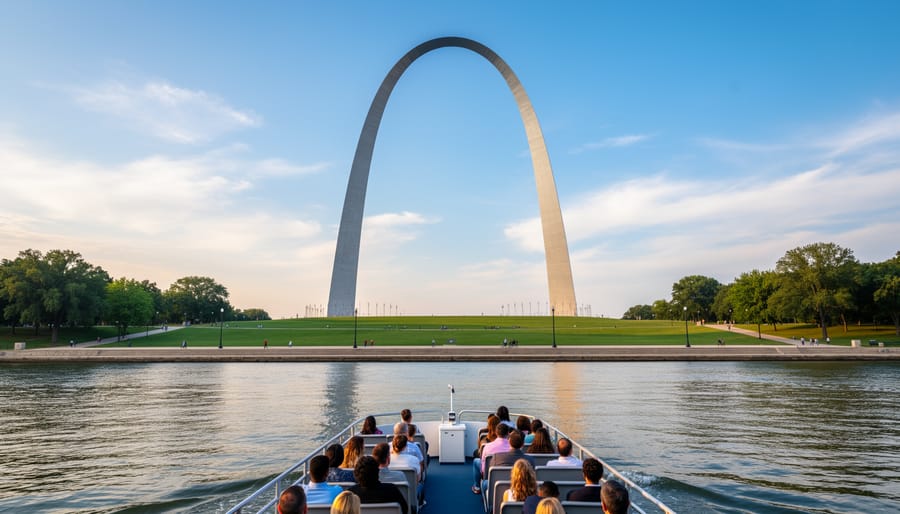
The Gateway Arch Riverboats dock right at the base of the park along the Mississippi River, offering a completely different perspective on the monument you just explored from ground level. These vintage-style paddlewheelers run sightseeing cruises that let you experience the Arch as Lewis and Clark might have seen riverfront landmarks: from the water, looking up.
The standard one-hour sightseeing cruise provides narrated history about St. Louis’s river heritage while you drift past the gleaming stainless steel curve towering 630 feet overhead. It’s genuinely striking how the Arch’s proportions shift when viewed from below on the water compared to standing beneath it in the park. Longer dinner cruises combine the sunset views with onboard meals, while themed specialty cruises run throughout the year for holidays and events.
Most visitors who tack on a riverboat cruise find it rounds out their park experience nicely. You’ve already learned the history inside the museum and seen the city from the top of the Arch. The cruise adds a third dimension: understanding why this exact spot on the Mississippi mattered so much to westward expansion. The river itself becomes part of the story rather than just backdrop.
Purchase tickets separately from your park admission, either online ahead of time or at the riverboat ticket booth near the park’s north entrance.
Planning Your Visit: Practical Information
Hours of Operation
Gateway Arch National Park operates year-round with hours that vary by facility and season. The Visitor Center opens daily at 9:00am and closes at 6:00pm most of the year. During summer months, you’ll find extended hours on weekends: the center stays open until 8:00pm Friday and Saturday evenings while maintaining the standard 6:00pm close Sunday through Thursday.
| Facility | Regular Hours | Summer Extended Hours |
|---|---|---|
| Visitor Center | 9:00am – 6:00pm daily | 9:00am – 8:00pm Fri-Sat |
| Park Grounds | 5:00am – 11:00pm year-round | 5:00am – 11:00pm year-round |
| Gateway Arch & Call Center | 9:00am – 6:00pm daily | 9:00am – 8:00pm Fri-Sat |
The park grounds themselves offer generous access, opening at 5:00am and remaining open until 11:00pm throughout the year. This gives you flexibility to walk the riverfront paths and photograph the Arch during golden hour without timed entry restrictions. Keep in mind that the Gateway Arch, Visitor Center, and Call Center close on three major holidays: Thanksgiving, Christmas, and New Year’s Day. If your trip falls near these dates, plan accordingly or focus on exploring the outdoor grounds instead.
Tickets and Pricing
Gateway Arch National Park uses a tiered pricing structure that keeps some experiences free while charging for the signature attractions. The good news is you can explore much of the park without spending a dollar, the Museum at the Gateway Arch and Visitor Center require no admission fee, letting you dive into westward expansion history and architectural exhibits at your own pace. Walking the 91-acre grounds along the Mississippi River is similarly free.
The iconic Tram Ride to the Top, however, operates on a paid timed-entry basis:
- Adults (ages 16+): $15 per person
- Children (ages 3-15): $11 per person
- America the Beautiful Park Pass holders: $12 per person
- Children under 3: Free, but still require a ticket reservation
These tickets grant you a specific time slot for the four-minute journey to the observation deck 630 feet above the city. The documentary film “Monument to the Dream” shown in the Tucker Theater runs $7 for adults and $3 for children, though many visitors skip this in favor of spending more time in the free museum or on the grounds. Combination packages bundling the tram and film are occasionally available.
Since tickets are timed and capacity is limited, the price you pay secures your spot in line rather than open-ended access. During peak seasons, popular time slots sell out hours in advance, so factor ticket costs into your budget early in the planning process. The park doesn’t charge parking fees directly, but nearby downtown garages typically run $10-20 for the day.
Reservations and Timed Entry
Gateway Arch National Park uses a timed entry system for the Tram Ride to the Top, which means you’ll need tickets for a specific time slot. Tickets go on sale at 9am daily and can be purchased three ways: through the official Gateway Arch website, by calling the park’s call center, or in person at the ticket center inside the Visitor Center.
During peak seasons, summer weekends, spring break, and major holidays, tram tickets often sell out by mid-morning, especially for desirable time slots between 10am and 2pm. If you’re visiting during these busy periods, book online as soon as tickets become available for your travel dates. The website allows you to secure your preferred time slot from home, which saves time once you arrive.
For off-peak visits (weekday mornings in fall and winter), day-of tickets are usually available at the ticket center, giving you flexibility if your travel plans are loose. Just like considering driving safety when planning your route from Colorado, advance planning for your Arch visit prevents last-minute scrambling and ensures you experience the monument’s signature attraction.
Getting There and Parking
Gateway Arch National Park sits in downtown St. Louis at 11 North 4th Street, directly along the Mississippi River. If you’re driving from Colorado, whether you plan a road trip through Kansas City or swing south through Oklahoma, Interstate 70 runs straight into the city and drops you blocks from the park.
Parking isn’t inside the park itself. Your best options are the Stadium East Garage (701 North 7th Street) and Lumiere Place Garage (900 North 1st Street), both within a 5-10 minute walk. Expect to pay $10-20 per day depending on the garage and time of year. Additional surface lots scatter throughout downtown, though weekend events can fill them quickly.
Public transportation works well here. MetroLink light rail stops at Laclede’s Landing Station, a short stroll from the Visitor Center entrance. Buses also serve the downtown corridor if you’re staying elsewhere in the city. Unlike Colorado’s scenic railways St. Louis transit focuses on practical urban access rather than sightseeing routes.
Local Tips from Travelers and Insiders
Best Times to Visit
Spring and fall offer the most comfortable weather and moderate crowds, with April through May and September through October providing pleasant temperatures for outdoor exploration along the riverfront grounds. Summer brings peak visitation, especially weekends and holidays, but also extended hours on Fridays and Saturdays when the Visitor Center stays open until 8pm instead of the standard 6pm closing time.
For the shortest tram lines, arrive right when the Visitor Center opens at 9am on weekdays, particularly Tuesday through Thursday. Weekend afternoons, especially Saturday and Sunday between noon and 3pm, typically see the heaviest crowds. Winter visits from December through February mean fewer tourists and easier same-day ticket availability, though you’ll face colder conditions on the grounds and shorter daylight for photography.
Weather considerations matter year-round since you’ll spend time outdoors on the 91-acre grounds. St. Louis summers can be hot and humid, while winter temperatures occasionally dip below freezing. The tram ride itself is climate-controlled, but plan for outdoor time before and after. Book tram tickets several days ahead during spring break, summer months, and holiday weekends to guarantee your preferred time slot.
What to Bring and What to Leave Behind
Security screening at Gateway Arch National Park mirrors airport protocols, so plan accordingly. All visitors pass through metal detectors and bag scanners before entering the Visitor Center and accessing the tram. Large bags, backpacks, and coolers aren’t permitted, though small purses and camera bags typically clear security without issue. Sharp objects, weapons, and outside food or drinks beyond personal water bottles will be confiscated.
The tram pods themselves are remarkably compact, just five seats arranged in a circular configuration. Bring only what you can comfortably hold on your lap during the four-minute ride. Cameras and phones are encouraged for capturing views from the top, but bulky camera equipment may prove cumbersome in the tight quarters.
Comfortable walking shoes are essential since you’ll cover significant ground exploring the 91-acre park and standing during your visit. A refillable water bottle keeps you hydrated, especially during summer months. The Visitor Center offers free storage lockers for items that don’t pass security or won’t fit in the tram, giving you flexibility to explore unencumbered after securing your belongings.
Photography Tips
The western grounds offer the classic straight-on shot of the Arch framed against the sky, best captured in morning light when the stainless steel reflects a warm glow. For a unique perspective, position yourself directly beneath the center of the Arch looking up, this creates a dramatic symmetrical frame that most visitors walk past without noticing. Early morning or late afternoon provides softer light and thinner crowds, making it easier to get clean shots without people blocking your composition.
Inside the observation area at the top, shoot through the small windows on the west side for downtown St. Louis views or east for the Mississippi River and Illinois beyond. The curved windows create slight distortion, so place your lens as close as possible to minimize it.
Don’t overlook the reflections in the Visitor Center’s modern glass architecture or the view from across the river in East St. Louis, where you can capture the entire Arch with the city skyline behind it. The riverside promenade at sunset delivers golden-hour shots with the Arch silhouetted against colorful skies, a photo opportunity that rivals any mountain vista back home.
Combining with Nearby Attractions
The Arch sits at the heart of a city loaded with worthwhile stops, making it easy to build a multi-day itinerary. Within walking distance, the iconic Old Courthouse and Laclede’s Landing district offer more history and waterfront dining. A short drive gets you to Forest Park, one of the country’s largest urban parks, where you’ll find free admission to the Saint Louis Art Museum, Missouri History Museum, and Saint Louis Zoo, plan at least half a day here if you’re bringing kids.
For a quirky detour, the City Museum (a repurposed warehouse filled with tunnels, slides, and salvaged architectural elements) delivers hands-on fun that appeals to all ages. Food-focused travelers should carve out time for The Hill, St. Louis’s Italian neighborhood, where family-run restaurants serve genuine toasted ravioli and gooey butter cake. Soulard Market, the oldest farmers market west of the Mississippi, operates year-round and makes a great Saturday morning stop for local produce and breakfast.
Colorado visitors swinging through the Midwest can anchor a road trip around the Arch, then loop through Kansas City barbecue country or head south to explore the Ozarks. The central location makes St. Louis a natural midpoint for multi-state adventures.
Frequently Asked Questions
Visitors to Gateway Arch National Park often have similar questions when planning their trips. Here are straightforward answers to help you prepare.
Is Gateway Arch National Park accessible for visitors with mobility challenges?
Yes, the park is fully accessible with elevators to the museum level and accessible pathways throughout the grounds. The tram pods are small and require climbing a few steps, but visitors who cannot take the tram can still enjoy the museum, grounds, and documentary film.
How much time should I plan for a visit?
Most visitors spend 2-3 hours to experience the tram ride, museum, and grounds. If you’re adding the documentary film, ranger programs, or a riverboat cruise, plan for 4-5 hours or a full day.
Is the park good for kids?
Absolutely. The interactive museum exhibits engage children, the tram ride thrills most ages (though kids must be able to sit still in the small pods), and the open grounds provide space to run around. Children under 3 ride the tram free but must sit on a lap.
Do I need to go to the top to enjoy the park?
Not at all. The museum is free and offers rich historical content, the grounds provide stunning views of the Arch from below, and the Old Courthouse adds another dimension to your visit. Many travelers find the ground-level experience equally rewarding, especially for photography.
Weather rarely closes the park entirely, though severe storms or extreme conditions may temporarily halt tram operations for safety. The park grounds remain open from 5am to 11pm year-round regardless of weather, while the Visitor Center maintains its 9am to 6pm schedule daily (extended to 8pm on Friday and Saturday during summer). The park closes only on Thanksgiving, Christmas, and New Year’s Day.
If you’re worried about crowds, weekday mornings generally offer the shortest wait times and the calmest experience. Tickets for the Tram Ride to the Top use a timed entry system and go on sale at 9am each day, so booking early ensures you get your preferred time slot, especially during peak summer months and weekends.
Gateway Arch National Park stands out among US national parks as a uniquely accessible destination that combines architectural wonder, American history, and urban convenience. Whether you’re traveling from Colorado’s mountain landscapes or anywhere across the country, this St. Louis landmark offers something refreshingly different: a chance to experience a national park without leaving downtown, to ride inside an iconic monument, and to walk the grounds where westward expansion began.
The park’s blend of indoor museums, outdoor riverfront spaces, and that unforgettable tram ride to 630 feet makes it ideal for families, history buffs, and anyone seeking a memorable detour that fits easily into a road trip itinerary. The free museum access and reasonable tram pricing mean you can customize your visit to match your interests and budget.
We’d love to hear about your Gateway Arch experience. What surprised you most? Did you discover hidden photo spots or local favorites nearby? Share your tips and stories with the Nomadic Adventures community to help fellow travelers plan their own Midwest explorations.