
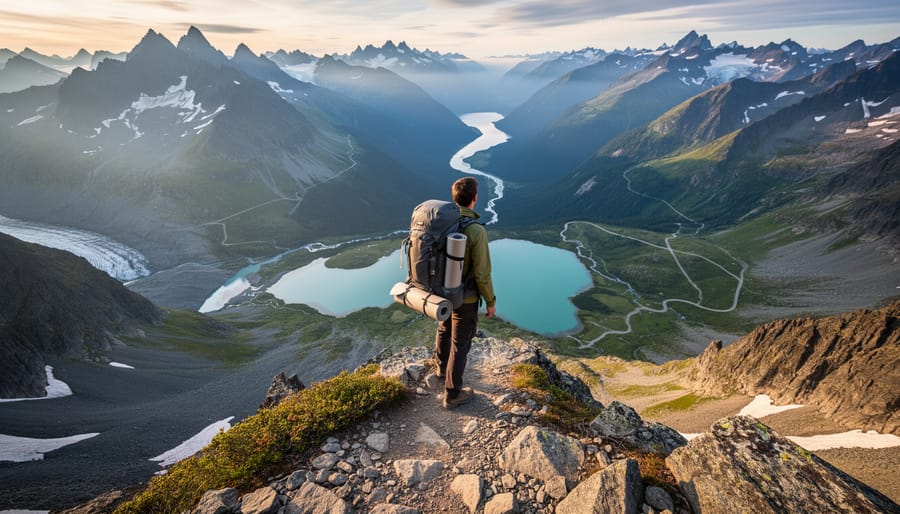
After spending the last three years trekking through permit-only wilderness corridors and scrambling up alpine passes on five continents, we can confidently say that Torres del Paine in Chile, Banff in Canada, and Fiordland in New Zealand top our list for adventure travelers chasing multi-day backcountry routes that demand real planning and reward you with solitude most day-hikers will never see. These parks rose to the top because they combine challenging terrain, well-managed permit systems that keep trails from turning into highways, and established infrastructure for multi-day treks that let you push deep into roadless country without feeling like you’re guessing your way through the wilderness.
We built this ranking after completing extended treks in each of the eight parks featured here, comparing everything from permit lead times and trail condition to the quality of backcountry campsites and the logistics of resupply. If you’re the kind of traveler who’d rather spend a week navigating glacier-fed valleys than snapping selfies at overlook parking lots, this guide delivers the park profiles, route recommendations, and permit strategies you need to plan trips that go beyond the standard bucket-list photo stops.
Our selection criteria weigh heavily toward parks that maintain true backcountry character through permit systems, offer established multi-day routes with clear waymarking, and provide enough logistical support that international travelers can plan confidently without hiring a guide. We’ve included detailed trip specs, tested permit timelines from our own applications, and transparent rankings so you know exactly why each park earned its spot and which one matches your skill level and trip style.
What to Watch For
Multi-day wilderness treks demand realistic self-assessment before you book permits or buy plane tickets. The eight parks featured ahead span vast differences in remoteness, navigation difficulty, and physical demand, what works for a fit beginner on Fundy’s maintained loop could prove dangerous for the same hiker attempting Sarek’s unmarked glacial valleys.
We’ve ranked these destinations for backcountry adventurers who value authentic wilderness immersion over roadside viewpoints, but your experience level, comfort with exposure, and willingness to carry multi-day loads should guide your final choice. Consider trip duration flexibility, too, some parks offer both short sampler routes and extended circuits, while others demand full commitment to remote crossings with no early exit options. Match the park’s character to your skills and timeline rather than chasing Instagram-famous peaks beyond your current ability.
Our Top Picks for Backcountry Adventure
After evaluating hundreds of trail miles and community reports from nomadic travelers worldwide, three parks rise to the top of our rankings for distinct reasons. Gros Morne National Park in Newfoundland earns our best overall pick for its combination of the challenging Long Range Traverse and the coastal Outport Trail, giving serious trekkers two world-class multi-day routes in one destination. The Long Range delivers proper wilderness isolation across 35 kilometers of alpine barrens, fjord overlooks, and weather that demands respect.
For adventurers who want to skip the permit lottery entirely, Sarek National Park in northern Sweden stands alone. This unmarked, trail-free landscape lets experienced wilderness navigators chart their own course through glaciated valleys without advance bookings or restricted campsites. You’ll need solid backcountry skills and Arctic navigation experience, but the freedom is unmatched.
Cape Breton Highlands National Park claims our accessible wilderness crown, blending the dramatic Cabot Trail scenic corridor with genuine hiking adventure. The wheelchair-accessible Skyline Trail proves that stunning coastal highlands don’t require technical skills, while the broader park offers camping and multi-day options for families building toward bigger backcountry goals.
How We Ranked These Parks
Choosing the best national parks for backcountry adventure meant applying a consistent set of criteria that matter to wilderness travelers planning multi-day expeditions. We drew on our own trekking experiences, conversations with nomadic adventurers who’ve completed these routes, and direct research into each park’s infrastructure and permit systems. Rather than ranking on scenery alone, we focused on the practical elements that determine whether a park delivers a genuine backcountry immersion, trail access, overnight options, and the balance between wilderness character and logistical feasibility.
Our evaluation framework considered these six factors:
- Backcountry trail networks: availability of established multi-day routes with clear waymarking and maintained paths versus unmarked wilderness navigation
- Multi-day trek options: variety of trip lengths and circuit routes that support 3+ day itineraries without retracing steps
- Permit accessibility: ease of securing backcountry reservations, advance booking windows, and availability of permit-free alternatives for spontaneous travelers
- Camping infrastructure: quality and spacing of backcountry campsites, hut systems, or designated wilderness zones with bear lockers and water access
- Scenery diversity: range of landscapes encountered on a single trek, alpine, coastal, forest, glacial, or desert transitions that reward the effort
- Remote wilderness character: degree of solitude, wildlife encounters, and distance from road access that creates genuine immersion rather than frontcountry convenience
We weighted remote wilderness character and multi-day trek options most heavily, since these separate world-class backcountry destinations from parks that excel at day hiking but lack true overnight adventure infrastructure. The list reflects parks where nomadic travelers consistently report transformative experiences and return for repeat visits.
At-a-Glance: Trail Length, Duration & Permits
We’ve mapped out the essential trip specs for each park so you can zero in on routes that match your available time and planning bandwidth. The table below compares signature multi-day routes by distance, typical duration, and permit logistics, critical data points when you’re weighing a five-day Patagonian circuit against a weekend loop in the Maritimes or planning around permit lottery deadlines.
| Park Name | Featured Route | Distance (km) | Duration (days) | Permit Status |
|---|---|---|---|---|
| Gros Morne, NL | Long Range Traverse | 35+ | 3-4 | Required (backcountry) |
| Gros Morne, NL | Outport Trail | 35 | 2-3 | Required (backcountry) |
| Fundy, NB | Fundy Circuit | 48 | 3-5 | Required (backcountry) |
| Cape Breton Highlands, NS | Skyline Trail & Cabot Trail | Varies | 1-3 | Day-use only (no overnight permits) |
| Banff, AB | Multiple backcountry circuits | Varies | 3-7 | Required (quota system) |
| Torres del Paine, Chile | W Trek / O Circuit | 71 / 130 | 4-5 / 8-10 | Required (advance booking) |
| Fiordland, NZ | Milford / Routeburn Track | 53 / 32 | 4 / 2-3 | Required (Great Walks booking) |
| Sarek, Sweden | Unmarked wilderness routes | Varies | 5-10 | None (freedom-to-roam) |
Use this snapshot to shortlist candidates based on your trip window and tolerance for permit admin. If you’re chasing last-minute adventure, Sarek’s permit-free wilderness offers the most flexibility, while iconic routes in Torres del Paine and Fiordland demand advance planning but reward you with hut infrastructure and world-class scenery.
The Complete List: 8 Best National Parks for Multi-Day Backcountry Treks
1. Gros Morne National Park, Newfoundland, The Long Range Traverse
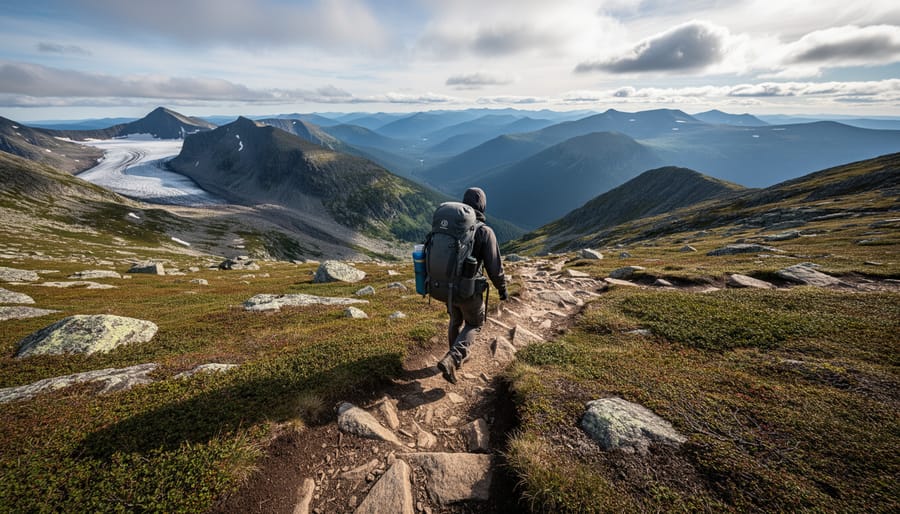
The Long Range Traverse stands as North America’s premier alpine barrens trek, pushing you across 35 kilometres of exposed tableland where stunted tuckamore and lichen-crusted rock stretch to every horizon. We’ve watched confident hikers emerge from this 3-4 day route transformed by the sheer scale of emptiness, the kind you don’t find in busier mountain corridors. The traverse climbs onto the Long Range plateau at roughly 600 metres elevation, where Arctic tundra replaces forest and navigation demands constant attention to cairns and waymarking in terrain that looks identical in every direction.
What makes this trek world-class is the combination of genuine remoteness and staggering scenery contrasts. You’ll cross windswept barrens where weather changes in minutes, then descend into protected valleys edged by glacially carved fjords that plunge hundreds of metres to the sea. The park’s official Long Range Traverse details outline the permit system and designated campsite locations, but the experience itself strips away the usual safety nets. Cell service vanishes. Other hikers might be kilometres ahead or behind. The plateau offers zero tree cover, so wind and rain hit hard when they arrive.
This route attracts experienced backpackers who’ve outgrown crowded trails and want a true wilderness test. Physical fitness matters less than mental readiness for exposure, self-reliance, and the possibility of weather pinning you down for an extra day. If you’re comfortable reading topographic maps, carrying four days of food and fuel, and making camp decisions based on wind direction rather than Instagram-worthy views, the Long Range Traverse delivers one of the planet’s most powerful immersion experiences without requiring international flights or expensive permits.
2. Gros Morne National Park, Newfoundland, The Outport Trail
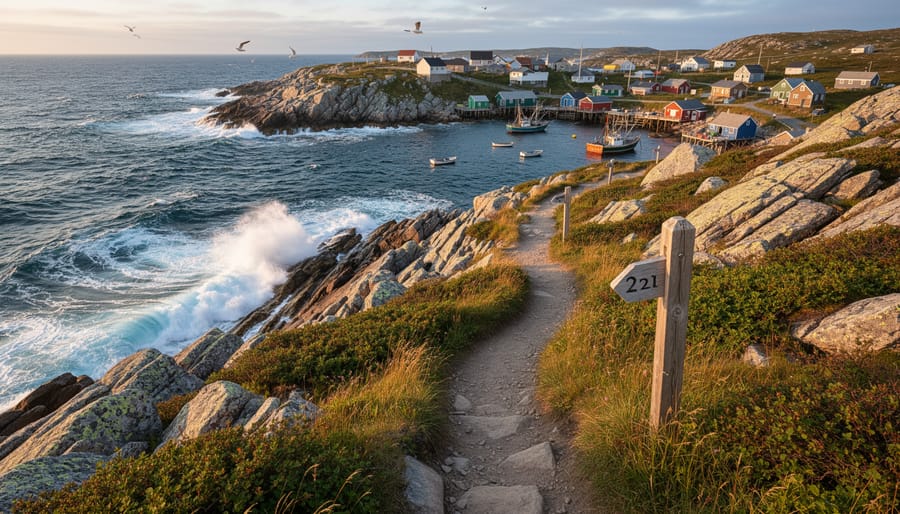
While the Long Range Traverse claims the alpine spotlight, the Outport Trail delivers an entirely different kind of wilderness magic along Gros Morne’s rugged coastline. This 35 km route weaves through abandoned fishing villages, follows storm-battered shorelines, and cuts inland across boreal forest and peat barrens, creating a multi-day journey steeped in cultural history and coastal drama. We found the Outport Trail length and duration ideally suited to hikers seeking a three-to-four-day adventure that trades high-alpine exposure for intimate encounters with Newfoundland’s maritime past. You will camp near the remains of century-old outports, wade across tidal streams, and navigate sections where the trail vanishes into beach cobble and sea spray.
What makes Gros Morne a true backcountry powerhouse is precisely this pairing: two world-class long routes offering completely distinct experiences within the same park system. You can fly into Deer Lake, tackle the alpine traverse, rest for a day, then pivot to the coastal Outport Trail without changing your base or travel logistics. Few parks anywhere deliver two such contrasting multi-day adventures in one destination, making Gros Morne an unmatched value for serious trekkers building a multi-week Newfoundland itinerary.
3. Fundy National Park, New Brunswick, The Fundy Circuit
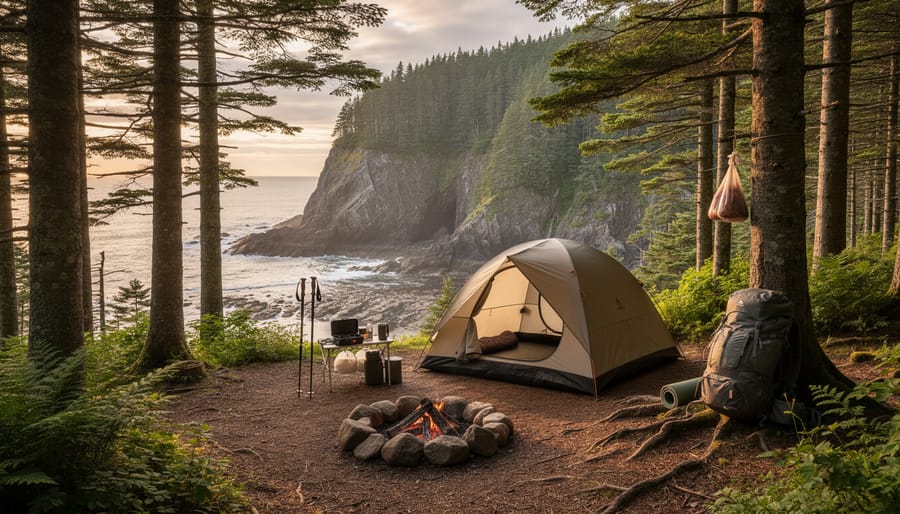
The Fundy Circuit transforms 48 km of New Brunswick wilderness into a three-to-five-day immersion through ecosystems shaped by the world’s highest tides. We found this loop exceptionally well-suited for trekkers stepping up from day hiking to multi-day wilderness travel, thanks to thoughtfully spaced backcountry campsites and clear trail markings through varied terrain.
The route threads through cathedral-like stands of old-growth Acadian forest where yellow birch and sugar maple tower overhead, then climbs to coastal highlands offering panoramic views of the Bay of Fundy’s dramatic shoreline. That tidal drama, 16-metre swings that expose vast mudflats twice daily, creates a constantly shifting backdrop unique among the world’s backcountry destinations. You’ll encounter sections where the trail descends to sea level, placing you directly within the tidal zone’s geological theatre.
What sets this circuit apart is infrastructure that supports confidence-building without diluting the wilderness experience. The park maintains designated backcountry sites with tent platforms, bear-proof food storage, and composting privies, amenities that let newer multi-day hikers focus on rhythm and navigation rather than survival concerns. Water sources are reliable throughout the loop, and bailout points at road crossings provide reassuring flexibility.
We tested this route in late summer when the Acadian forest displays peak biodiversity and weather patterns stabilize. The moderate elevation gains (nothing exceeding 300 metres) and well-maintained tread make it manageable for reasonably fit hikers carrying full packs, while the three-day minimum duration teaches essential backcountry skills: camp setup and breakdown, multi-day food planning, and pace management over consecutive trail days. For adventurers eyeing bigger objectives like Gros Morne’s alpine traverses or international epics, the Fundy Circuit serves as an ideal proving ground.
4. Cape Breton Highlands National Park, Nova Scotia, Skyline Trail & Cabot Trail Highlands
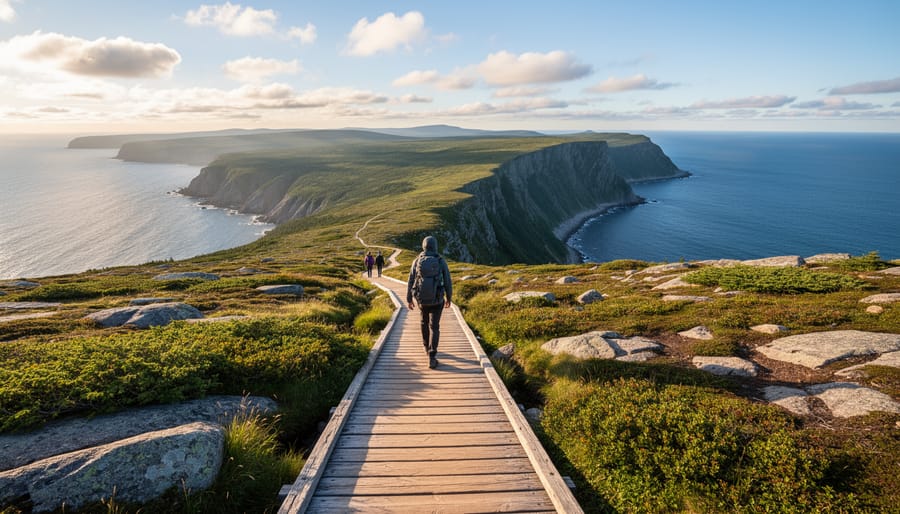
Cape Breton Highlands stands apart because we found a rare combination here: world-class highland scenery paired with genuine accessibility options, making this park a powerful choice for both seasoned backcountry travelers and those just starting multi-day adventures. The Cabot Trail corridor delivers a scenic driving backbone that lets you stage short, intense hiking pushes or build a longer camping-based adventure, switching your approach day by day.
The Skyline Trail became our benchmark for how accessibility and dramatic wilderness can coexist. This 8.2 km route climbs through boreal forest before opening onto coastal headlands where the Gulf of St. Lawrence stretches to the horizon. The wheelchair-accessible boardwalk segment proved that inclusive design doesn’t dilute the experience, we watched moose grazing near the cliffs and caught sunset light painting the water in copper and violet from that same accessible section. For stronger hikers, the trail continues to rougher terrain with steep coastal drop-offs and exposed ridgelines that feel utterly remote despite the trailhead’s proximity to the highway.
The broader highlands offer dozens of shorter trails that chain together for multi-day exploration if you base yourself at campgrounds along the Cabot Trail. We tested this approach and appreciated the flexibility: tackle a punishing climb to alpine barrens one morning, then switch to a gentle coastal ramble the next, returning each evening to established campsites with facilities. The park sits where Acadian forest meets northern highlands, so scenery shifts constantly between dense woodland, rocky headlands, and river gorges. Weather changes fast here, we got soaked in fog one afternoon and baked in sun two hours later, but that volatility adds to the coastal drama rather than detracting from it.
5. Banff National Park, Alberta, Rocky Mountain Backcountry Routes
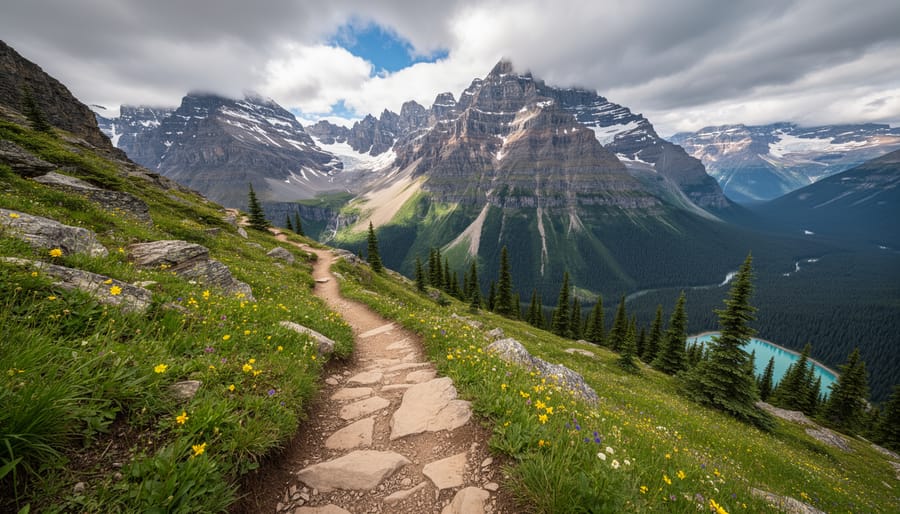
Banff pulls in millions of visitors every year, but step beyond the roadside viewpoints and you’ll find a backcountry trail network that rivals anywhere on the planet for alpine grandeur and multi-day adventure. Established in 1887 at the site of Banff’s hot springs, this is Canada’s first national park, and its 6,641 square kilometers of Rocky Mountain wilderness protect some of North America’s most iconic backcountry terrain. We’re talking saw-tooth peaks, turquoise glacial lakes, hanging valleys thick with wildflowers, and a trail system that delivers weeks of possibilities for confident trekkers.
Classic circuits like the Skoki Loop and Mount Assiniboine traverse high alpine passes where you’ll camp above treeline surrounded by limestone giants and the howl of September winds. The Sawback Trail threads through old-growth forest and open meadows, offering a quieter alternative to the park’s marquee routes, while the Egypt Lake area serves up postcard scenery without the Rockies-greatest-hits crowds. What makes Banff exceptional isn’t just the scenery, it’s the infrastructure: backcountry campgrounds are well-spaced, bear poles are standard, and the trail maintenance means you can focus on the experience instead of route-finding through blowdown.
The permit system here isn’t a frustration, it’s a feature. Quotas keep each campground small and protect the wilderness character, so when you’re camped at Pharaoh Lake or Marvel Pass, you’re sharing the valley with a handful of tents, not a tent city. Book early through Parks Canada’s reservation system, especially for July and August, or target September for thinner crowds and larch-gold hillsides. Wildlife encounters are real: we’ve crossed paths with grizzlies, elk, and mountain goats, so carrying bear spray and knowing how to use it isn’t optional. Banff rewards preparation with the kind of multi-day immersion that reminds you why you started backpacking in the first place.
6. Torres del Paine National Park, Chilean Patagonia, W Trek & O Circuit
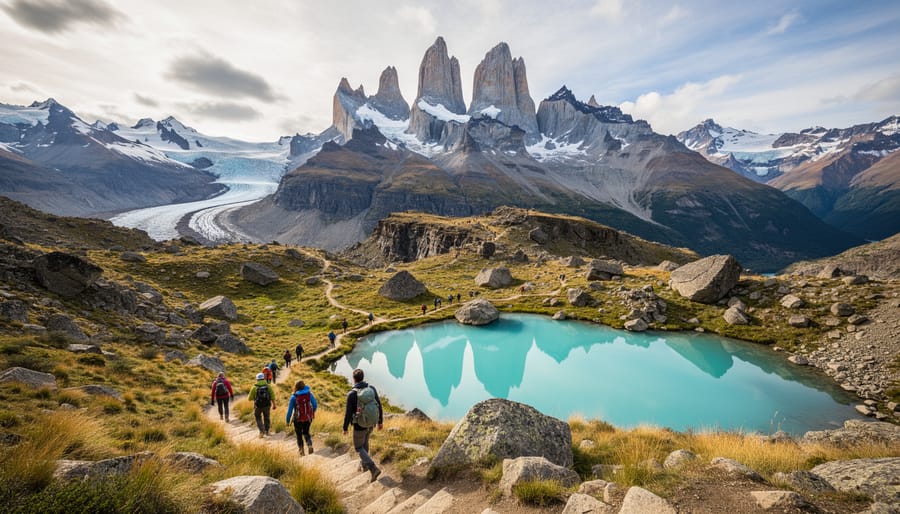
Torres del Paine stands as Chile’s crown jewel and one of South America’s most dramatic wilderness destinations. We’ve watched countless trekkers return from Patagonia forever changed by the raw power of this landscape, where jagged granite spires pierce storm-laden skies above electric-blue glacial lakes.
The park offers two main routes that define world-class multi-day trekking. The W Trek covers roughly 80 kilometers over four to five days, hitting the park’s greatest hits: the base of the Torres themselves, the French Valley’s amphitheater of stone, and Grey Glacier’s calving ice face. It’s challenging but achievable for fit hikers with basic backpacking experience. The full O Circuit wraps the entire Paine massif at 130 kilometers, taking seven to nine days and demanding stronger navigation skills and weather resilience through the backside’s more exposed terrain.
Logistics split between refugios (mountain huts with meals and bunks) and campgrounds. Refugios book out months ahead and cost significantly more, but they spare you carrying tent and food weight. Camping offers flexibility and budget savings, though you’ll shoulder a heavier pack through Patagonia’s notorious winds. Both require advance reservations; showing up without permits isn’t an option here.
What makes Torres del Paine unforgettable isn’t just the scenery, it’s the full sensory assault. Wind that forces you sideways on exposed ridges. Weather that cycles through four seasons in an afternoon. The crack of ice breaking from glacier faces. We’ve seen hardened adventurers humbled by Patagonia’s ferocity and absolute beauty in equal measure. That combination of accessible infrastructure and genuine wilderness challenge puts this park on every serious trekker’s bucket list.
7. Fiordland National Park, New Zealand, Milford & Routeburn Tracks
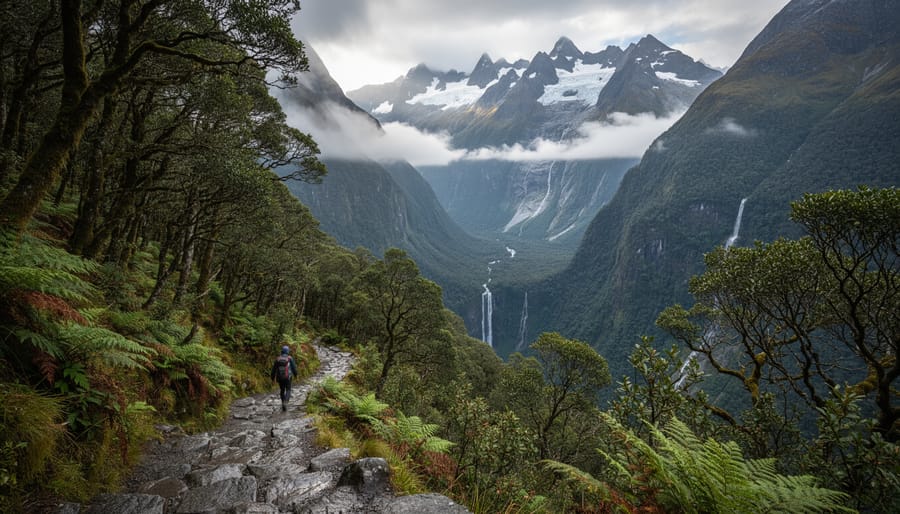
Fiordland National Park occupies 1.2 million hectares of New Zealand’s South Island, protecting temperate rainforest, fjords carved during the last ice age, and alpine peaks that rise straight from the sea. Two routes stand out as bucket-list entries for multi-day trekkers: the Milford Track and the Routeburn Track, both designated Great Walks within New Zealand’s premier hiking network.
The Milford Track runs 53.5 kilometers from the head of Lake Te Anau to Milford Sound, typically walked over four days. The route climbs from moss-draped beech forest through Mackinnon Pass at 1,154 meters, then descends past Sutherland Falls, one of the world’s tallest waterfalls, before reaching the sound’s tidal waters. We found the scenery transitions exceptional: you walk from cathedral-like rainforest into exposed alpine tundra, then back down through valleys where waterfalls appear after every rain.
The Routeburn Track covers 32 kilometers across three days, linking Mount Aspiring and Fiordland national parks through subalpine terrain. This route delivers broader mountain vistas and faster elevation gain than the Milford, with open ridgeline walking above the treeline. Both tracks use a guided-hut booking system during peak season, October through April. You must reserve hut spaces months in advance for independent walks, or join a guided group staying in private lodges along the route.
The system protects trail quality and limits crowding, but it demands careful planning. We tested both tracks in shoulder season and found the infrastructure world-class: heated huts, flush toilets, and warden presence at each overnight stop. The weather shifts fast here, Fiordland receives over six meters of rain annually in places, so waterproof gear and flexible expectations are essential.
8. Sarek National Park, Sweden, Europe’s Last True Wilderness
Sarek stands apart from every other park on this list. We’re talking about 1,970 square kilometers of Arctic wilderness in Swedish Lapland with no marked trails, no maintained campsites, no huts, and no permit bureaucracy standing between you and absolute remoteness. This is Europe’s answer to Alaska’s Brooks Range, a landscape of glaciated valleys, hanging ice fields, and river crossings where your navigation skills and wilderness judgment are the only safety net.
The terrain demands serious backcountry competence. You’ll route-find across trackless tundra using map, compass, and increasingly vital GPS waypoints, ford glacial rivers that change daily with meltwater flow, and camp wherever your skill and Leave No Trace principles guide you. The Rapadalen valley offers the most traveled corridor through the park, but “traveled” is relative, you might encounter a handful of trekkers over a week-long crossing. Most routes involve 80 to 120 kilometers of off-trail navigation through genuinely wild country where weather can shift from clear to whiteout in under an hour.
We’ve found Sarek appeals most to experienced wilderness navigators who’ve mastered their systems on maintained trails and are ready to operate without external structure. The park’s freedom from permits and regulations is liberating, but it assumes you bring the expertise to handle true self-reliance. If you’re comfortable reading terrain, managing river crossings, and making conservative decisions when conditions deteriorate, Sarek delivers Europe’s most authentic wilderness immersion. If those skills are still developing, build them elsewhere first, this landscape doesn’t forgive gaps in judgment.
The remoteness is the reward. You won’t find anything this wild and accessible anywhere else on the continent.
Backcountry Terminology You Should Know
Before you set off on your first multi-day wilderness adventure, it helps to speak the language. These terms come up in permit applications, trail guides, and backcountry forums, and understanding them makes trip planning clearer and less intimidating.
- Backcountry Permits
- Official authorization required to camp overnight in designated wilderness zones, usually with quotas to protect trail conditions and solitude. Some parks issue them free on a first-come basis; others charge fees and require advance reservations months ahead.
- Leave No Trace
- A set of outdoor ethics focused on minimizing your impact: pack out all waste, camp on durable surfaces, respect wildlife, and leave what you find. It’s the foundation of responsible backcountry travel and keeps trails pristine for future adventurers.
- Established Campsites
- Designated tent sites with defined boundaries, often including a fire ring, food storage lockers, and a privy. They concentrate impact in already-used areas and simplify navigation on popular routes.
- Wilderness Campsites
- Unmarked, dispersed camping where you choose your own spot within a zone, following leave-no-trace principles. It offers more solitude and flexibility but requires stronger navigation and judgment skills.
- Thru-Hiking
- Completing a long trail in one continuous journey rather than breaking it into separate trips. Multi-day national park circuits like the O in Torres del Paine qualify as short thru-hikes.
- Trail Conditioning
- The physical and mental preparation you do before a trek, building endurance, testing your pack weight on training hikes, and adapting to elevation or terrain. Proper conditioning prevents injury and makes the experience far more enjoyable.
- Hut Systems
- Mountain refuges or lodges spaced along a route, providing bunks, cooking facilities, and sometimes meals. New Zealand’s Great Walks and European alpine routes use hut systems; you book beds instead of carrying a tent.
We’ve found that confident use of these terms speeds up research and makes permit instructions less confusing. When you understand the difference between an established campsite and a wilderness zone, or know what trail conditioning means for your fitness level, you make smarter choices and avoid unpleasant surprises on the trail. This shared vocabulary connects you to the broader backcountry community and helps you learn from others’ trip reports with less guesswork.
Planning Your Multi-Day Trek: Permits, Seasons & Gear
Securing permits early is non-negotiable for popular parks like Banff and Torres del Paine, where prime summer slots fill months ahead. We’ve learned to enter permit lotteries the day they open and maintain a flexible date range; if you’re planning late, midweek departures in shoulder seasons often show availability when weekends are gone. For spontaneous adventurers, permit-free parks like Sarek offer total freedom, and closer to home, BLM backcountry access provides similar wilderness immersion without the bureaucracy.
Season shapes everything. Patagonian parks deliver their clearest skies December through February, while Canadian Rockies and Newfoundland highlands peak July through early September, outside those windows you’re gambling with snow or mud. New Zealand’s Great Walks book solid for their summer (November, April), but autumn (March, May) rewards flexible planners with fewer crowds and stable weather. We always check historical weather patterns for our target week rather than trusting generic “best time” advice.
Gear matters more on multi-day routes than day hikes. Your pack weight directly impacts enjoyment, so test your setup on shorter trips first to dial in the trail difficulty match between ambition and capability. A quality shelter, layered insulation, water filtration, and a tested stove system form the non-negotiable core; beyond that, trim ruthlessly.
Follow this planning sequence for success:
- Research each park’s specific permit system and application windows four to six months before your target dates
- Submit permit requests the day reservations open, or identify permit-free alternatives if you need flexibility
- Cross-reference seasonal weather windows with your vacation dates to avoid monsoons, snowpack, or extreme heat
- Assemble your gear list and field-test critical items on weekend trips to catch failures before you’re remote
- Confirm current backcountry regulations, fire restrictions, and food storage requirements one week before departure
Community feedback consistently shows that overconfident beginners underestimate mileage and elevation; honest self-assessment of fitness and experience level prevents miserable slogs. Start with maintained trails and established campsites before graduating to route-finding challenges in trail-free wilderness.
Frequently Asked Questions
Tackling a multi-day backcountry trek in a world-class national park raises practical questions, especially for first-timers. We’ve gathered the most common queries from our nomadic community and provided straightforward answers to help you plan confidently.
Do I need a guide for these multi-day treks?
Most of the routes we’ve profiled are well-marked and documented, making them accessible to confident hikers with solid multi-day hiking prep and navigation skills. Guided options exist for parks like Torres del Paine and Fiordland if you prefer support, but experienced backcountry travelers typically tackle these independently.
What’s the best park for first-time multi-day hikers?
Fundy National Park’s 48 km circuit offers well-maintained campsites, clear trails, and manageable terrain, ideal for building confidence before tackling more remote routes. Cape Breton Highlands also provides accessible options, including the wheelchair-accessible Skyline Trail segment, making it approachable for varying fitness levels.
Can I do these trips solo?
Absolutely, though safety planning becomes even more critical when traveling alone. Carry a satellite communicator, file detailed trip plans with park authorities, and honestly assess whether your skills match the route’s demands, especially in permit-free wilderness like Sarek where rescue is complex.
How far in advance should I book permits?
Popular routes in Banff, Fiordland, and Torres del Paine fill months ahead during peak season, so apply as early as booking windows open. For flexibility, consider shoulder seasons or permit-free alternatives, but always check current systems through park websites as part of your multi-day trip planning.
Are there family-friendly multi-day options?
Cape Breton Highlands combines car-accessible camping along the Cabot Trail with shorter day hikes, making it suitable for families building toward overnight trips. Some Banff routes accommodate older kids comfortable carrying packs, but true wilderness routes demand fitness and maturity, start with established campsites and front-country loops before committing to remote terrain.
Planning a major backcountry adventure involves more than answering logistical questions. You’ll want to dial in your adventure gear basics practice leave-no-trace principles, and build physical conditioning gradually. We’ve found that hikers who invest time in preparation, testing gear on weekend trips, studying maps thoroughly, and honestly evaluating their capabilities, have transformative experiences rather than survival ordeals. The parks on this list reward thoughtful planning with some of the planet’s most powerful wilderness encounters.
The world’s best national parks aren’t just destinations; they’re classrooms for self-reliance, wonder, and connection to something larger than ourselves. Whether you’re navigating unmarked terrain in Sarek, watching sunrise light the Torres del Paine towers, or completing your first backcountry loop in Fundy, multi-day wilderness travel changes how you see your place in the landscape. We’ve found that matching your skill level to the right park makes all the difference between an intimidating ordeal and a confidence-building adventure. Start where you are: if you’re new to backcountry travel, Fundy’s maintained campsites and well-marked trails offer an excellent proving ground. If you crave total remoteness, Sarek’s trail-free wilderness won’t disappoint.
For our Colorado readers, these international treks complement the alpine experiences close to home and offer a chance to test your backcountry skills in radically different environments. You might draw scenic route inspiration from Cape Breton’s coastal highlands or discover that Patagonian wind makes our Rocky Mountain gusts feel gentle. The Nomadic Adventures community thrives on these stories of exploration, and we encourage you to share your own multi-day adventures as you build your wilderness resume. Plan thoughtfully, respect the permit systems that protect these places, and embrace the uncertainty. The trail always teaches more than the guidebook promises.